Beyond Buildings: Rethinking Architecture in Weimar
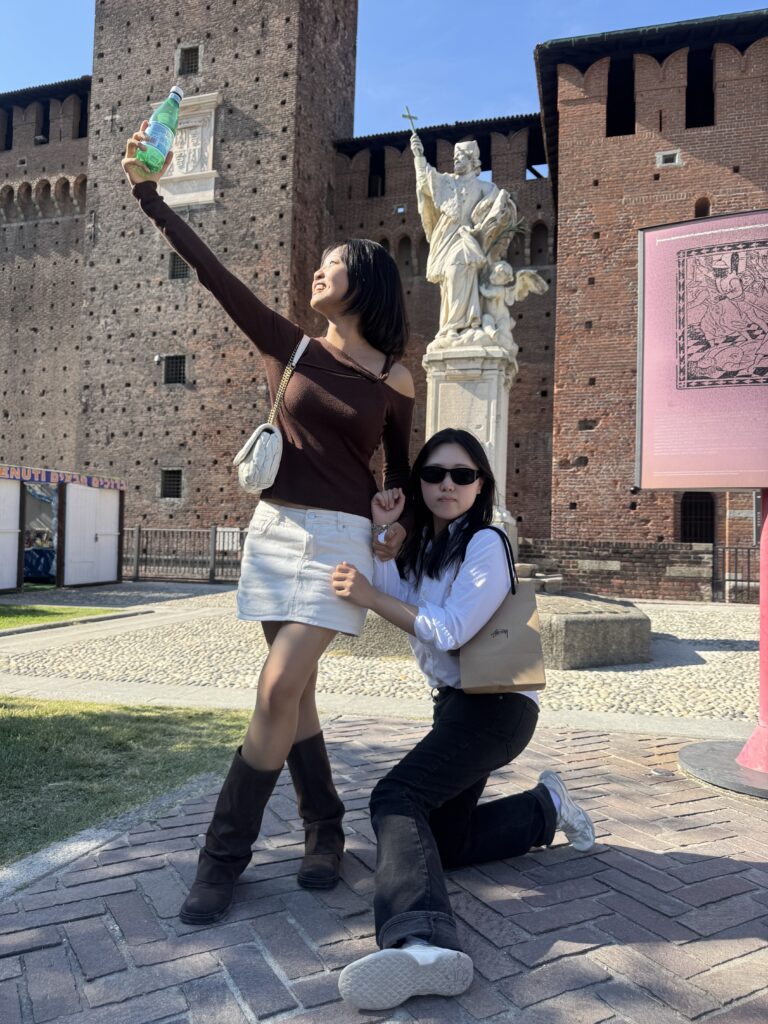
InterviewKim Jimin is a friend I first met in high school. Like many Korean students, we spent most of our school years focused on getting good grades. But during her second year of high school, Jimin discovered a passion for architecture and started studying it on her own. Her dedication eventually led her to pursue architecture at a university in Korea. Now, she is spending her exchange semester in Germany at Bauhaus University Weimar, one of the world’s leading universities for architecture. Through this interview, I hope to learn more about her journey and what her everyday life as an exchange student in Germany is really like.
1. What first drew you to architecture?
At first, I became interested in architecture because my father works in this field. But what really attracted me was the power of architecture. It can guide movement, shape the character of a space, and even become a city landmark.
2. Why did you choose Weimar for your exchange?
Because Bauhaus-Universität is here, the Bauhaus movement played a huge role in the development of modern architecture, so I really wanted to study in the place where it all began.
3. What did you expect before you arrived, and what did you find?
Before coming here, I was really looking forward to the architecture classes. I was curious about how professors teach and how students think about architecture here. But after I arrived, I realized that the classes were not that different from those in Korea. For example, professors still write on the blackboard and give lectures, just like at my home university.
4. What was your first week like?
It was exhausting because I have a terrible sense of direction. I kept getting lost everywhere. Even getting from Frankfurt Airport to Weimar was a big challenge. I got lost so many times that I was already exhausted by the time I arrived. But making friends and carrying heavy luggage weren’t really problems for me. It was just finding my way around!
5. How does studying architecture at the Bauhaus-Universität differ from your home university?
I think the biggest difference is how we research the history of a site. Here, historical preservation is very well established, and there are lots of old photographs and historical records. So it’s much easier to find information about how a place looked in the past. Also, there are so many old buildings here that they almost feel like living history books. In Korea, things are a little different. Korea has experienced numerous historical conflicts and invasions, which has resulted in the loss of many historical records. Also, modernization happened very quickly, which means the history of modern architecture is relatively short. So I think Weimar is a really great place to study the historical background of architecture.
6. Can you tell me about a project or moment here that changed how you see design?
I think I learned how to read a city’s context. Back in Korea, I didn’t really understand why urban context was so important. Most of the sites we worked on were in newly developed cities, and many of them had similar development processes. So I didn’t think studying their urban context was that meaningful. But here, I realized that every city has its own history and identity. Every place has different stories and values. Now I think understanding the context of a place should always be the first step in architectural design.
7. How do you deal with working in a second language and a different studio culture?
Honestly, it’s really difficult. There are only two exchange students in my studio, including me, and I’m the only Asian student. The other 17 students are all German. Most of the classes and discussions are in German, so it’s sometimes really hard to follow what’s going on. My professor usually explains things to me in English after class, and my German classmates are also very kind and helpful whenever I ask them something. But still, constantly having to understand and communicate in a foreign language takes a lot of energy. It’s mentally exhausting.
8. What has surprised you most about everyday life in Germany?
How punctual people are! Koreans are also quite punctual, but we tend to be a little more flexible sometimes. In Germany, people seem to take schedules very seriously. If something is supposed to happen at a certain time, it happens at that exact time.
9. How has this exchange changed the way you think about your future work?
I learned that architecture is not just about designing buildings. It’s also about understanding the history, culture, and social context of a place. In the future, I want to become an architect who thinks beyond the buildings themselves and creates spaces that respond to the needs of people and their communities.
10. What would you tell a student who is considering an exchange in Germany?
I think studying abroad is an experience everyone should have at least once in their life. Personally, I think Germany is one of the best choices in Europe for Korean students. I feel that it’s relatively welcoming to international students, and the lifestyle is not too difficult to adapt to as a Korean. Also, groceries are quite affordable, which is definitely a plus!
11. What haven’t I asked that you would like readers to know?
Korean Spam is definitely better than German sausages!
Leave a Reply