It seems like you no longer have to be in Scandinavia to get ‘Scandi vibes’. You just have to be in Munich.
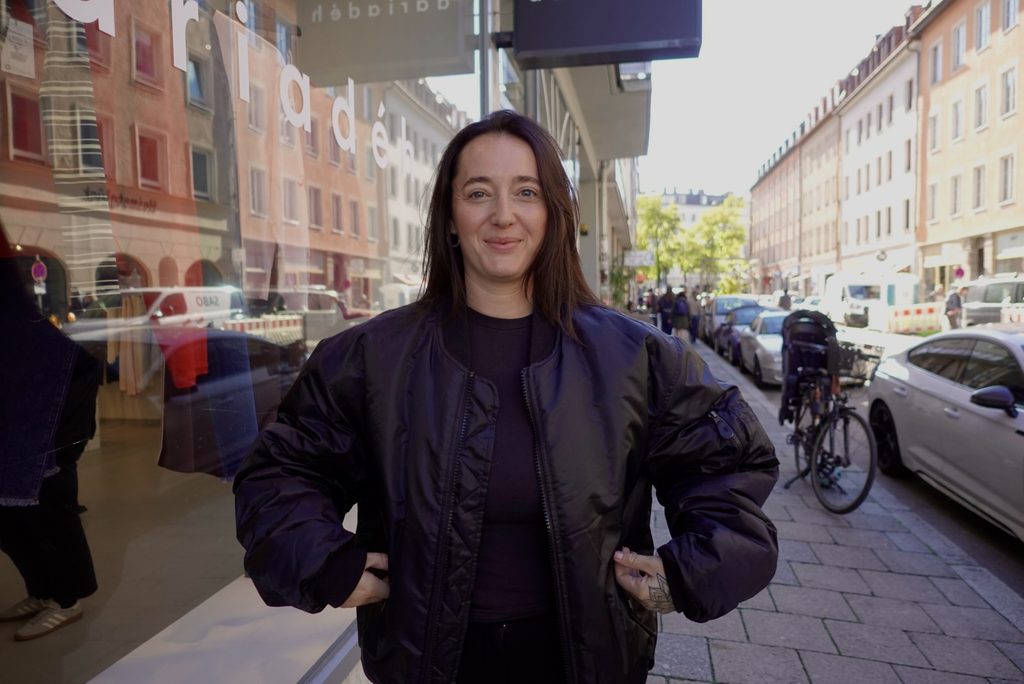
InterviewScandinavian-inspired stores seem to be everywhere in Munich. I asked Homegirl Store founder Medo Diet what drew her customers to Scandinavian fashion.
When I first walked through the streets in Munich, I felt far from my home in Denmark.
And yet in those same streets, I kept encountering something familiar, like small postcards from home.
From concept stores and fashion boutiques to restaurants and cafés, traces of Scandinavia seemed to be somehow inescapable here. A café called Lé Hygge, a concept store called Fika. Another Icelandic café, a Swedish bakery. A store called ‘The Danish Girl’. Other stores committedly only selling Danish fashion brands. You name it.
Maybe it only stood out to me because of its familiarity – I might just be more attuned to it; it is after all where I’m from. Still, I couldn’t help but think whether it was something more than coincidental that I kept spotting these traces of Scandinavia everywhere.
So, I went on social media.
“Five spots in Munich that feel like Scandinavia.” (translated from German)
“A new Scandi-inspired café worth knowing.”
“Favorite café in Munich giving me scandi vibes.”
I guess my intuition wasn’t totally off.
But the more posts and videos I saw, the less sure I became of what people actually meant when describing something as ‘Scandi’.
Was it purely about aesthetics? Was it a momentary trend or a general fascination? Had the term taken on a meaning of its own outside Scandinavia or did it have the same value as I had assigned to it?
So, back to my virtual cave. And after scrolling through numerous posts and articles about where to get the Scandinavian feeling in Munich, I came across the store ‘Homegirl’.
Opened in 2018, selling mainly Scandinavian brands and vibes, now converted into a home to different pop-up shops.
Seemed like a good place to start.
So, naturally, I had to meet the woman behind it. Medo Diet.
Of course, there is only so much I can conclude about Munich’s general perception of “Scandinavia” and use of the word from one fashion shop owners’ reflections.
Nevertheless, after several years of experience selling Scandinavian brands – and being a committed, longtime fan of Danish fashion herself – I figured she must have her own take on what her and people in Munich associate with the word “Scandi” and why it might appeal to them.
And I wasn’t disappointed.
From the get-go she recognized that Scandinavian style and aesthetic is attractive to her and her customers, but that it hasn’t always been like that.
“I think it came the last years, because Instagram got bigger, and people get a little bit more used to fashion.”
Asking her where this attraction stems from, she argues in her experience the initial attraction comes from the minimalistic aesthetic that’s associated with the Scandinavian brands.
“People are coming in [her store] and saying, ‘okay, it’s nice, it’s not that loud, it’s simple, easy. I buy it.’”
She also points out that especially Danish brands are well-known in Germany, and therefore buying them comes with a feeling of recognizability:
“They know the brands and it feels comfortable.”
While that may explain part of it, I wasn’t fully convinced that it was the full story. After all, minimalistic and aesthetic brands exist everywhere, in multiple countries.
Also, I couldn’t help but feeling a slight twitch of skepticism towards the version of Scandinavian fashion Diet was describing, as it sounded somehow farfetched from the one I know from the streets in Copenhagen, where the fashion scene often is more or less the opposite; colorful, boundary-seeking and playful.
But before I could ask her about this contradiction, Diet addressed it herself, telling a story about how some of her customerswere shocked about shoes from the brand Miista they sold in the store – a London-based brand known for its unique and sculpturally-looking boots.
“They wouldn’t come in because they saw them.”
For Diet this became an example of how far she could push it in her store. She learned that in her case, her customersoften tended to associate Scandinavian fashion with something more accessible and safer than perhaps the experimental expression she and I mostly associated with it.
“I think they take the commercial things out of it here [in Munich], and it works. But if you do the next step, it doesn’t work anymore.”
Whether that assessment is fair in a broader perspective outside her store is difficult to determine. Nevertheless, it raises an interesting question about what happens when a certain cultural style appears in cultures away from their place of origin.
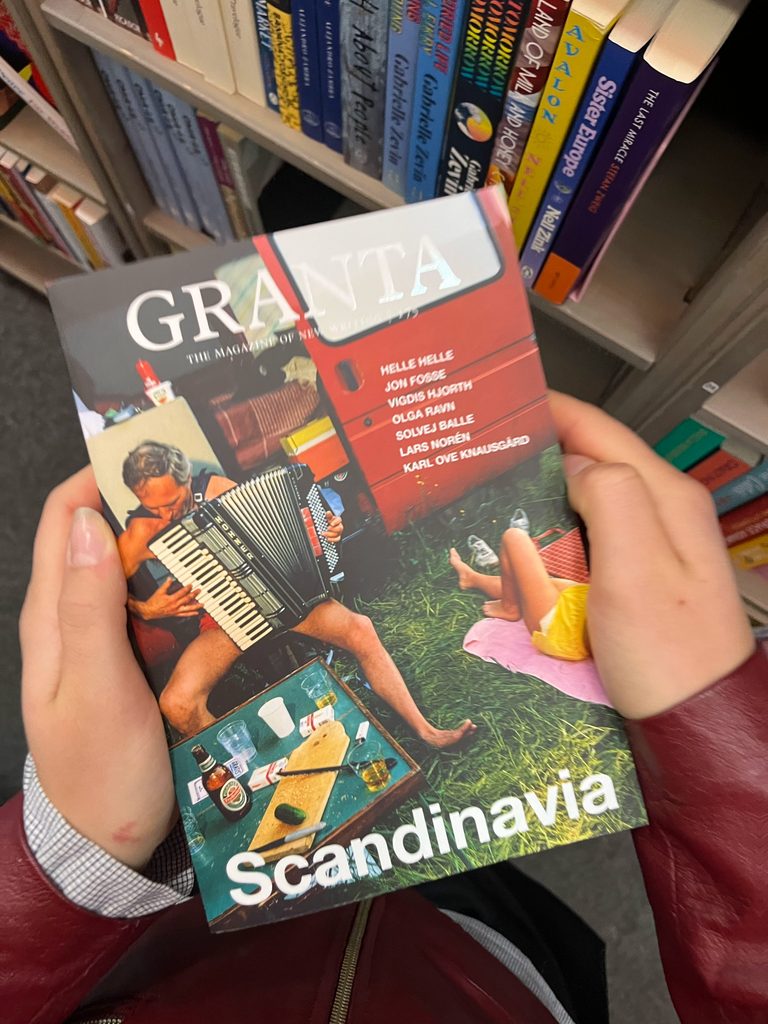
So, I asked Diet about why she thinks that the view of Scandinavian fashion changes expression when landing in Munich.She argues that the style – though also acknowledging it often being electric and maximalist – also is very easy to style down, and that a lot of Danish brands have timeless pieces that attracts people and her customersin Munich.
“In my store, it was mostly that the quality is good, the price is good, the style is good, but it’s not too much of everything.”
Still, I wanted to dig a step deeper. So, I asked whether buying Scandinavian fashion – when it changes expression somehow radically – perhaps meant buying something more than a piece of cloth. But Diets explanation remained rather simple.
“I don’t think that people feel connected to Copenhagen or Denmark. The only reason why they are buying it is because they know that it’s cool.”
I guess that closes the case quite firmly on why the clothes got sold in her store.
Still, if the attraction lies primarily in the minimalistic and clean aesthetic rather than a deeper connection to Scandinavia itself – why did I keep seeing those references all over the streets in Munich? There’s plenty of countries and cultures to borrow a café name from. Why Scandinavia?
Neither Diet nor I can answer that for Munich as a whole. Perhaps the word didn’t even mean the same from store to store, or from a bakery to a café. Further dismissing Munich’s version of ‘Scandi’ as detached or a misinterpretation entirely different from the real deal would also be too easy – many stores draw a direct inspiration from the Nordic countries or even have roots there.
I guess it was probably also this I had recognized in the streets.
But after talking to Diet, I left wondering if I had just read too much into it in the first place, and perhaps what had caught my eye showed me more about Munich’s own taste than about how people in Munich view and think of Scandinavia themselves.
Perhaps it just wasn’t that deep.
Either way, it works, I guess.
*Quotations have been lightly edited for clarity and length.