Between Parisian Barricades and Buenos Aires Resistance: The Pulse of Public Education
Interview . Journalistic WritingIn recent weeks, Paris has become the focal point of massive student mobilizations protesting against rising living costs and public education cutbacks. Rita Wroclawski, a University of Buenos Aires student living in the French capital for the past year and the daughter of a French father, experiences the unrest firsthand. Between general assemblies, university occupations, and tear gas on the boulevards, she reflects on the contrast between French youth resistance and Argentina’s historic university struggles, comparing state welfare, material conditions, police tactics, and the defense of public services across both cultures.
This interview has been edited for length and clarity and translated from Spanish.
How did the transition of moving from studying in Buenos Aires to living in Paris feel for you?
What strikes me most is the difference between both cities: Paris is a global capital, while Buenos Aires is a regional one. Around thirty percent of the Parisian population is foreign. Social circles here usually form among people who are passing through, making it hard to connect with born-and-raised locals. In Buenos Aires, I made a close circle of local friends right away. In terms of public life, Paris feels more interconnected: libraries are constantly full, and there are many shared spaces where people invest more resources into culture.
How has having roots in both cultures shaped your understanding of these political conflicts?
My parents have always been deeply politicized. My father listened to French news radio every morning, yet my political awareness remained distinctly Argentine. However, having visited France during previous holidays, I participated in demonstrations against the pension reform, so the current discontent over living costs feels familiar. In Argentina, we are so accustomed to chronic austerity that we normalize professors working without pay. We assume acquired rights cannot be taken away, but that is simply not true.
What was your initial reaction when these student protests broke out?
The speed at which the movement organized was impressive. Above all, I was struck by their consistency: they simply will not stop until their demands are met. That persistence is something I often miss in Argentine student politics. Protesters here do not care if only fifty people block a street; they continue anyway. I was also shocked by the harsh police response against young protesters, and the determination to set street barricades on fire to demand radical change.
How would you describe the atmosphere on the streets and among young demonstrators?
Daytime rallies are mostly peaceful, though some escalated into barricades and curfews with helicopters circling overhead. What caught my attention early on was how police followed closely behind the march to clear the streets, followed immediately by sanitation trucks cleaning the pavement. The deployment of tear gas is also intense; canisters shatter into multiple fragments across the asphalt, and the rule among demonstrators is strictly not to run.
Can you recall a specific scene that caught your attention?
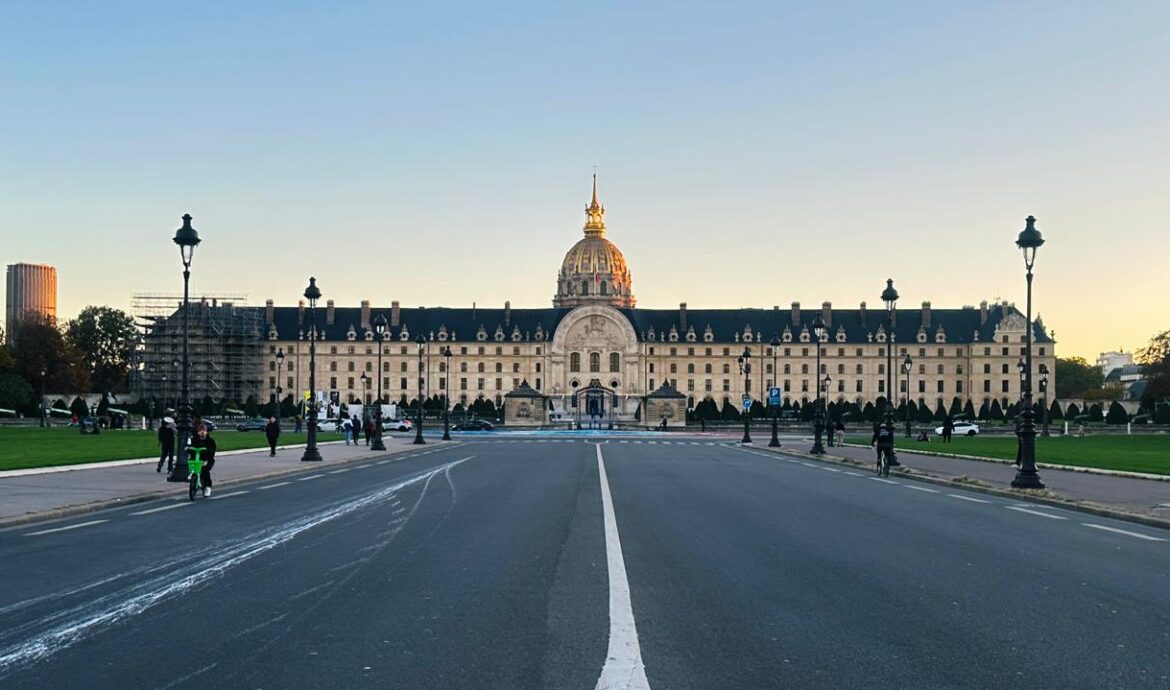
I was struck by masked protesters spray-painting surveillance cameras to protect personal identities against state monitoring, reclaiming the street as a space of rebellion. Another intense moment occurred during an unauthorized march toward Matignon, the Prime Minister’s office. Thousands converged at Les Invalides, where police intercepted us with heavy tear gas.
How do students organize themselves between assemblies and building occupations?
Many friends currently occupy their faculties, coordinating logistics through Instagram. Weeks ago, a radical group prepared mattresses to take over a campus building, but the general assembly voted against it, and everyone respected that decision. Once the vote passed recently, students occupied the site, guarding it day and night against eviction. Internal assembly votes are strictly honored.
How do material conditions and state support here compare to Argentina?
Some French peers asked if complaining about projectors was silly compared to a developing country. I told them that studying film in Buenos Aires meant rarely having a working projector, but their demands remain entirely valid. Societies must aspire to the highest standard rather than leveling downward. Furthermore, economic hardship in Argentina alienates students: if you march for four hours, nobody pays your bills. French state support offers the stability needed to mobilize.
What lessons can French and Argentine student movements learn from each other?
France has fluid national communication: when a strike is called, cities across the country halt at once. In Argentina, activism remains centralized in Buenos Aires; provincial schools can crumble without national notice. Argentine students need broader federal coordination. Conversely, French demonstrations lack creative energy, repeating the same chants since the 1950s. The lyrical wit, rhythm, and passion of Argentine protest chants remain unmatched.