Chasing a Place to Call Home: Student’s Housing Struggle in Munich
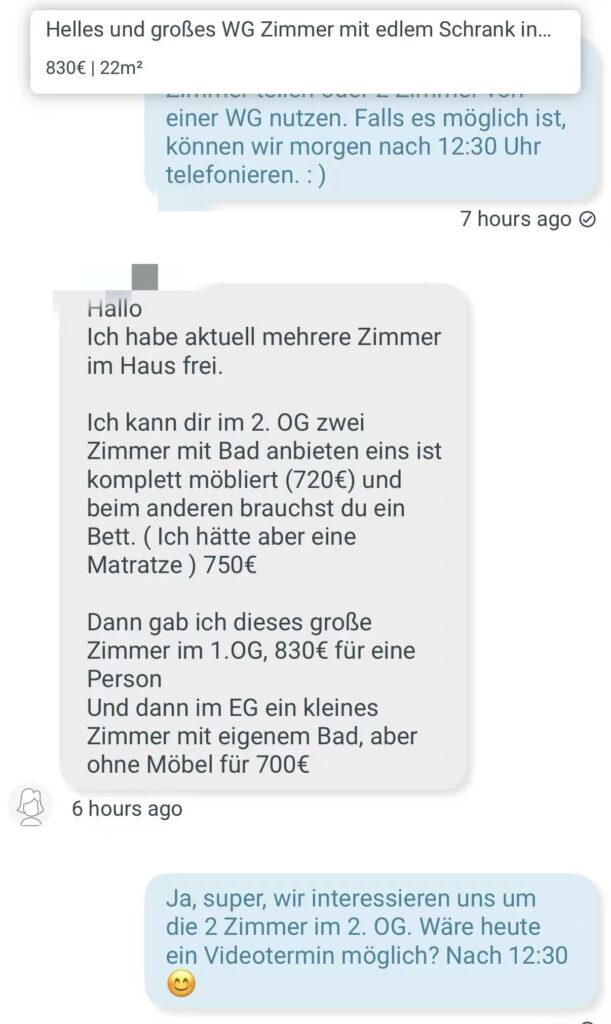
City life . Germany . Society . Student lifeFor almost two months, Cécilia searched relentlessly for a place to live in Munich. She attended more than 30 apartment viewings, both online and in person, before finally securing a room in a three-person shared flat. The rent was around 800 euros per month per person — far from cheap, but a relief after weeks of uncertainty. Standing in front of the building that would become her new home, she felt both exhausted and grateful. The path to this front door had been long, stressful, and emotionally draining.
Munich, Germany — It was a grey autumn morning when Cécilia refreshed her phone screen once again. Another message appeared in one of the many Munich-based housing chats she had joined weeks earlier. It was short and familiar: “Room already taken.” For the international student, these four words had become a daily reality.
Searching Everywhere, Belonging Nowhere
Like many international students arriving in Munich, Cécilia turned to every possible channel. She searched listings on WG-Gesucht, joined Facebook housing groups, browsed posts on Xiaohongshu, a Chinese social media platform popular among students, and asked senior students for advice. Most importantly, she relied on several Munich-based WeChat groups, where hundreds of students exchange housing information, warnings about scams, and personal experiences on a daily basis.
“The competition was overwhelming,” Cécilia said. “Sometimes dozens of people would respond to one listing within minutes.”
Despite being able to communicate normally with German landlords, rejections were frequent. Some landlords explained that they preferred to rent to couples. Others said another tenant had already been chosen. In several cases, in-person viewings were required — impossible for Cécilia at the time, as she was still in her home country.
More troubling were situations in which landlords refused to provide the Wohnungsgeberbestätigung, the registration document required to officially register an address in Germany. Without it, students cannot complete basic administrative procedures such as residence registration or opening certain bank accounts. “Some landlords simply said they wouldn’t give it,” Cécilia explained. “That immediately made the room impossible for me.”
Distance, Time Zones, and Digital Barriers
Much of Cécilia’s apartment search took place before she arrived in Germany. Because of the time difference, online viewings often happened late at night or early in the morning. Unstable internet connections added another layer of stress.
Being physically far away also increased the risk of fraud. In WeChat groups and online forums, students frequently warned each other about scams targeting international students who urgently needed housing. Fake listings, forged contracts, and requests for advance payments were common topics of discussion. According to advice published by German official study portals, legitimate landlords never ask for money before a contract is signed and a room is clearly verified.
“There were moments when the video froze in the middle of a viewing,” she recalled. “I could see the landlord talking, but I couldn’t hear anything.”
The Dormitory Lottery
Like many students, Cécilia applied for student dormitories run by Studentenwerk München, hoping for a safer and more affordable option. However, student housing in Munich is extremely limited.
“I didn’t get a place,” she said.
Every semester, far more students apply for dorm rooms than can be accommodated. Those who are not selected are forced onto the private rental market, where high prices and fierce competition dominate. For international students, the lack of local rental history, guarantors, or long-term residence status often makes the situation even more difficult.
Finally, a Breakthrough
After weeks of rejection and uncertainty, one listing on WG-Gesucht finally offered hope. The current tenants of a three-person shared flat were open to renting to international students and agreed to conduct an online viewing. The conversation went smoothly, documents were exchanged, and a few days later, confirmation arrived: the room was hers.
Standing in front of the building — modest, quiet, and slightly outside the city center — Cécilia felt something she had not felt in weeks: stability.
A Structural Housing Problem
Cécilia’s experience reflects a broader housing crisis in Munich. According to the official Munich Mietspiegel, the city consistently ranks among the most expensive rental markets in Germany. High demand, limited housing supply, and steady population growth continue to push prices upward.
Students, particularly international ones, often find themselves at a disadvantage. Many landlords prefer tenants with stable local incomes or long-term guarantees. While language skills can help, they do not eliminate structural barriers.
A German student I spoke to offered a different perspective. “Finding a room is difficult for everyone in Munich,” she said. “But international students definitely have fewer connections and less time to search.”
More Than Just a Room
For Cécilia, securing housing was not just about finding a bed. It was about being able to start her life in Munich with a sense of security and dignity.
“Once you have a place to live, everything else becomes easier,” she said. “Before that, you’re constantly anxious.”
As Munich continues to attract students from around the world, pressure on the housing market shows no signs of easing. For now, students like Cécilia will continue refreshing their screens, sending messages into crowded group chats, and hoping that the next reply will finally say: “You got the room.”
Leave a Reply