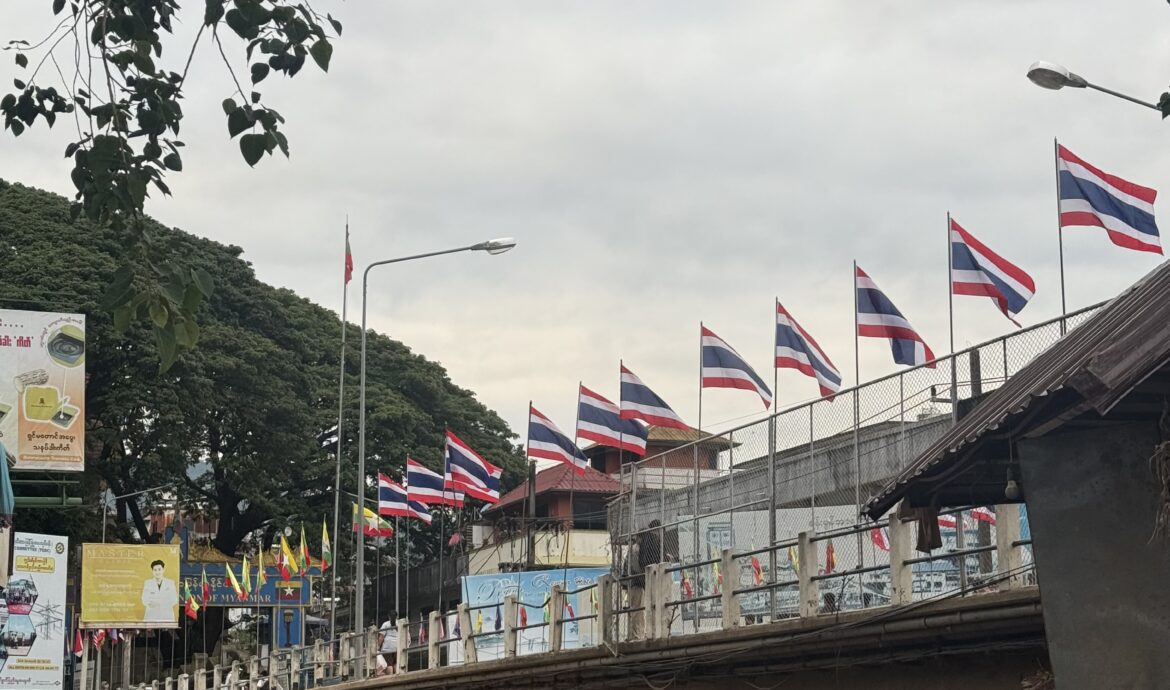
How Myanmar’s Youth Are Escaping a War They Never Chose
PoliticsDisclaimer: The interviewee’s identity has been anonymised. A pseudonym has been used, and no photograph is included to protect their safety.
On the night F crossed into Thailand fleeing from the new conscription law announced in February 2024 in Myanmar, he did not carry much—no passport, no certainty, only the knowledge that staying in Myanmar could cost him his life.
“If you get arrested by the military junta, the consequences are really bad,” he says through an Bermese interpreter. “That is why I crossed to Thailand the illegal way.”
F is from the Bago Region of Myanmar, also known as Berma. Before the country’s future was violently upended, he had dreams far removed from politics and war. He moved to Yangon, a city in Myanmar hoping to become an actor. Instead, he became part of a generation forced into exile.
On 1 February 2021, Myanmar’s military seized power in a coup, arresting elected leaders and overturning the results of the November 2020 general election, which the junta claimed, without evidence, was “fraudulent”. Aung San Suu Kyi, the country’s civilian leader and Nobel Peace Prize winner, was detained alongside senior members of her government on the same day. Overnight, the democracy of Myanmar was stripped away.
The coup sparked mass protests across Myanmar. Young people flooded the streets in defiance, striking against military rule and demanding the restoration of democracy. F was among them. For two to three months, he joined the protest, moving from town to town to avoid arrest as the military cracked down.
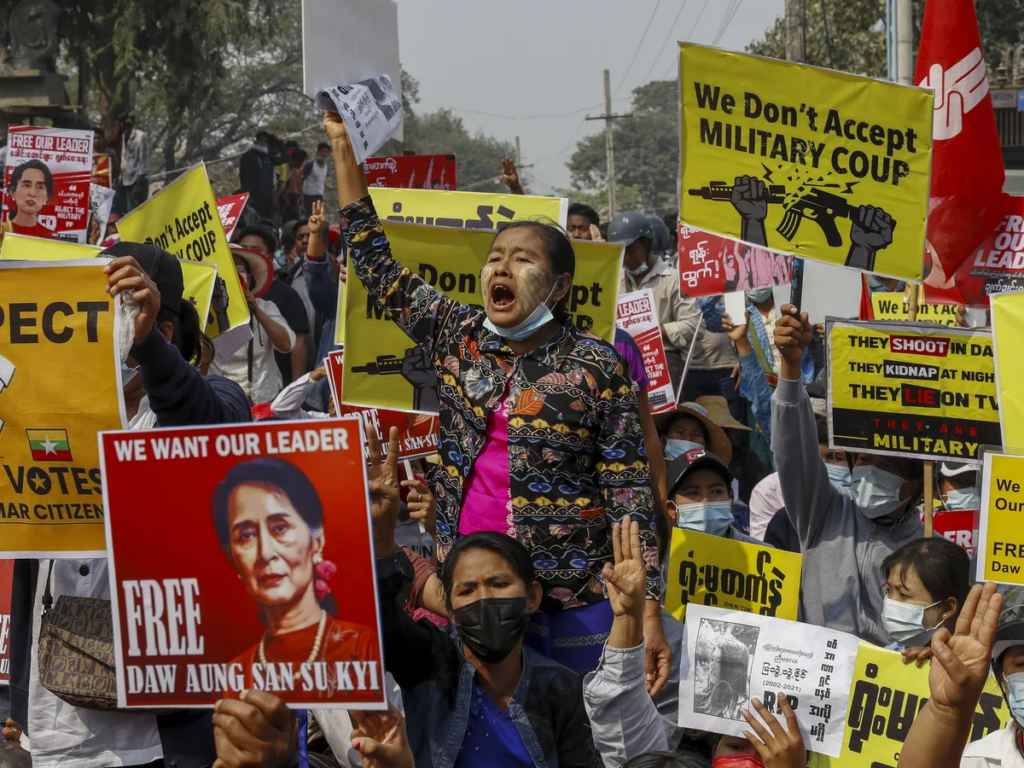
Protest in response to the 2021 Coup | Copyright to The Guardian
The response from the junta was swift and brutal. Peaceful protesters were met with live ammunition and mass arrests. As repression intensified, resistance took on a new form. On 5 May 2021, civilians formed the People’s Defence Force (PDF), an armed resistance movement opposing the military regime.
F’s own brother joined the PDF. “He is fighting,” F says quietly. “I am here (in Thailand) to make money and send it back to my family.”
Today, F lives in Northern Thailand as an undocumented migrant, one of tens of thousands of young Myanmar nationals who have fled across borders since the coup. The announcement of the consciption law by the military junta in February 2024 was the final call for him to leave his country. Under the law, all men aged 18 to 35 and women aged 18 to 27 are required to serve in the military for two to three years, extendable up to five years under the junta’s ongoing state of emergency.
The announcement sent shockwaves through Myanmar’s cities. In places like Yangon, reports emerged of young people being detained and forcibly recruited. Many went into hiding. Others fled the country.
“This law was expected,” F says. “The junta has already done worse things.”
While conscription exists in countries such as South Korea, Finland, Sweden, Norway and Greece and is now debated in places like Germany, the context in Myanmar is fundamentally different.
For many young people, military service does not mean national defence, it means being forced to fight for a regime that has killed civilians, bombed villages and imprisoned political opponents.
“The junta issued this law expecting young people to leave the country,” he says. “Youth are potential enemies for them. They want to reduce the youth population.”
Joining the military to support the junta would be the last thing F would do like many other Bermese youths. If conscripted to the military, it is likely they will be deployed directly to front lines with minimal training, often using them human shields. And more importantly, they will be supporting the military junta and fighting against their own supporters such as the PDFs.
Hence, many Beremese youths flee and seek refugee into neighbouring countries such as Thailand, India and Malaysia. Many arrivals, like F, live without legal status, vulnerable to exploitation and arrest.
Despite the scale of the crisis, F feels the world has turned away.
“I feel like my country is being neglected by the international community,” he says. “Because Myanmar is a small country, they cannot find any interest in us. That is why they forget about Myanmar.”
“The junta are really bad. They are not human,” he says, before pausing. “The international community should not forget about us (Myanmmar).”
“I do not ask for political or economic help, at least humanitarian aid,” he says. “Rather than issuing statements, take relief. I understand the legal complications, but these guys need to be faced with serious actions.”
More than four years after the coup, Myanmar remains locked in a brutal civil war. Villages are razed and young people are forced to choose between fighting, fleeing, or being conscripted into the very army they oppose.
For F, exile is not freedom, it is survival. He dreams of returning one day to his family and back to his country, to a Myanmar where youths are not hunted or drafted and where democracy is more than a memory.
* This interview was conducted in December 2024. Nearly a year later, nothing has changed. The conscription law remains in force, political tension in Myammar continues and young people are either arrested or fleeing their country to avoid forced military service.
Leave a Reply