Media Companies are Ruining the Art in Cinema and Television
Opinion piece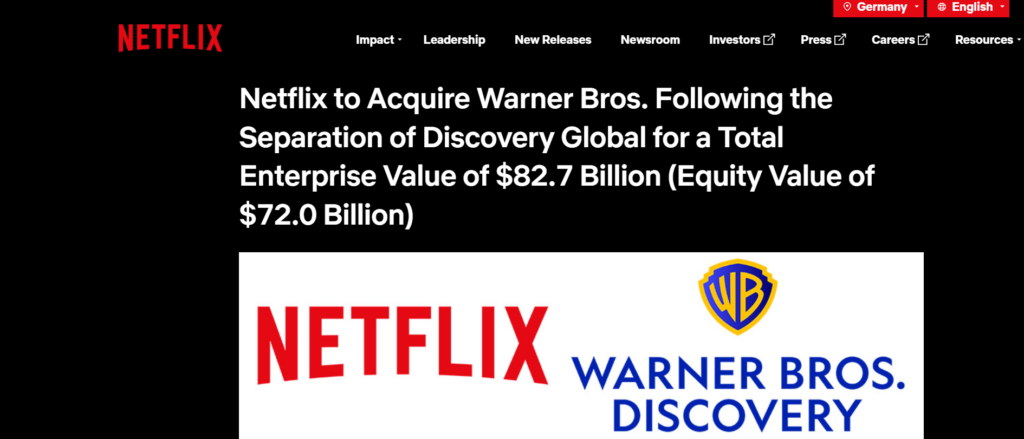
Screenshot of the Netflix Website
https://about.netflix.com/en/news/netflix-to-acquire-warner-bros
In December Netflix bid to buy Warner Brothers Discovery for $83 billion. When this deal was confirmed, many people were unhappy with this decision. This decision was not well received because of comments made by the Netflix CEO. He mentioned that theatrical releases would not be a top priority and instead many movies would have a small theatrical release or would go straight to streaming. In recent year there has been a destruction of the art of cinema and television due to media companies controlling the outputs of their creators. The purchase of Warner Brothers by Netflix is going to cause a major shift in the entertainment industry which will lead to less detailed and intuitive pieces of cinema being created so that they can fit into the Netflix model of producing content. This decision is part off a wider issue that is happening in the media industry which is destroying the artistry within the industry.
Netflix has a model for making content that makes it easy to consume. For its Netflix original productions, it often makes them easy to consume while people are double screening. Double screening is using a secondary device such as a phone or tablet while watching television. Complaints have been made about television shows with complex plots because the audience could not follow with the plot because they are double screening. This has led to these television shows dumbing down the plot and having very the dialog spell everything out. The most recent example of this that can be seen is Stranger Things. Stranger Things was first released in 2016 and is a very narrative heavy sci-fi show. As the seasons have gone on the audience has noticed a decline in the quality of writing in the seasons and the plots have become simplified and has led to a very disappointing final season. In a show that was usually action packed with multiple fight sequences was reduced to mainly the main characters sitting around discussing what they will do. The final fight sequences were underwhelming and was paired with below average writing it made for a disappointing end to a much-loved series. It is a perfect example of what happens when you decide to leave the original spirit of a concept in order to make it more palatable for a wider less engaged audience.
Taking away theatrical releases will impact the production of movies and how audiences consume them for the worse. In the past five years Warner Brothers have released movies such as Dune and Barbie, which are all movies that have benefited from theatrical releases. These movies are meant to be watched in the cinema rather than at home. Dune is a major sci-fi movie which is made better by screening it on a large screen with surround sound. It makes the whole experience of the movie more immersive and therefore gives the audience a better viewing experience and does justice to the production of the movie. Barbie is another example on why theatrical releases are important for movies especially in terms of marketing and engagement. Barbenheimer was a cultural phenomenon which saw people watching both Oppenheimer and Barbie in the same day and dressing up to see these movies. People who would no have seen these movies were going to see these movies to join in with this trend. Without a theatrical release all these movies would not have been as successful as they were.
Media companies are currently working against the best interest of their productions. The purchasing of Warner Brothers by Netflix could mean a dramatic shift in the way movies are released and consumed but as the audience we do have power in this decision. It’s important as audience members we continue to support the cinema industry and see films in the cinema like they are meant to be consumed. We also need to continue to critique bad writing in programmes and encourage television shows with good writing to be continued.
Leave a Reply