School, but Make It Different! The Role of the Media School
Uncategorized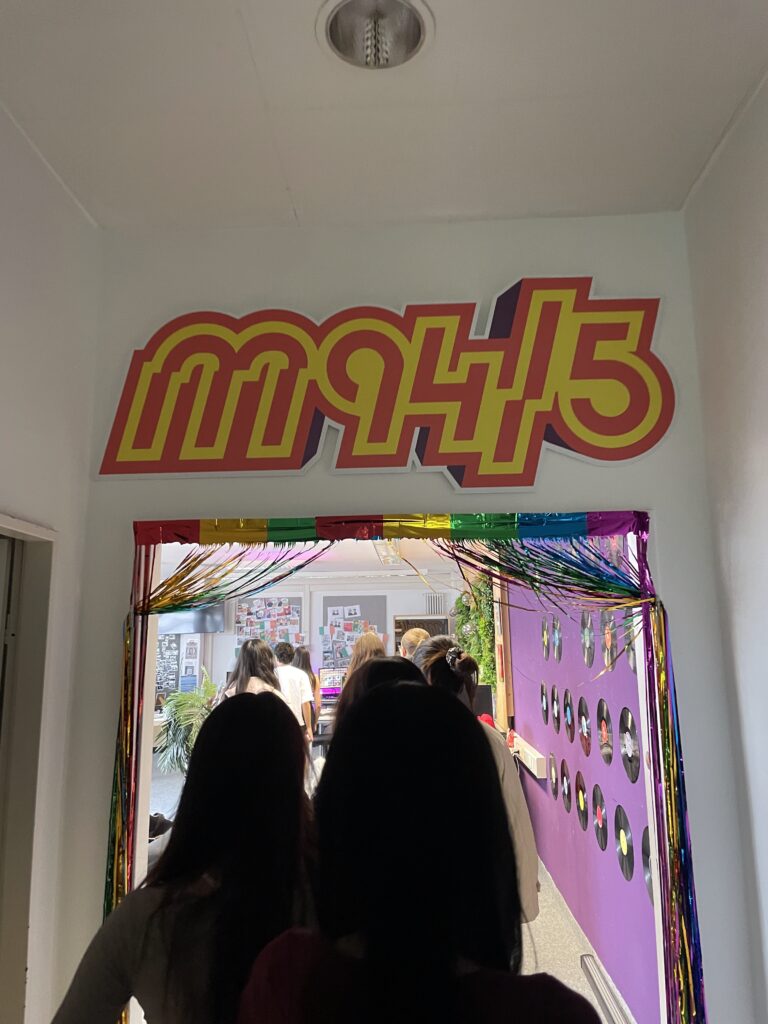
As part of our second excursion, we had the opportunity to visit the Media School in Munich. For those who were not there and have landed on this blog, here is some background information: The Media School was founded in 1994 on the basis of the Bavarian Media Act. Its goal is to provide young people with access to the media industry. In addition, it aims to promote independent journalism and provide modern and up-to-date media education (Media School Bayern, n. d.). According to the Media School, the training programs are free of charge for interns and are financed through a public-private partnership. Young talents can learn there free of charge, while contributing their own projects and content in return. Among the best-known training platforms are the radio station M94.5 in Munich, which we visited, and max neo in Nürnberg, where a different media focus is pursued. Bayerische Landeszentrale für neue Medien (BLM) also describes the Media School as a central institution for the education and training of future journalists in Bavaria (Bayerische Landeszentrale für neue Medien, n.d.).
Based on the journalistic role models of Hanitzsch and Örnebring (2019), I would place the Media School within the informational-instructive, analytical-deliberative, and developmental-educative orientations. On the one hand, it promotes media literacy and democratic participation by teaching information skills and journalistic fundamentals and thereby fulfilling an educational role. On the other hand, interns are encouraged to critically analyze topics, include different perspectives, and think openly and independently. Different sides of a story are always beeing concidered to create strong journalistic pieces and independent content. It was also emphasized that journalistic contributions must be approved before publication for example to ensure practicability and quality. These aspects go along well with the roles of the educator, storyteller, and analyst.
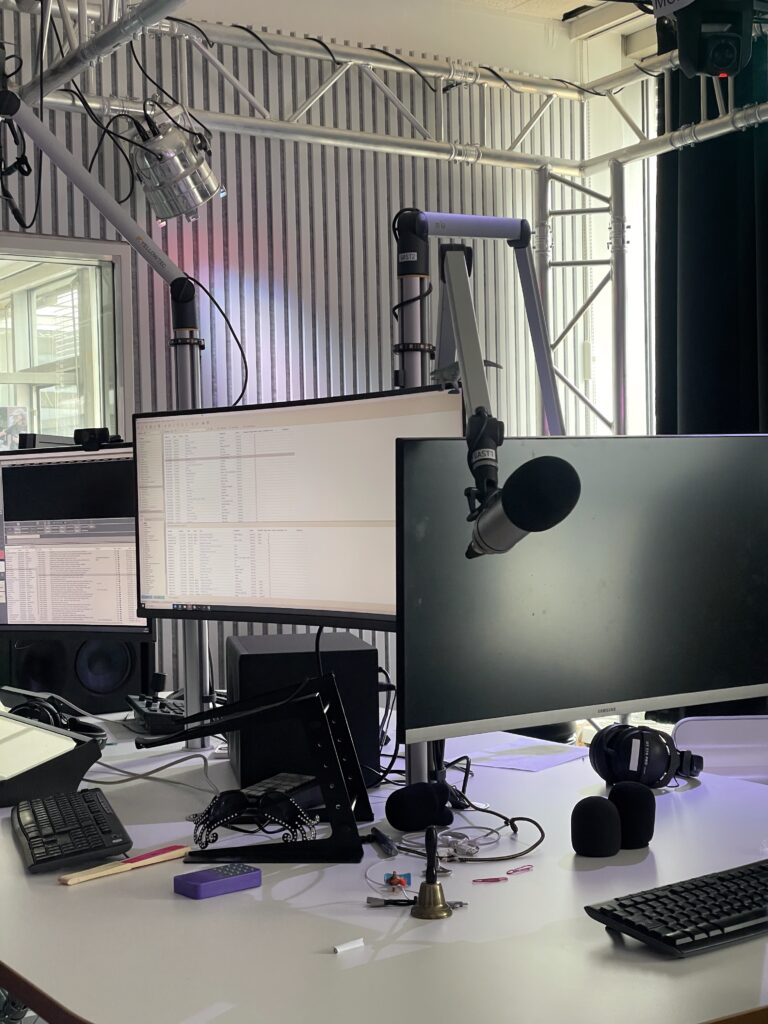
A brief insight into the atmosphere on the Media School campus: During our visit, we saw many interns working together on various projects. There were people recording podcasts, a girl experimenting with a stop-motion-handstand-video in the TV studio, and a group playing Flunkyball outside while filming the game with a drone. It became very clear that the training is highly practiceoriented and that students can try out different things. They develop their own content, pitch topics, and produce media in all kinds of formats. I was particularly impressed by the technical equipment they have, including modern radio studios, a TV studio, green screens, mobile camera systems, flexible production spaces, and all kinds of equipment ranging from microphones to professional photo and film cameras. At the same time, we also met people with greater responsibilities, such as André, who is responsible for programming schedules and editorial decisions.
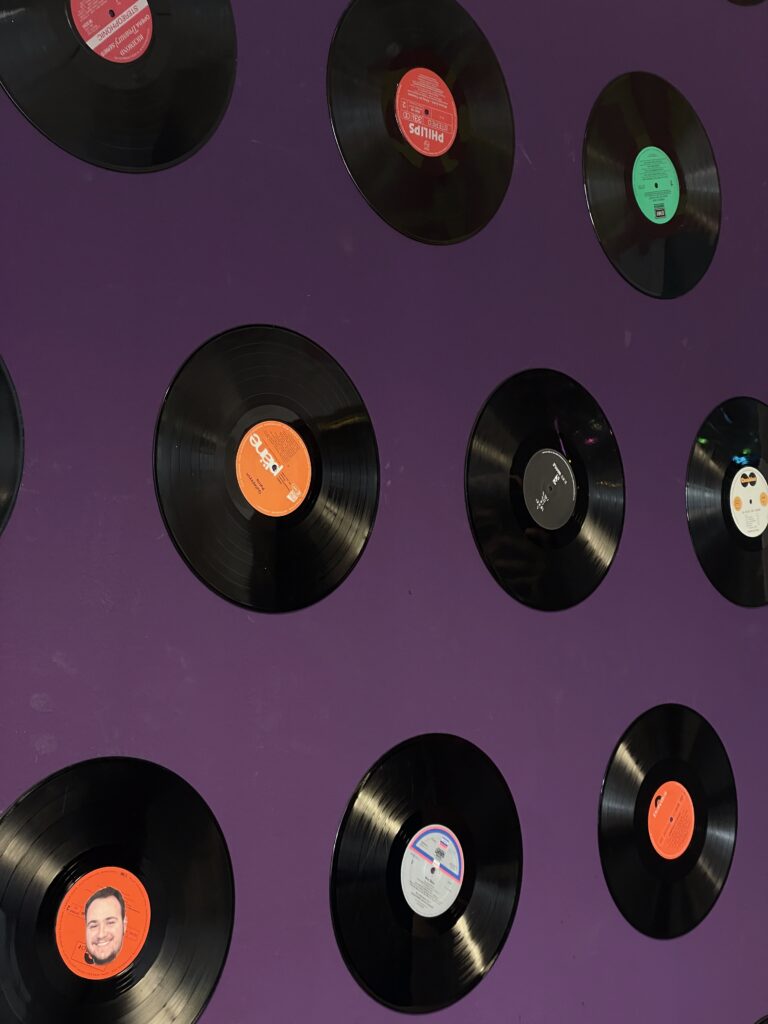
With regard to the journalistic values represented by the Media School, media literacy, equal opportunities, and democratic participation stand out. As already mentioned, internships are free of charge, meaning that access to journalistic education does not depend on financial resources. In addition, the institution enables young people to contribute their own topics and perspectives, creating opportunities for independent journalism that may be less common in established media institutions. As on their website, this contributes to strengthening democracy and creating space for social cohesion (Media School Bayern, n. d.). In a broader sense, the Media School also represents key journalistic values that are reflected in the German Press Council’s Press Code. Particularly evident are the principles of accuracy, truthfulness, and journalistic independence. Students learn to research information independently, include multiple perspective and produce content responsibly. Also, decisions are intended to be made independently of economic or political interests. By promoting media literacy and democratic participation, the Media School transport an understanding of journalism that embraces social responsibility (German Press Council, n.d.). Furthermore, the institution emphasizes equal opportunities, diversity and the promotion of gender equality in its interns, which also relates to the broader value of nondiscrimination (Media School Bayern, n. d.).

Nevertheless, there are also aspects that should be viewen critically. Although the Media School emphasizes its journalistic independence it is partly funded by public institutions and media partners. This raises the question of how independent such an institution can truly be in terms of published or educational content when it is supported by actors who are also part of the media system or economic structures. During our visit, however, it was clearly stated that journalistic integrity is maintained. Another aspect that caught my attention is the strong focus on digital platforms. Especially today it is important that journalistic formats fulfill the quality standards neccessary for audiences to place trust in the content published by the Media School. Connected to this is the idea that interns are allowed to implement almost anything they can think of. While it was mentioned that some projects are rejected because they are “just too stupid,” the basis for these decisions was not really explained or clarified according to which guidelines journalistic content is evaluated and approved. Regarding communication with different target groups, I noticed that almost exclusively younger employees and students were there at the Media School. External perspectives or the viewpoints of other generations therefore may be underrepresented. Since we were also told that students can pretty much do and implement everything they want, I would describe the working approach as being more creative than journalistic. In my opinion, there should be a clearer contrast regarding published content between purely creative work and journalistic pieces, so that audiences are not misled by the information presented.
Overall, however, I was genuinely impressed by the Media School and consider institutions like this to play a highly important role, especially for our generation and the digital age. It offers the opportunity to experience journalism and media production through active practice. What I find particularly outstanding is that everything is free of charge. Coming from my homecountry Austria, I do not know of a comparable institution that offers young people such opportunities on such a large scale. Because I already worked for the ProSiebenSat.1 Media Group, I can also very well imagine returning back to Munich after my exchange semester and perhaps doing my next internship there myself.
Sources used:
Bayerische Landeszentrale für neue Medien. (n.d.). Media School Bayern. Retrieved June 18, 2026, from https://www.blm.de/de/wir-foerdern/aus-und-fortbildung/mediaschool-bayern.cfm
Deutscher Presserat. (n.d.). Pressekodex. Retrieved June 18, 2026, from https://www.presserat.de/pressekodex.html
Hanitzsch, T.; Örnebring, H. (2019). Professionalism, Professional Identity, and Journalistic Roles. In Hanitzsch, T. (Ed). The Handbook of Journalism Studies. 2nd Edition. Routledge.
Media School Bayern. (n.d.). Media School Bayern. Retrieved June 18, 2026, from https://www.mediaschool.bayern/map
Leave a Reply