The Freedom to Fail: My Field Trip to Mediaschool Bayern
UncategorizedWalking into a professional media studio usually comes with an underlying sense of tension. In the mainstream media world, airtime equals money, ratings dictate survival, and mistakes are incredibly costly. But during our recent field trip to Mediaschool Bayern, which is the training academy behind Munich’s student station M94.5, I encountered a completely different philosophy. It is an environment built entirely around the radical freedom to explore, experiment, and honestly just mess up.

The experimental television studio at Mediaschool Bayern. To understand how a space like this can even exist without worrying about profit, you have to look at how it is structurally set up. Mediaschool Bayern operates as a unique public-private partnership. Its main shareholder is the Bayerische Landeszentrale für neue Medien, the regulatory authority for media in Bavaria, alongside twenty-five other private and public partners including local universities and commercial broadcasters. Because it is a non-profit training academy, its funding is entirely decoupled from commercial ad revenue or student tuition. They do not monetise the content the students produce, and the shareholders have absolutely zero say in editorial decisions. This unique setup creates a protected sanctuary for young media makers to learn with full journalistic integrity.
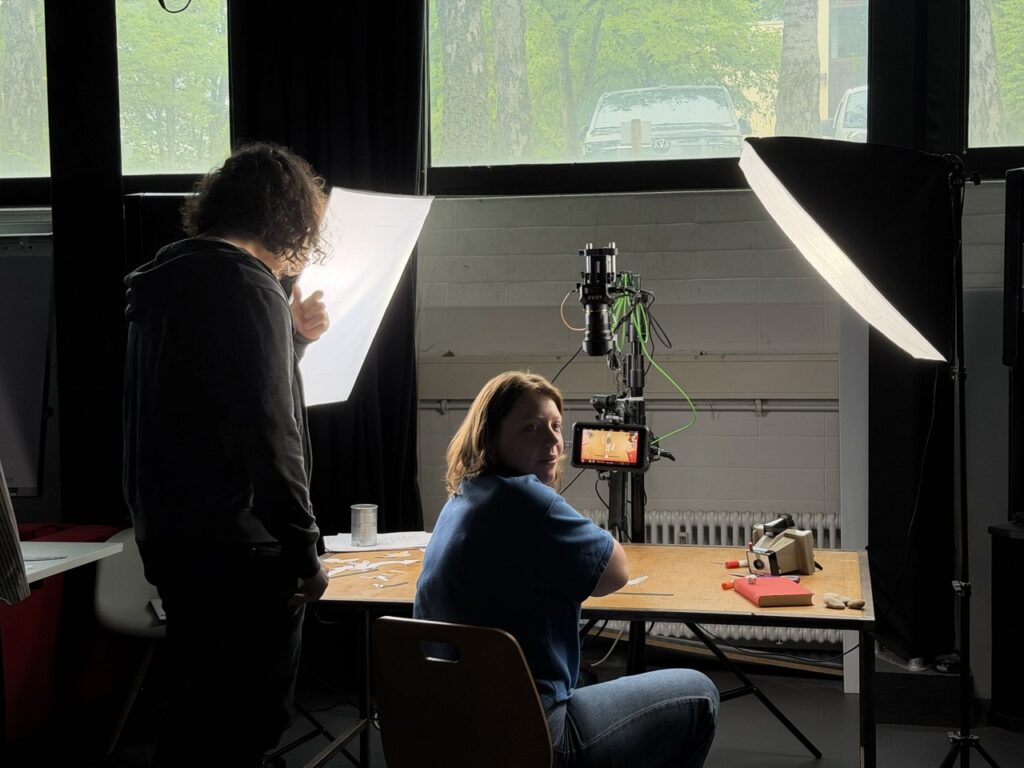
During our tour, the team gave us insights of their massive, state-of-the-art live radio and television studios. We got to see how the live mixing boards work and how they track audio playback durations. The radio side is highly structured around live, fixed slots throughout the day, focusing on an informative magazine format that acts as a heartbeat for what is currently happening around Munich.
What struck me most was just how much creative freedom the students actually have. Most of the time, interns come in with their own organic, quirky ideas. For instance, they told us about a social media reel series where a student simply traveled to the final stop of various Munich S-Bahn lines just to explore what was out there. The strategy behind their multi-platform approach feels incredibly deliberate because they do a little bit of everything. Radio is kept hyper-local, live, and informative, while YouTube is a balanced mix of deep-dive information and entertainment. TikTok is used purely for entertainment and chasing trends. They even have the infrastructure to stream on Twitch, though that does not happen often yet because people are still just learning the basics. It is an incredibly experimental space, and the biggest luxury is that it does not matter if a video completely flops. Because their funding is stable, students never have to prove themselves to advertisers.
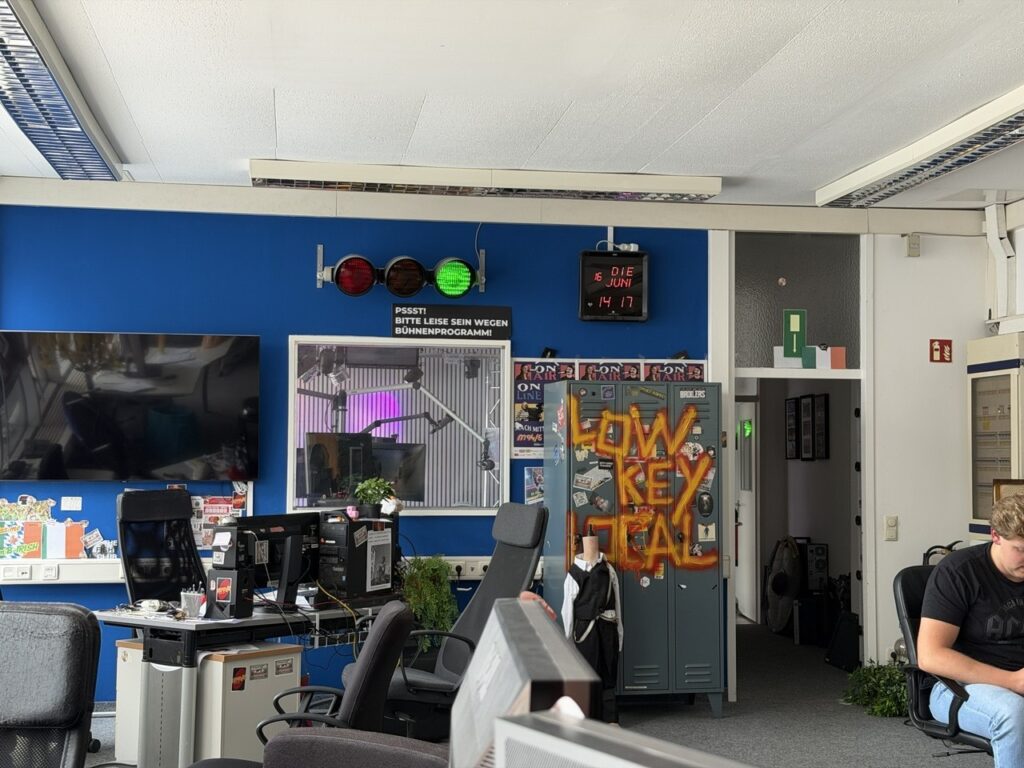
Looking past the impressive studio gear, the trip gave me a lot to think about regarding how media education intersects with the real world, and it left me weighing some major pros and cons.
On the positive side, Mediaschool Bayern plays a massive role in democracy and media education. By offering free, hands-on training to students and young creatives, and even accommodating international perspectives by allowing projects in English, they open doors that are usually locked behind expensive private tuition. They teach the core values of the German Press Code, like strict verification and keeping editorial content independent from outside influence. By removing performance anxiety, they give students the psychological safety to try weird ideas, learn the technical ropes, and find their creative voice.
But I think it is also important to look at the setup with a critical eye. There is the issue of unpaid internships. The fact that the students interning here do not get paid is a major downside. Even though the education itself is free, full-time unpaid labor creates a socio-economic barrier. Students who need to support themselves financially might not be able to afford to take up these opportunities, meaning the system inadvertently favors those who already have a financial safety net.

Ultimately, Mediaschool Bayern is a fascinating case study in what media education looks like when you remove commercial greed from the equation. It proves that when you protect young creators from the frantic chase for algorithms, you get genuine curiosity and robust ethics. However, as future media professionals, we have to stay aware of the gap between this idealistic training ground and the economic realities waiting for us on the outside.
Leave a Reply