Final Blogpost
UncategorizedOver the past few weeks, I have had the wonderful opportunity to explore Munich’s vibrant media scene through a series of field trips and research visits. From witnessing behind-the-scenes action in Media School and print houses to learning about AI’s role in journalism, these experiences offered me a clearer view of the evolving media landscape. Here’s what I’ve taken away academically, personally, professionally, and how I imagine the future of journalism could unfold.
Understanding the Media Landscape in Munich
Munich’s media landscape is definitely both rooted in legacy and energized by innovation. Through my field trips and research, I’ve come to see the city not just as a media hub, but as a living case study of how journalism adapts to cultural, political, and technological shifts. With earlier visits to a traditional news print house and local news offices to visiting Media lab where there are constant innovations for startups in the journalism industry, I have witnessed the media landscape in Munich spanning from legacy institutions steeped in tradition to agile startups redefining journalism through technology
Print operations in Munich are still massive and sophisticated. The second printing press we visited was truly one of the most memorable field trips we went on this entire semester. It was fascinating to see how it was fully automated, running at 28 miles per hour, replacing ink and paper rolls with barely any human input. While many cities have seen their print media hollowed out, Munich’s newspapers still act as anchors of public discourse. But even legacy media must earn relevance daily and it does so by blending credibility with community responsiveness.
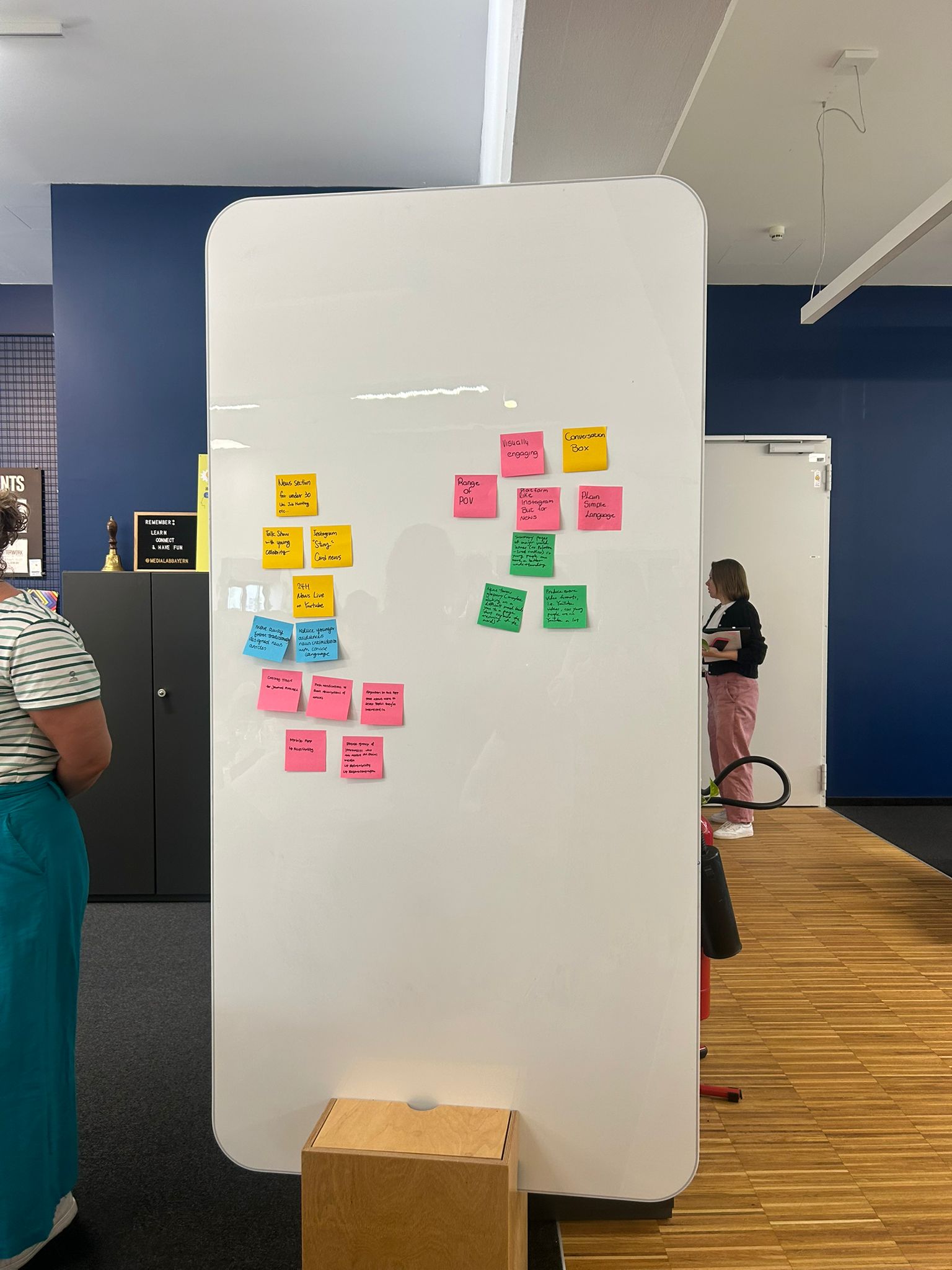
What makes Munich’s media landscape particularly exciting is its commitment to innovation. Media Lab Bayern is the clearest expression of this. With 120+ startups and a strong representation of women in leadership, the lab is actively shaping journalism’s next frontier. The experience of trying to come up with an innovative solution for common problems in the media landscape in Munich using the design thinking principle was also thought-provoking. It truly let me understand what the process of innovation looks like in the field of journalism. As an Information Systems student in my home country, I have come across the design thinking process in terms of creating user-focused solutions for businesses using technology. It was interesting to see how the same principles applied to a completely unrelated field. Munich isn’t just preserving journalism, it’s actively prototyping its future. And that future is collaborative, multilingual, AI-assisted, and socially aware.
Future of Journalism
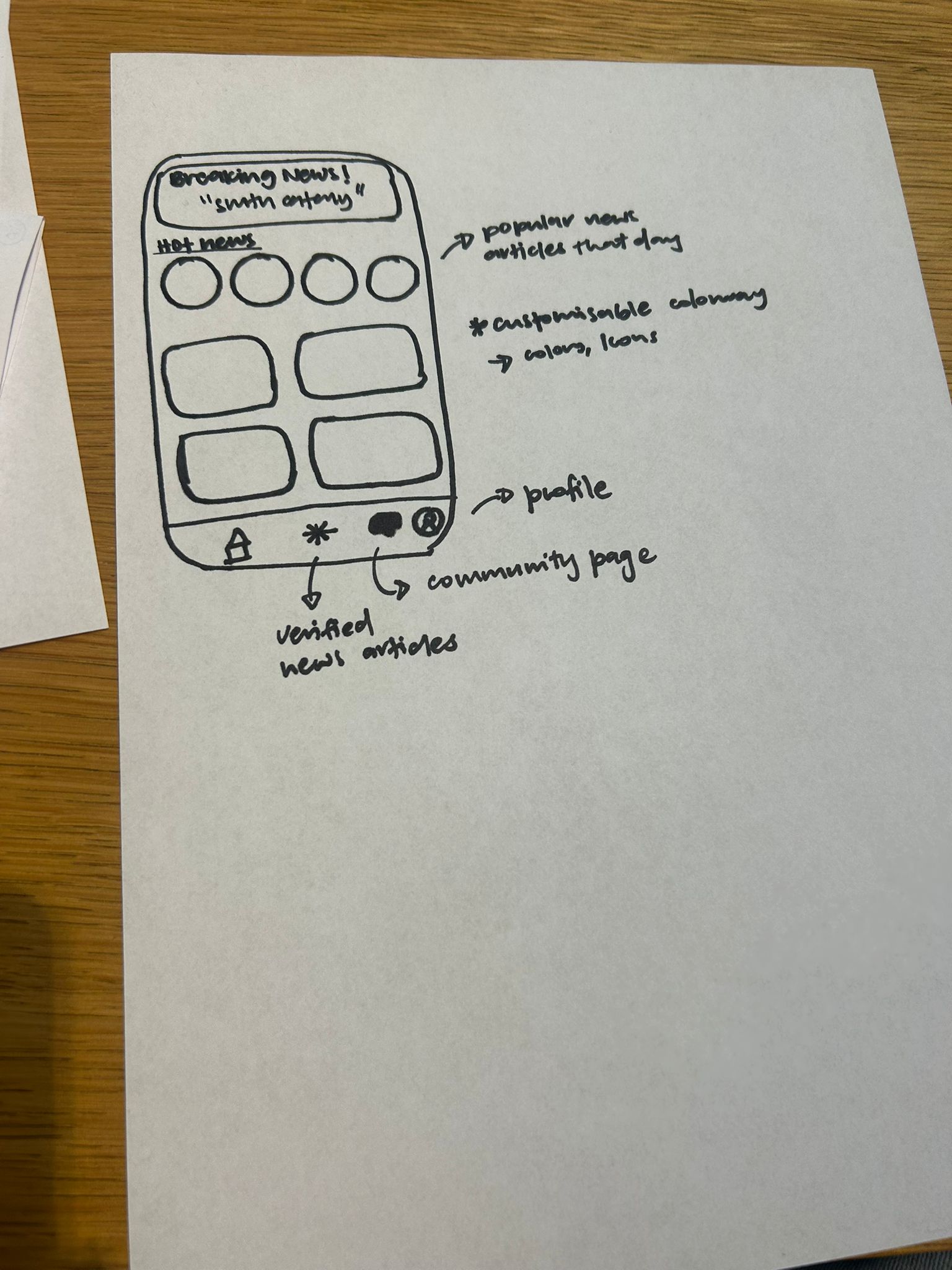
Based on what I’ve seen, I believe the future of journalism isn’t one thing — it’s a hybrid. A space where automation handles the mundane, but humans shape the meaning. A newsroom that listens before it publishes. A future where technology empowers inclusivity, and ethical standards evolve with new challenges.
We often think of journalism as products such as newspapers, shows, or articles. But it’s better seen as a practice that is rooted in trust, curiosity, and responsibility. If it continues to reflect diverse voices, experiment with formats, and question its power, journalism won’t just survive — it will lead.
Personal and Academic Learnings
Academically, this journey taught me about innovation, ethics, and evaluation. But personally, what lingered was the human side of journalism — the widow who called a newspaper about her phone bill and ended up sharing the most-clicked story that month. Or the interns at M94.5 who were learning to tell stories with autonomy and voice. Or the journalist who admitted her frustration with opinionated reporting.
These moments reminded me that journalism isn’t just about big headlines — it’s about small truths that touch real people.
Leave a Reply