Where Technology Meets Emotion: Livestreaming and the Future of Concerts – A Dialogue with Cyril Zajac
Interview . MediaFor my master thesis on livestreaming and the music industry, I used this assignment as an opportunity to interview Cyril Zajac, CEO of Omnilive. What followed was a conversation about his own professional journey, the shifting logic of digital broadcasting, and moreover the strategic place livestreaming occupies in today’s entertainment landscape.
Professional Trajectory and the Origins of Omnilive
A quick scan of your career shows a shift from traditional audiovisual production to livestream technologies. What animated that choice? Who are you?
Zajac’s path into livestreaming began long before the word became mainstream. He spent more than thirty years in audiovisual production (directing, supervising, post-producing) before gradually realising that the grammar of filmed performance was being rewritten by digital platforms. What motivated him was not abandoning production, but redesigning it for an environment where viewers expect immediacy and flexibility.
For readers unfamiliar with your work, how would you describe Omnilive?
As he puts it, “We create the conditions for viewers to put the show together themselves.” He describes Omnilive as a technological “enabler,” a software layer that allows viewers to switch between camera angles instantly, like choosing tracks on a DVD, but in real time. Omnilive emerged from a simple observation: the tools of broadcast were evolving faster than the industry that used them. “The product changed, not the ambition,” he told me. The goal is not to replace traditional filming, but to give audiences the ability to “direct” their own experience.
Business Insights and the Logic of Livestreaming
You once said that YouTube is already the biggest TV channel in the world. How do you understand this shift in consumption habits between traditional media and digital platforms?
For Zajac, the distinction between television and digital video has already collapsed. Audiences move fluidly between screens, spaces, and formats, no longer differentiating between a concert hall, a laptop, or a phone. He sees this as a foundational shift rather than a temporary change accelerated by the pandemic. “People don’t care about the medium anymore,” he said. “They care about the experience.” This, in his view, is why livestreaming is not an imitation of live events but an extension of them, one that responds to how culture is consumed in an age of infinite content.
You said in an interview that ‘what creates links and emotions after a show is sharing each person’s focus or point of view.’ What do you mean by that? How does Omnilive fit into this?
Zajac believes that the emotional power of a concert does not lie only in what happens on stage, but in the conversations that follow, when people discover that they watched the same performance differently. Livestreaming, when done well, can recreate that multiplicity rather than flatten it. He emphasised that multi-view formats are not a gimmick but a way to restore the richness of the in-person experience. Thus, omnilive aims to give online audiences access to that same diversity of perspectives.
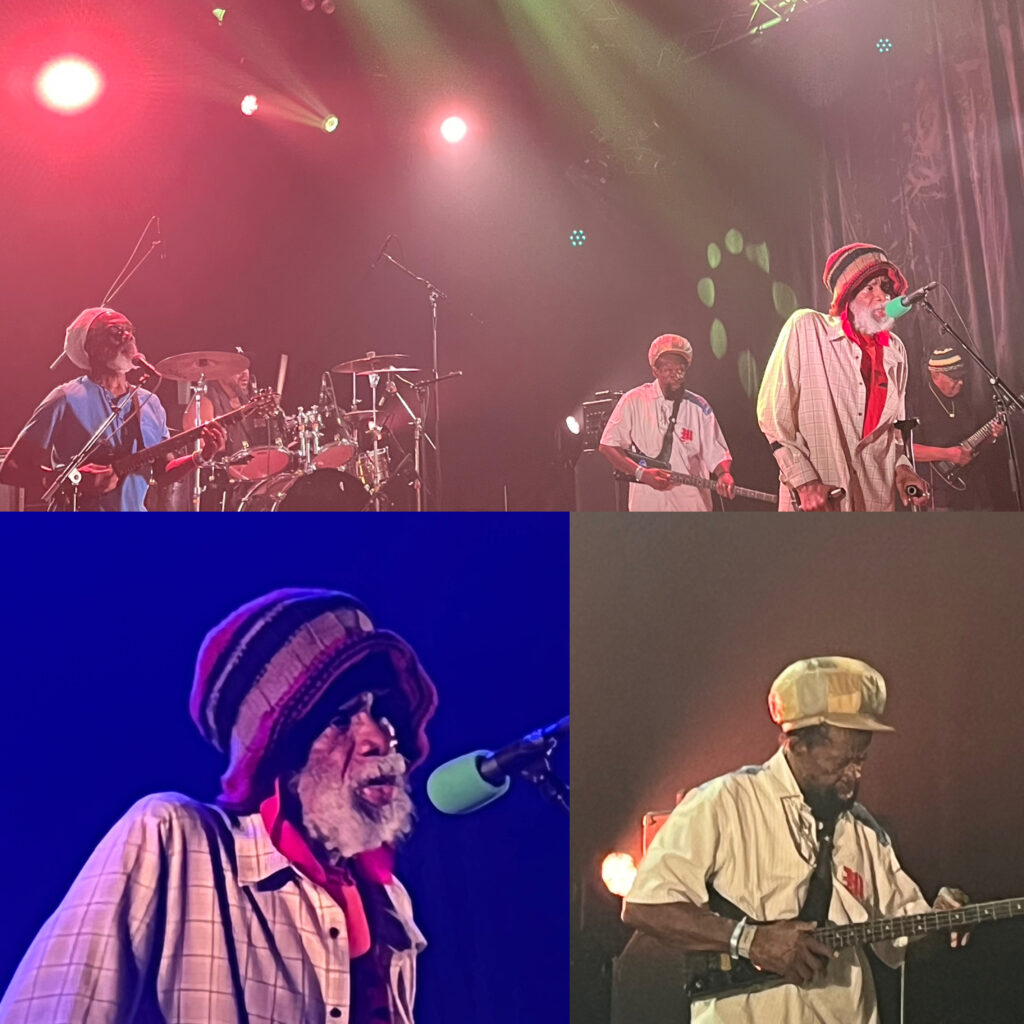
An Israel Vibration gig, seen from different angles
Master Thesis Perspectives and Personal Reflections
From your perspective, is livestreaming the future of the music industry?
Zajac pushed back on the idea that livestreaming represents the “future.” For him, the transformation already happened years ago, we are now living in its aftermath. “We’ve already lived the transformation,” he insisted. “What’s left is to implement it properly.” In his view, livestreaming is not replacing concerts but expanding what the industry can offer, particularly in a world where attention, not scarcity, defines value.
As someone hoping to work in this environment, I’m curious: what is the place of personal editorial vision in such a technologically driven context?
He reassured me that editorial sensibility remains central, even as tools evolve. At Omnilive, they recently created an internal studio to develop formats and accompany partners creatively. Technology, he explained, is only meaningful when it serves a coherent artistic vision. “Tools don’t replace storytelling, they amplify it.” We agreed to stay in touch so he can read parts of my research as it progresses and perhaps explore future opportunities together, and in that sense this conversation was not simply an assignment but already a step toward the world in which I hope to build my career.
Leave a Reply