What happened to newspapers? A comparison between printhouses (SZ and Athesia)
Excursions . MediaWhen we think of media nowadays, our minds usually jump to the Internet and its addicting social media feeds. Online news are characterized by catchy and quick information, whose power is strong enough to make us scroll for endless hours on a screen. Yet, although companies currently race to become more and more digital, I find it fascinating to return to the origins of communication, take a step back, and embrace a slower pace of life.
In today’s blog I want to talk about newspapers and printhouses, more specifically, the roles and missions of two publishing giants: the Süddeutsche Zeitung in Munich (DE), which I explored through research, and the Athesia Group in Bolzano (IT), which I had the privilege of visiting personally with my home university class this past February.
The State of Print
To understand these companies, we have to look at the numbers. Since 2011, the circulation of German newspapers has been in steady decline, a trend mirrored in Italy as well. In 2024, approximately 10 million print copies were sold in Germany, a stark drop from 18 million in 2011.
However, print is not dead; it is evolving. Digital subscriptions are rising fast, now accounting for nearly half of the total ones. Data from Süddeutsche Zeitung (2024) shows that while they sell an average of 250,000 print copies daily (reaching 1.3 million readers), their digital strategy is becoming their lifeline. This proves that while the medium is changing, the hunger for reliable news remains.
Süddeutsche Zeitung and Sustainability
From my research on SZ, I learned that this centre-left powerhouse is battling the decline of print by focusing on efficiency and ecology. One of the main features of their facilities is, indeed, the commitment to the environment. Built on the outskirts of Munich to reduce city traffic, there’s a building in Steinhausen, whose plant is a model of green industry. They use 100% recovered paper, recycle aluminium printing plates, and filter chemicals to drastically reduce carbon emissions. This is just one of the reasons why such a company thrives in the industry, as it cares not only about producing and selling, but also about doing it in a way that sustains our future.
Inside Athesia
Walking into the Athesia’s facility in Bolzano offered a different kind of awe. What stroke me the most was the long history behind the company and the appreciation to both the territory and its citizens.
As a matter of fact, founded in 1888 (originally as “Tyrolia”), Athesia is woven into the DNA of South Tyrol. It survived the suppression of the Fascist era, where it was forced to change its name to “Athesia” (Latin for the Adige River) and emerged as a crucial pillar for the German-speaking minority.
During our tour, the versatility of the plant was incredible. We saw where they print all the different supplies: from school textbooks and calendars, to flash news updates and articles. I was particularly fascinated by the juxtaposition of the newspapers on the production line. Seeing the Dolomiten (historically the voice of the German Catholic population) printed alongside the Alto Adige (the Italian regional paper) in the same room was a bit surprising. Despite their different languages and historical ideologies, they are birthed from the same ink and iron.
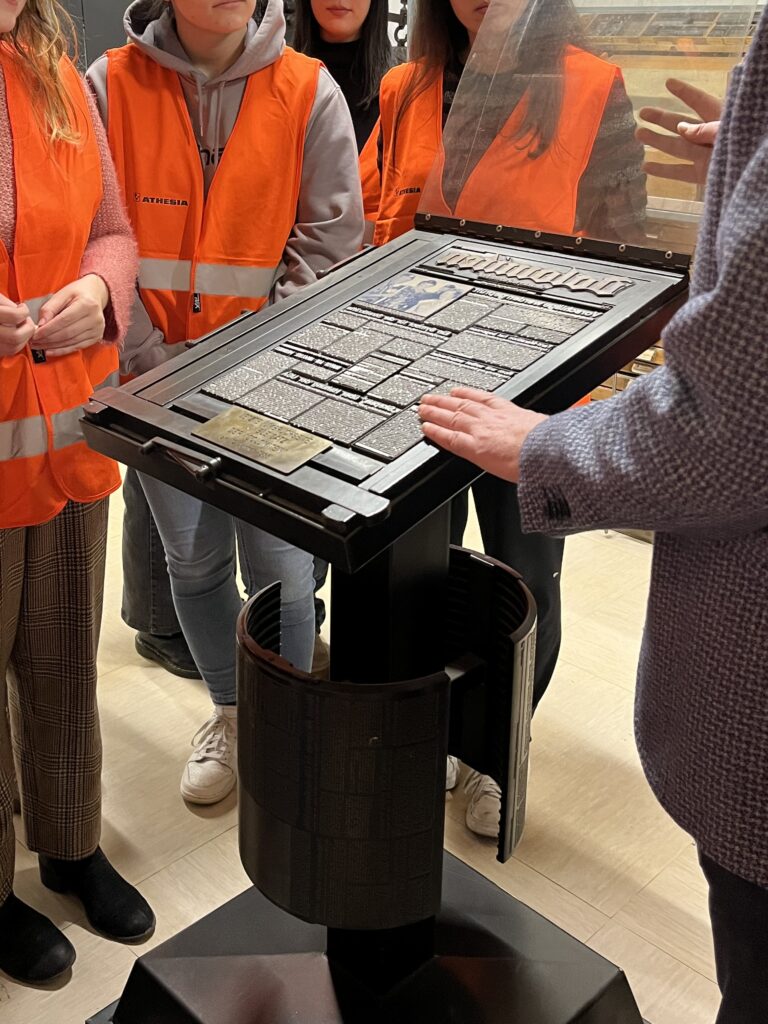
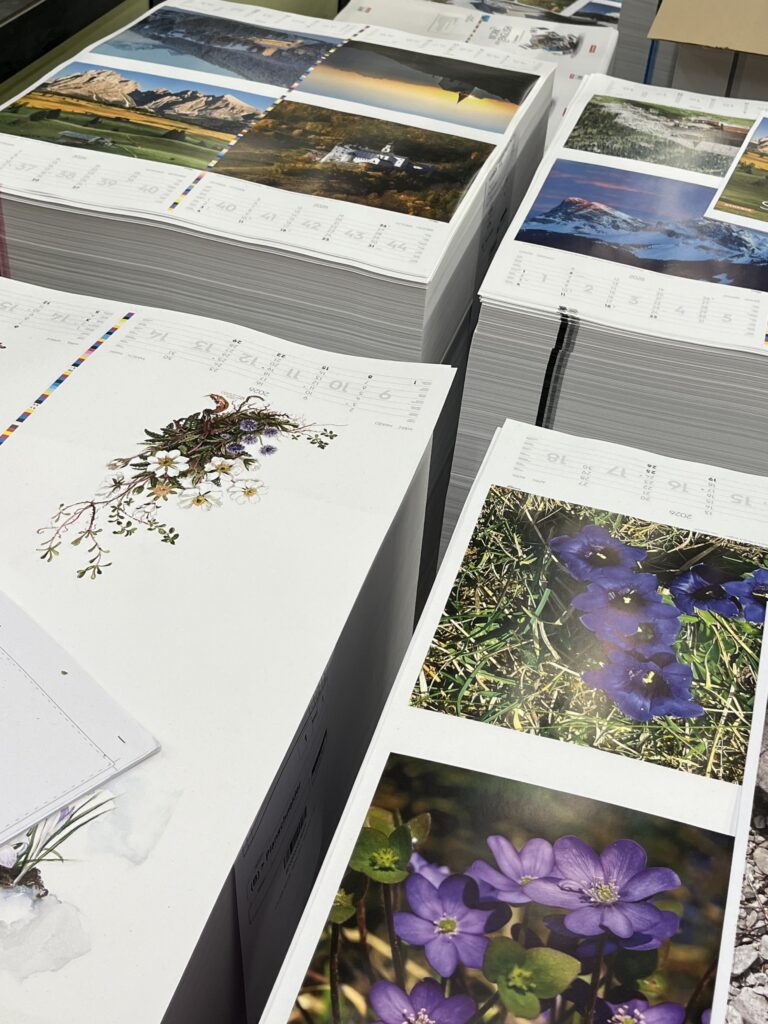
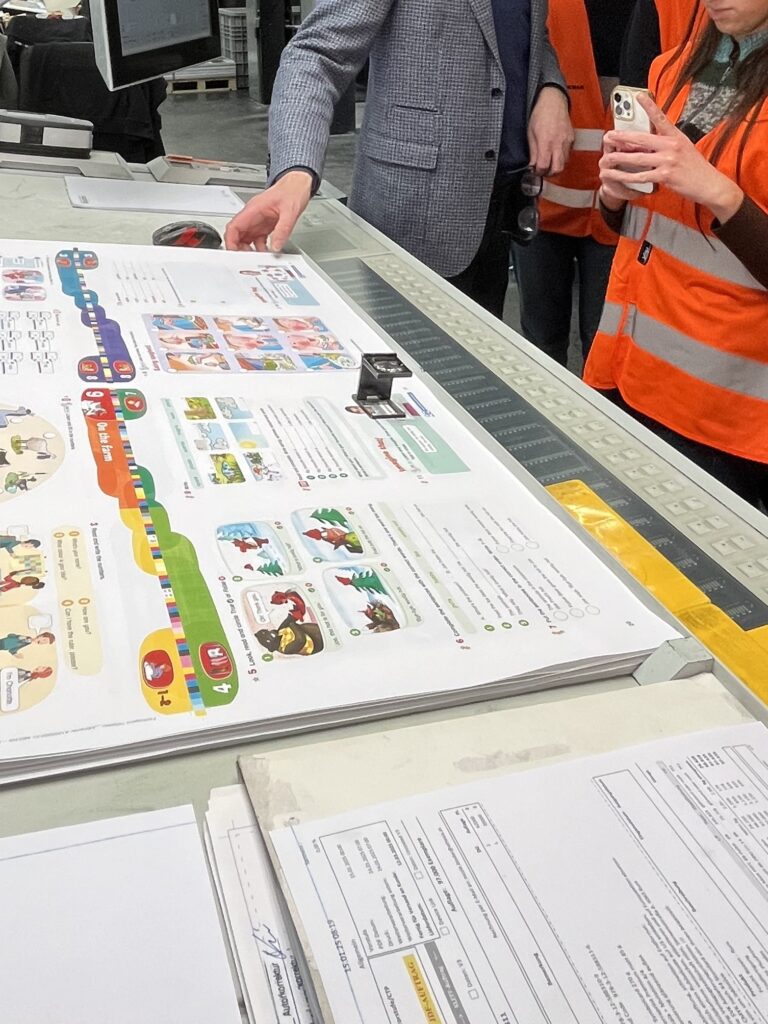
Fotos of the trip to Athesia’s printing house (Source: Anna Dal Bo’s Photos – Feb 2025)
The highlight of the visit was undoubtedly the discussion with the CEO from the Ebner family. Michl Ebner explained to us all the other different sectors where the company works and cooperates. I personally found this last part of the trip the most interesting one, as it made me deeply understand why Athesia isn’t just a publisher, it is a diversified conglomerate of spanning tourism, energy, and retail.
Conclusion
While SZ impresses with its ecological modernity and national reach, Athesia impressed me with its cultural weight. It is a “machine” in every sense: a political, economic, and industrial force that literally prints the identity of South Tyrol, one page at a time.
It was fascinating to go back in time and understand that although we move quickly as a society, some things stay the same. Visiting Athesia gave me a chance to see how the history of our territory is still being written (and printed) every single day.
Leave a Reply