Seen but Limited: Queer Identity in the Thai Entertainment Industry
Society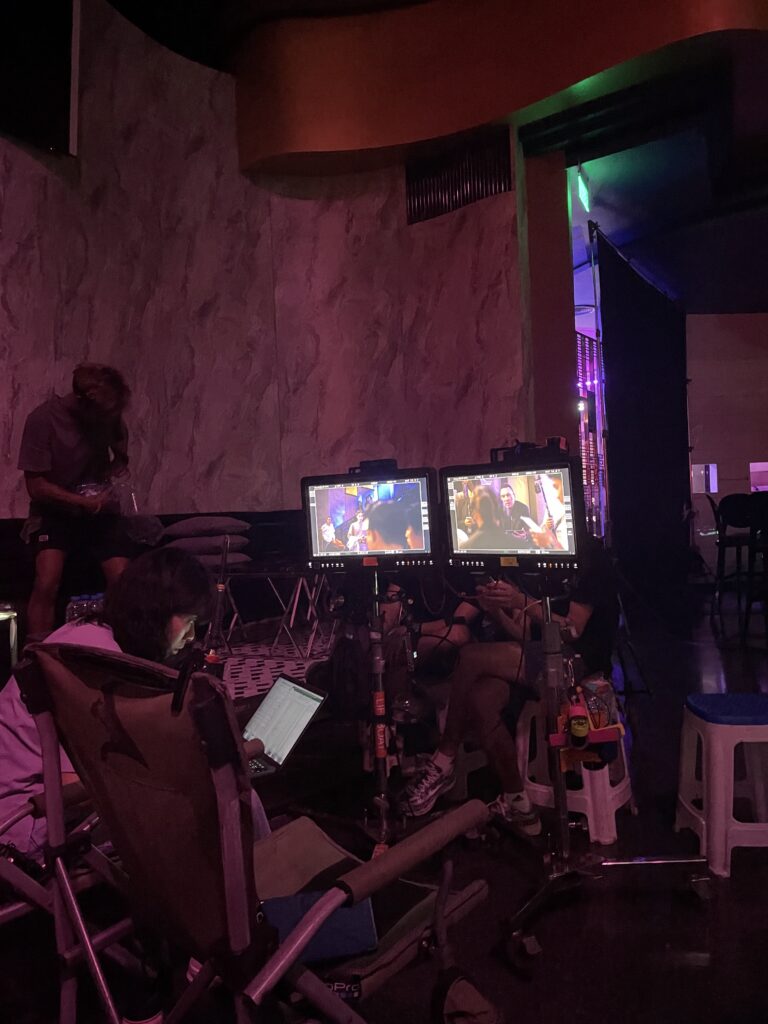
The lights on the set of Taste are ready for today’s shooting, marking the spot for actors to be on their scene. While others’ scenes are filmed, Obey Punnavich focuses with his script and tries to connect with his character, preparing for his take. One of the set prop’s staff walks by and laughingly says “You would be so perfect for a camp or comedic role just like other queer performers in the past, and you are naturally funny just like that.”
Obey is a bit shocked but laughs politely, as a typical Thai person’s reaction. However, we meet later, within our safe space away from the set’s crews and any judgement. “I know he doesn’t intend to hurt me, he is just from the old generation,” He says a bit shakenly. “But sometimes it feels like I don’t belong here cause people just justify my gender orientation and my identity, I don’t know even before the audition”
I personally have known Obey since grade 10th, long before kitchens and set scenes. Back when we’re in high school together, he was one of those people that had such a unique personality and effortlessly indescribable aura. From the way he expressed himself to his decision of life. While typical Thai students go to university after high school, he chose culinary school as his path at Le Cordon Bleu Bangkok. It was such a daring move for him, especially in the culture where academic achievement is treated as a source of pride for the whole family. Also from cooking in a kitchen to acting on a mainstream series, every step he has taken is far away from a normal Bangkok student path. It is always this unconventional journey that shaped him to be his today’s version.
However, as a gay actor portraying a queer role in his very first work in the industry, the path ahead is not as easy and clear as it seems.
A story among others
Unfortunately, many can relate to what Obey experienced. While Thailand markets itself for diversity, especially queerness representation like same-sex marriage or BL series, behind the scenes of its entertainment industry hides s complicated lore. Many Thai LGBTQ+ actors are still tied into stereotypical and predictable roles: the comedian, the flamboyant side character, the exaggerated role whose purpose is to mainly entertain, not to lead.
“It feels like they have decided what kind of character I should be,” Obey says. “Most of the time, even before I open my mouth.”
His frustration reflects a deep rooted systematic issue. The Thai entertainment industry embraces LGBTQ+ community in a notably shallow way. Seemingly just for the aesthetics and marketing, but offers very limited space for actors in the community to play more diverse, complex, or leading roles. The acceptance might exist, but definitely selective.
Visibility with Limits
Thailand’s “boy love” (BL) series, has been widely popular among both domestic and international audiences. These series unarguably increased the visibility of a non-societal constructed relationship or queer couple. However, According to the report by DW (Thai BL & Representation Challenges) most critics also point out that this genre does not portray the real diversity of LGBTQ+ people, conversely depicting the unrealistic and romanticized gay couple plot with marketable characters instead of opting for the real-life scenario within the community (DW).
This contradiction is the reason why queer actors like Obey can feel the mixed feeling of visible and restricted. They are demanded to be in the story which celebrates and showcases queer romance, meanwhile, sweeps all of the crucial parts of gay identity under the rug.
Typecasting, Stereotypes, and silent discrimination
For many Thai queer actors, typecasting is undoubtedly inevitable. Thai producers sometimes perceive queerness with a certain point of view: sassy, loud, humorous, exaggerated. Although none of these might seem to be negative, the repetition can be seen as stereotypes and a form of constraint.
Obey describes “I mean, I don’t dislike these roles. But I’d like to try more things in my career. Sometimes the industry kinda puts us into a certain box they want us to be.”
Most portrayals of gay romance from Thai BL also repeatedly follow and strengthen gender nominative roles and stereotypically idealized gay couples, seeing that one partner is typically “masculine” while the other is more “feminine.” Critics argued that this pattern of fantasy version of queerness perpetuated the traditional binary norms rather than challenging gender and sexuality stereotypes or broadening representation. DW (Thai BL & Representation Challenges)
This structure has consequences. Queer actors who desire to be in mainstream roles can face numerous obstacles including, limited casting opportunities, fewer leading roles, deals that prefer “straight-passing” faces, or the pressure to align with stereotypes that appeal to mass audiences.
“One of the senior queer actors describes his experience to me “it’s like we’re being allowed to exist, but not to grow in this industry.” Ober tells me. Their experience points out what is an actual behind the scenes where the visibility and acceptance comes with the unspoken limitations.
A closing scenario
As filming ends for the day, Obey steps out of the set into the vibrant Bangkok night, scrolling through supportive messages from his fans from Taste. He feels grateful for what he’s received, but also looks forward to the long journey ahead of his journey in the industry. “I just hope,” he says, “that one day this industry will see me as a real artist, an actor. Not a queer actor with some expectations attracted. Just a performer who loves to deliver my art to the public”
His voice is calm, but firm. And the hope for LGBTQ+ performers to have the opportunity just like others echoes in his words, His journey from being a student to an actor is just like the Thai entertainment industry, showing how far they’ve come and the fact that there’s so much further they still need to go.
Leave a Reply