Opinion Piece: Democracy Must Defend Itself
Extremism . Opinion piece . Politics . RomaniaHey everyone! I’m back with another post from my Professional Communication course at LMU. For this final assignment, we were asked to write an opinion piece about a controversial topic that matters beyond our everyday lives. I decided to write about something that deeply affected me personally: the recent presidential election crisis in Romania, where far-right candidates came dangerously close to winning power. As someone from Romania and part of a minority community, this moment raised important questions for me about democracy, extremism, and what Europe can learn from this situation. Here is my perspective.
Last year, Romania experienced something that many people believed could not happen anymore in a modern European democracy. A far-right presidential candidate came dangerously close to winning national power. For many Romanians, it was shocking. For others, it was a warning that had been building for years.
The election quickly turned into a scandal. After the first round, the candidate Călin Georgescu unexpectedly received the most votes. His rise was linked to a massive online campaign and serious concerns about electoral interference. Soon after, Romania’s Constitutional Court made a rare and dramatic decision: the election was annulled and postponed. The official reason was that the process had been affected by irregularities and possible foreign influence.
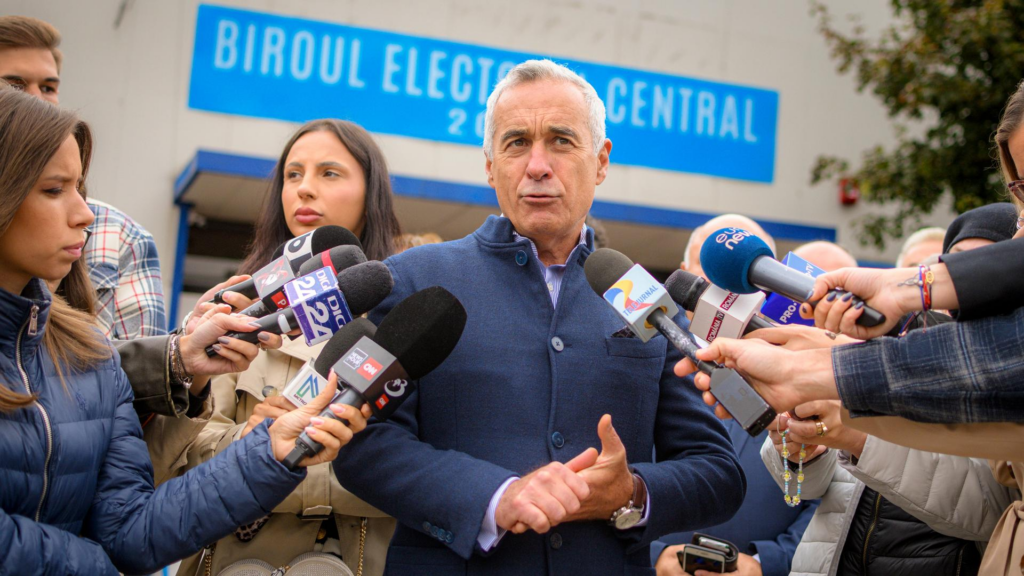
Source of the picture: https://www.nachrichtenleicht.de/praesidenten-wahl-rumaenien-ungueltig-100.html
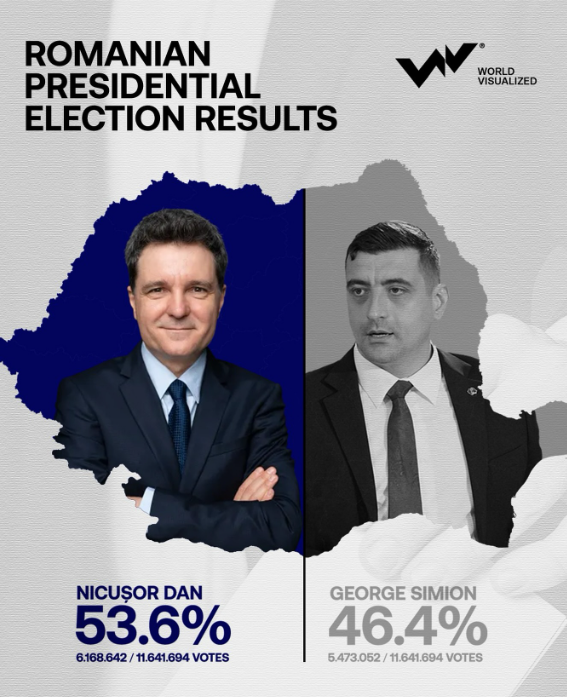
Source of the picture: https://www.instagram.com/p/DJ1bxnFssek/
The decision sparked protests. Some people argued that cancelling an election is itself undemocratic. Others believed it was necessary to protect democracy from being manipulated. That debate matters. But the deeper question is even more important: how did Romania get so close to handing power to an extremist in the first place?
This was not just a one-time shock. When elections were held again, another far-right figure, George Simion, a political ally of Georgescu, gained major support as well. He received more than 40% of the vote, showing that this was not an accident but part of a wider trend. Extremism in Romania is not disappearing. It is becoming normalized. And this is not only a Romanian issue. It is part of a larger European pattern.
Extremism Is Not Just Another Political Opinion
In every democracy, people have different political views. Being conservative or progressive is normal. Disagreeing is part of politics. But extremism is different. Far-right nationalism is not simply “one side” of a debate. It often comes with something much more dangerous: the belief that only some people truly belong, while others do not. That is where democracy begins to break.
Extremist movements often promise strength, order, and national pride. But history shows what happens when nationalism becomes extreme and unchecked. Europe has seen times when leaders turned fear and identity into weapons, leading to persecution, war, and the collapse of democratic values. The tragedies of the Second World War remind us how quickly hate and exclusion can escalate.
For me, this issue is not abstract. I come from Romania, and I am part of the Hungarian minority. When far-right politicians speak about the nation, they often speak as if minorities are a problem, not a part of society. During the campaign, nationalist rhetoric became louder. Some messages suggested that people like us have no place in Romania, that we are not truly Romanian, and that diversity is a threat. Even if such ideas are not turned into laws immediately, they create an atmosphere of fear and exclusion.
Democracy is not only about elections. It is also about protecting rights, respecting differences, and making sure that no group becomes a target. When extremist candidates gain power, minorities are often the first to feel the consequences.
The danger is not only political. Extremism also has real economic effects. After the far-right candidate almost won, Romania’s currency weakened, and the euro became noticeably more expensive. Investors and citizens reacted with uncertainty. This shows that democracy and stability are closely linked to economic confidence. If Romania were to move away from European values, it could harm not only minority communities but also jobs, trade, and the country’s future within the EU.
The Election Was Stopped — But the Danger Remains
Romania avoided the worst-case scenario. The election was restarted. The far-right did not take the presidency. But the story does not end there.
Extremist parties are still active. Many voters still support them. And the conditions that helped them grow, economic frustration, distrust in institutions, and social media manipulation, have not disappeared.
Cancelling an election may have prevented immediate damage, but it does not solve the deeper problem. In fact, it may even increase anger and distrust if citizens feel the system is broken.
That is why Romania must do more than simply “stop” extremism at the last moment. The country needs long-term democratic strength: better education, transparent institutions, fair media, and real inclusion.
A Lesson for the Rest of Europe
What happened in Romania should matter far beyond its borders. Across Europe, far-right movements are gaining ground. In Germany, for example, parties like the AfD have become more visible and influential, especially through online platforms and polarizing messages. Many people believe, “It cannot happen here.” But Romanians thought the same… until it almost did. Extremism does not arrive overnight. It grows slowly, often through normal democratic channels, using elections, slogans, and frustration. By the time society realizes the danger, it may already be too late.
Europe cannot afford to treat far-right extremism as just another trend. Nationalist politics that exclude minorities, attack democratic institutions, or glorify authoritarian ideas are not harmless. They are a threat to the future of an open society.
Romania came close — twice. Next time, the outcome might be different.
Citizens must stay informed. Schools must teach democratic values and critical thinking. Governments must protect electoral integrity and resist foreign interference. Media must fight misinformation. And European societies must invest in unity, not division.
Because democracy is not only about who wins an election.
It is about living together peacefully in a society where difference is not treated as a problem.
So this was my opinion piece on Romania’s recent election crisis and the wider rise of far-right extremism in Europe. I hope it shows why democracy must be actively protected, not taken for granted. Thank you for reading, and see you next time! 👋
Leave a Reply