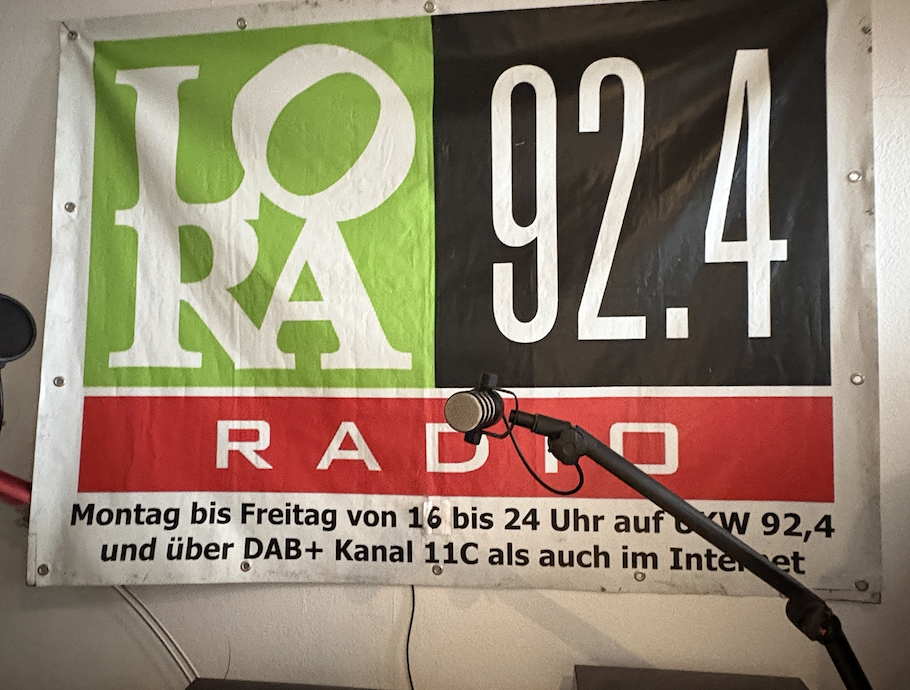
Radio LORA is on air! 📻
Excursions . Germany . MediaA behind-the-scenes look at Radio LORA
I recently had the chance to visit Radio LORA München and it was an eye-opening experience. We got to see how this independent station keeps the spirit of “Free Radio” alive. The name “LORA” is short for Local Radio, inspired by a radio station in Zürich, Switzerland. Since the first ideas for the station sparked in 1986, Radio LORA has operated as a non-commercial radio station.
Most media in Germany generally falls under two groups. The first group is public broadcasting, which people fund through mandatory household fees. The second group is commercial private media, which are businesses funded through advertisements. Because of this setup, it is incredibly rare to find a true “community radio” in Bavaria. In fact, Radio LORA and Radio Z in Nürnberg are the only two community radios that exist in the entire state.
Before I stepped into their studio, I associated broadcasting with clinical, high-budget corporate offices or massive public-funded networks. Radio LORA shattered that expectation completely. Their vibrant space bursts with excitement and inspiration. It felt alive and full of history.
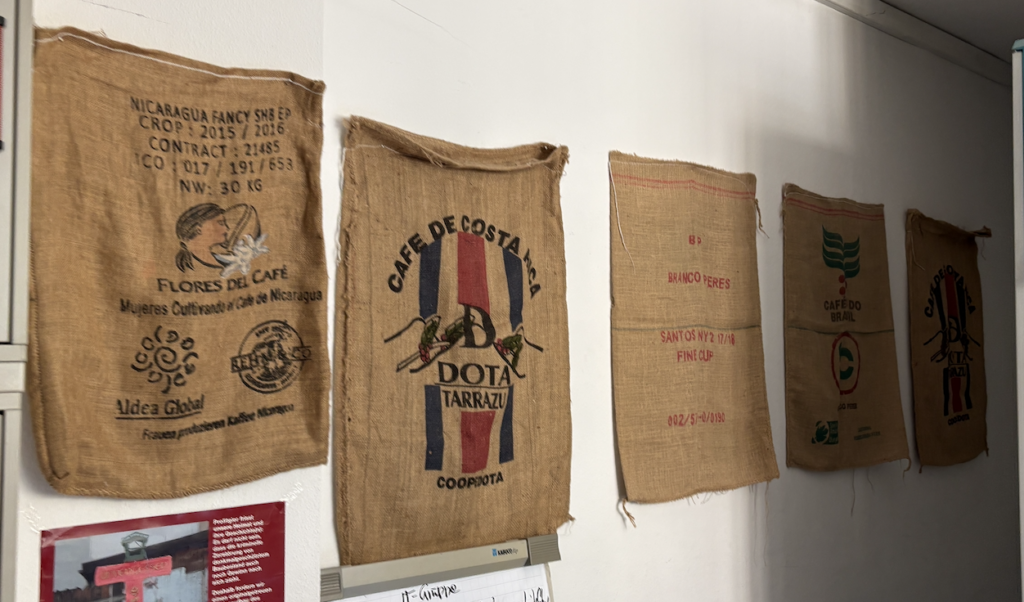
Although Radio LORA rarely does advertising, they ran an ad for a coffee roastery. The roastery gave Radio LORA some coffee beans instead of paying with money, and Radio LORA thanked them on air. The team kept the empty coffee bags, and use it to decorate their studio wall till today.
Radio LORA’s perseverance as a free radio station
I learned that back in 1994, the station almost went bankrupt because they failed to broadcast their mandatory station identification several times, which led to a massive fine of over €10,000 from a public authority. To make sure that this never happens again, they still broadcast their company imprint every single night shortly before midnight.
Through our talk with the Radio LORA staff, I gained a lot of insights into the radio industry. Radio stations face many hidden problems such as the competitiveness of even getting a radio frequency. To negate this issue, Radio LORA shared the 92.4 FM frequency with other stations in a “frequency split” in 1994. But it also created a new problem, which was that they had limited time on air.
In 2017, the station went through another frequency renewal. They won two extra hours of airtime, but with a very complicated schedule.
Today, they face a confusing daily routine:
- They start broadcasting at 4pm on regular FM radio.
- However, their digital signal does not start until 6 pm.
- At midnight, the digital signal turns off early, but the regular FM radio stays on until 1am.
- To make it even more confusing, their Friday FM broadcast must end early at 9pm.
The staff told us that nobody really understands why the rules are this complicated, but they still follow them perfectly. From 4 pm until midnight, the volunteers host live programs. However, for the rest of the day, an automated loop takes over. The station repeats the programs four times during the following night, the next afternoon, and over the weekend, so that everyone gets a chance to hear them.
The Radio LORA staff
After visiting the station, their hard work shows in their office. Everyone comes together to run Radio LORA. They develop the concept, conduct interviews, edit, choose music, as well as host the shows. Their vibrant office shows the passion of their employees, where most work at Radio LORA as volunteers with little allowance.
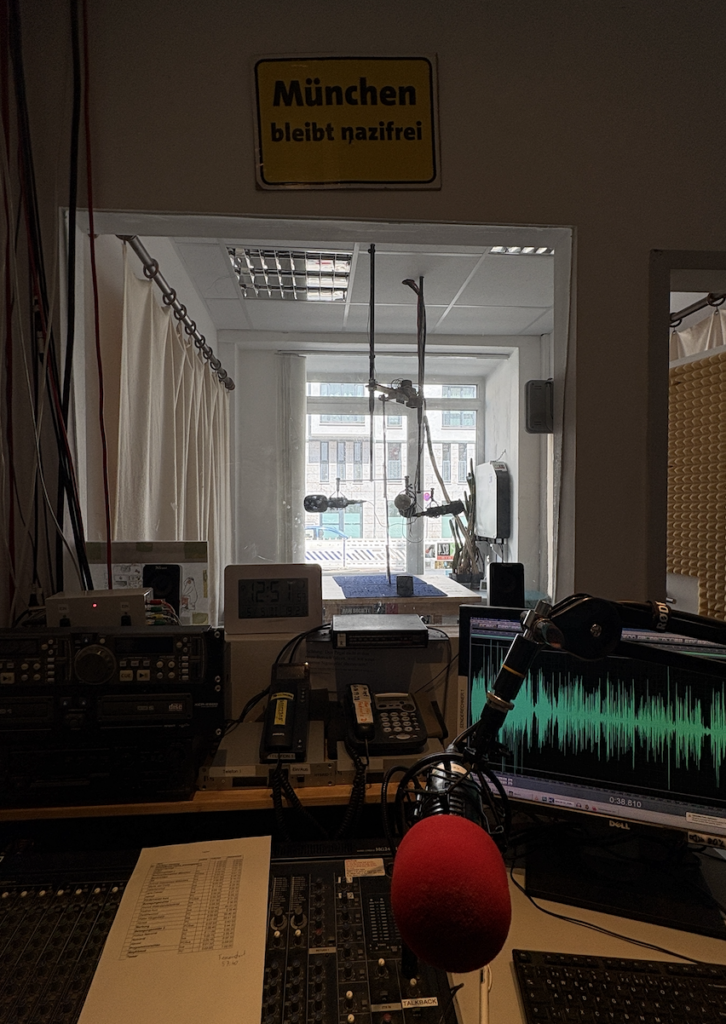
Radio LORA has birthed some of the most unusual, delightful, and human-centric shows that you would hear on German radio.
The Cooking Show: Radio LORA invited guests that brought mobile cooking plates directly into the studio to cook live on air. Listeners could literally hear the onions frying while the hosts discussed a variety of topics.
Beautiful Stutter: A live show hosted by individuals who stutter, featuring live call-ins to make stuttering audible and help people get over their fear of speaking with others.
Aural Pleasure: A segment where cabaret performers read historical erotic literature, also considered as love stories, allowing readers to imagine the scenes in their minds.
I had a great experience visiting Radio LORA. I had never visited a radio station before, so having this once in a lifetime opportunity to visit, was definitely unforgettable. seeing their hard work showed me that determined people can always find a way to share their unique stories.
In a media landscape where most professional speakers use similar vocabulary and tone, Radio LORA intentionally hands the microphone to normal people and give minorities a real voice. This station is a special, free place where people can always share new and different ideas.
Leave a Reply