More than just a radio: Giving a voice to the community
Excursions . Germany . Media . UncategorizedDuring our fieldtrip in May, we visited Radio LORA München, one of the most unique media organizations in Germany. Located in Munich, Radio LORA is a private, non-commercial community radio station that offers a platform for social, cultural, ecological, and political topics. Unlike public broadcasters or commercial radio stations, LORA is run mainly by volunteers and focuses on giving a voice to groups that are often underrepresented in mainstream media.
Radio station run by passion
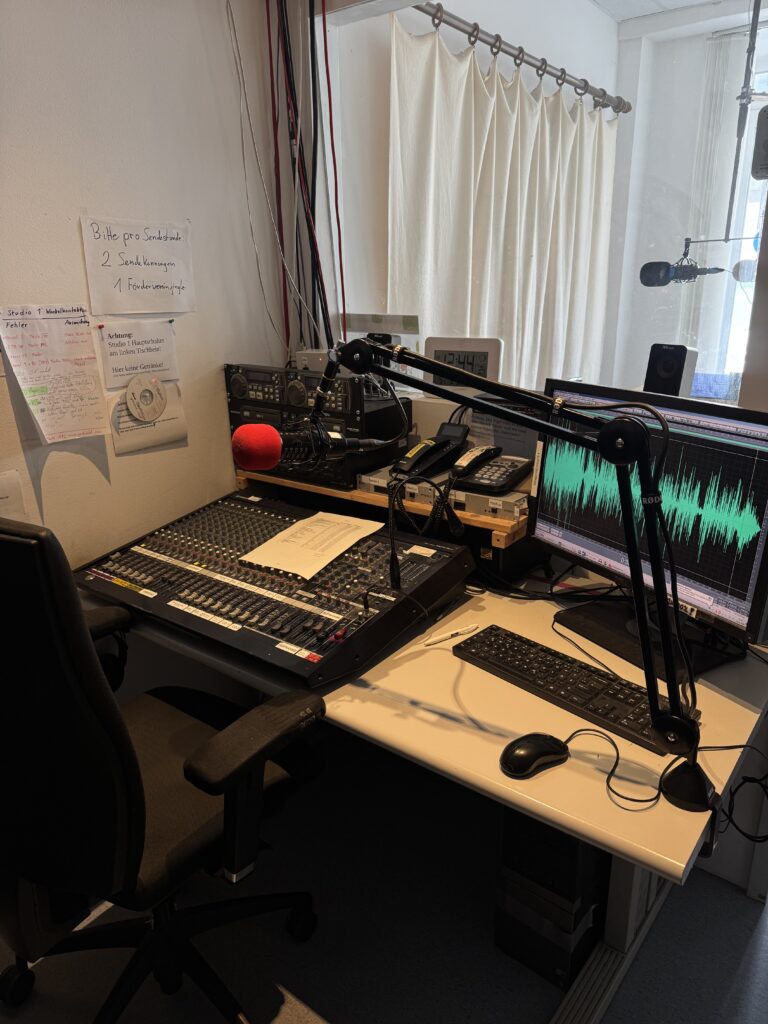
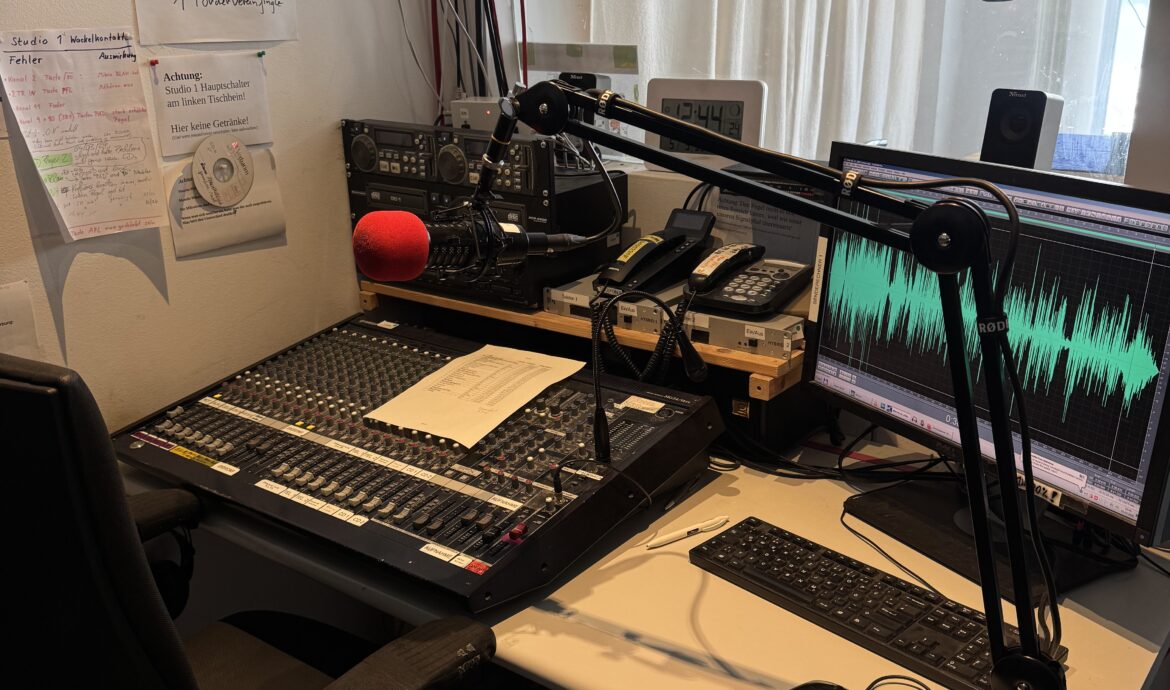
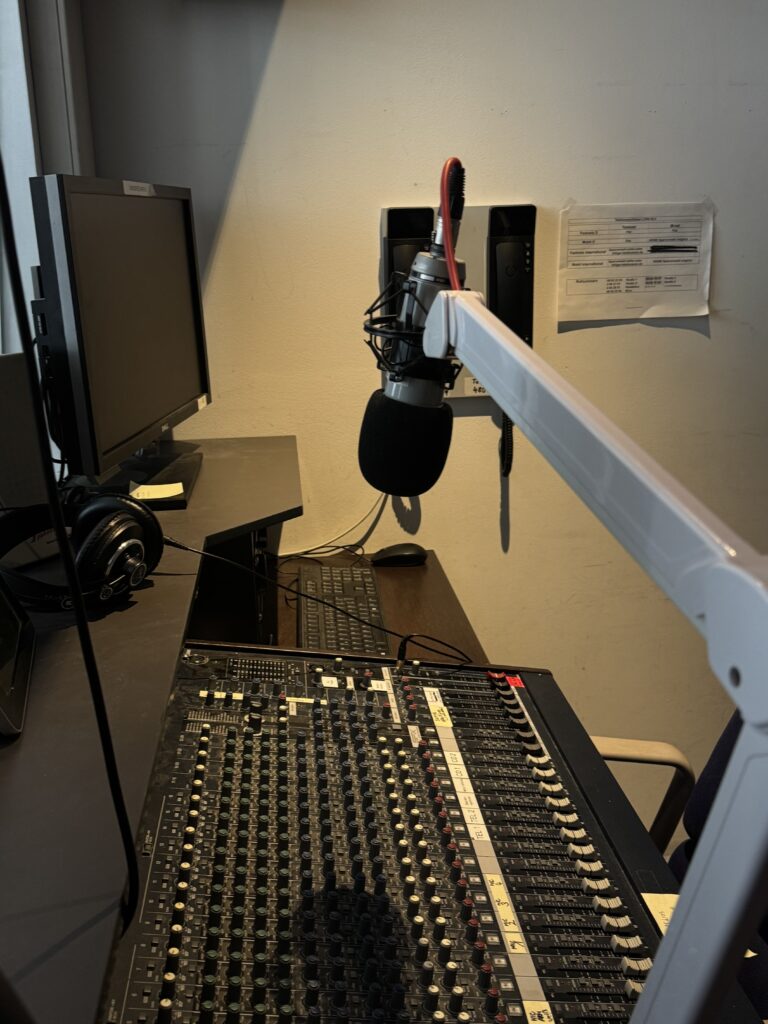
From the moment we entered the building, it became clear that Radio LORA is very different from modern commercial media organizations. The studio was relatively small and simple, but it was full of energy and passion. What impressed me most was that almost everyone involved works voluntarily. People produce programs, conduct interviews, edit audio, select music, and host shows without expecting financial rewards.
From 26 Minutes on Air to a Voice for the Community
One of the most interesting insights was the history of the station. The idea for Radio LORA dates back to 1986, but the station only received its first FM frequency in 1993. Even then, it was allowed to broadcast for only 26 minutes. Later, it received two hours of daily airtime and gradually expanded its schedule. Today, the station broadcasts from 4 p.m. until midnight. The rest of the day consists of repeated programs running in a loop. This history illustrates how difficult it can be for alternative media organizations to establish themselves in a highly regulated broadcasting environment.
Where Everyone Can Become a Broadcaster
During the visit, I observed several aspects of the organization. The atmosphere was welcoming, informal, and highly collaborative. Unlike large media corporations, where journalists often follow strict professional structures, Radio LORA encourages participation from ordinary citizens. Anyone can propose a program concept. After approval by editorial and programming committees, new volunteers can create their own shows. This open approach reflects the station’s mission of media participation and diversity.
The range of programs was particularly remarkable. Besides political and cultural content, LORA has hosted highly unusual broadcasts. For example, there was a cooking show where guests prepared food live in the studio, allowing listeners to hear onions frying while discussing recipes. Another program featured people who stutter, aiming to reduce the fear of public speaking and increase acceptance of speech disabilities. The station has also broadcast erotic literature readings and gardening programs. These examples demonstrate how community radio can provide content that would rarely find a place in commercial broadcasting.
Challenges behind the scenes
The financial situation of Radio LORA was another important observation. The station does not receive funding from Germany’s broadcasting licence fee, unlike many community radio stations in other federal states. It also avoids commercial sponsorship and advertising. As a result, funding remains a constant challenge. The station has fewer than 500 supporting members and operates on an annual budget of around €100,000. Despite these limitations, it continues to provide daily programming through the dedication of its volunteers.
Why community radio still matters
The role of Radio LORA in German society is significant. Germany’s media landscape is often dominated by large public broadcasters such as Bayerischer Rundfunk and commercial media companies. LORA offers an alternative perspective by giving minorities, activists, and community groups an opportunity to speak directly to audiences. It promotes media diversity, democratic participation, and local engagement. In this sense, the station fulfills an important social function that extends beyond entertainment.
One story that particularly stayed with me was from the COVID-19 pandemic. Although volunteers operated the station, Radio LORA was classified as “system-relevant” and was therefore expected to continue broadcasting despite lockdown restrictions. This situation highlighted the paradox of being considered essential to society while receiving limited financial support.
Overall, the fieldtrip provided valuable insights into the realities of community media. Before visiting Radio LORA, I mainly associated radio with professional journalists and commercial stations. However, this visit showed me that radio can also be a platform created by and for local communities. I was impressed by the commitment of the volunteers and the station’s dedication to diversity and inclusion. The experience helped me better understand the importance of alternative media organizations and their contribution to a democratic society
Leave a Reply