Aurel Samsom – Blogpost 2
UncategorizedFreedom Over Numbers: Inside Radio LORA
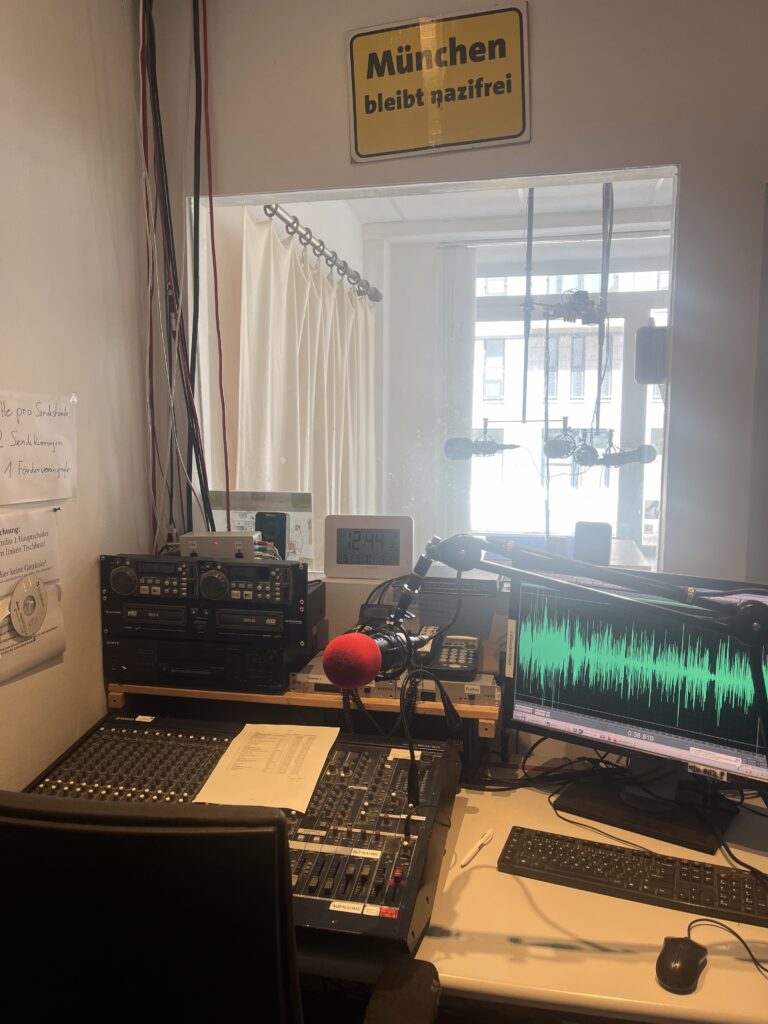
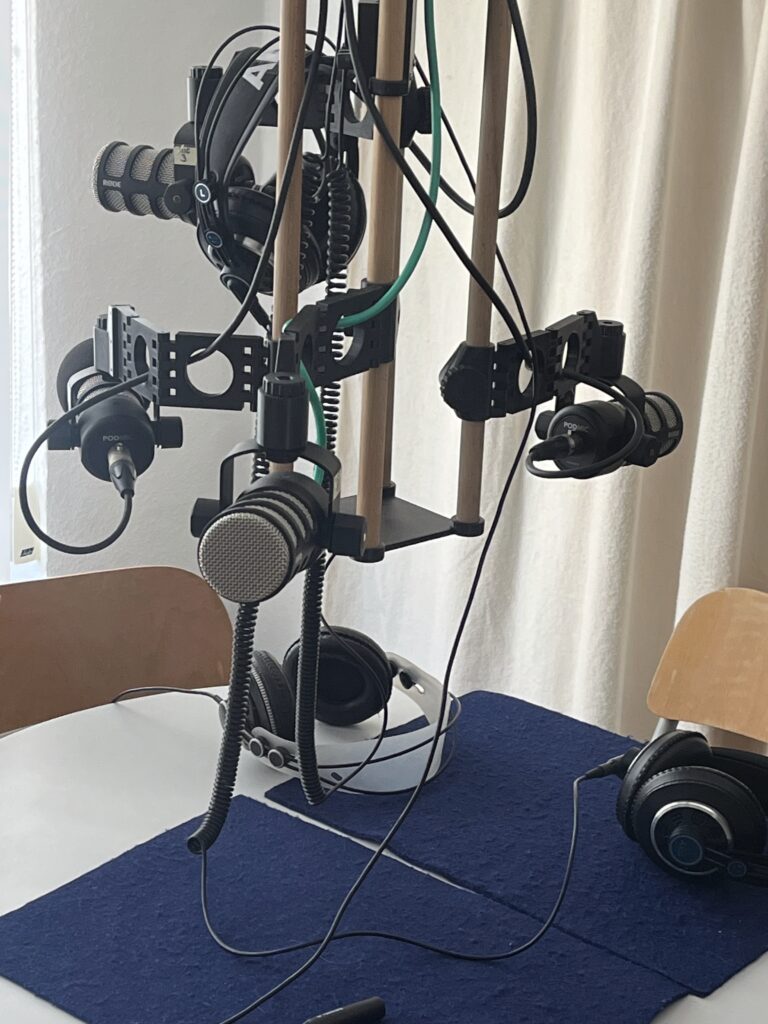
During our field trip for the course Media Institutions, I expected to visit a radio station like many others: a place focused on audience numbers, growth strategies, and attracting as many listeners as possible. Instead, when I walked into Radio LORA München, I entered a completely different media world. The building felt small, chaotic, and alive. There were cables hanging everywhere, old studio equipment, handwritten schedules, plants near the windows, and volunteers moving between tiny recording rooms. In one studio, microphones hung from the ceiling above a table like a strange art installation. It did not look polished or corporate. But maybe that was exactly the point.
Before the visit, one of the main things I wanted to ask about was audience data: Who listens to Radio LORA? How big is their reach? How do they target listeners? In my studies and internship, media is often approached through growth, performance, and analytics. Everything revolves around improving numbers, increasing engagement, and developing strategies to attract larger audiences. That is why I was genuinely surprised when the first answer I got at LORA was basically: we do not really know the numbers, and we are not driven by them either.
That immediately changed the way I looked at the organization.
Radio LORA is a private, non-commercial and independent community radio station in Munich. It was founded by social and cultural initiatives that wanted an alternative to public and commercial broadcasting. The station works almost entirely with volunteers and focuses on social, cultural, ecological, and political topics that often receive little attention in mainstream media. Unlike commercial radio stations, LORA does not depend on advertising revenue or profit. In fact, they are legally not allowed to broadcast advertisements.
During the presentation, Karin, one of the volunteers, explained that they once hired a marketing strategist to help improve the station. On one of the walls there was still a positioning chart made during that process. It showed where LORA wanted to position itself: highly informative, opinion-leading, critical, and politically left-oriented. The strategist approached the station with ideas about efficiency, optimization, and audience growth. But according to Karin, this mindset simply did not fit the culture of Radio LORA. The volunteers were not interested in turning the station into a more commercial or performance-driven organization. Their motivation for making radio was completely different.
I found this one of the most interesting insights of the trip because it challenged my own assumptions about media success. In many media environments today, success is measured through clicks, reach, listening time, and growth. At Radio LORA, success seemed to be measured more through participation, representation, and freedom. Their goal is not necessarily to reach the biggest audience, but to give space to voices and ideas that otherwise might not exist in the media landscape.
You could clearly see this in the programs they described. Radio LORA once had a live cooking show where guests prepared food inside the studio while listeners could literally hear onions frying in the pan. There was also a live radio show hosted by people who stuttered, created to make stuttering more visible and reduce fear around speaking publicly. Other programs focused on gardening, minority communities, bilingual broadcasting, or niche music genres. Karin explained that anyone with a good concept that fits the station’s ideology can eventually create a program.
This freedom creates space for experimentation and niche entertainment that would probably disappear in a more commercial environment. A station focused entirely on ratings would most likely never approve a cooking show on the radio or dedicate airtime to extremely specific cultural communities. But at LORA, these ideas are valued because they contribute to diversity and participation rather than profit.
Another thing that stood out to me was how strongly the station wants to remain independent. Financially, LORA constantly struggles. They survive through volunteers, membership support, and small project funding. Yet this difficult financial position also protects their freedom. Because they are not driven by advertisers or large investors, they are able to prioritize content that reflects their social mission instead of market demands.
Walking through the station, I realized that Radio LORA almost feels like a form of resistance against today’s highly optimized media culture. It reminded me that media can have another purpose besides growth and performance. Media can also create community, experimentation, and representation. Even though I still understand why strategy and audience analytics matter, this visit showed me a perspective I had never really considered before: sometimes the value of media lies exactly in the freedom to make something small, unusual, local, and imperfect.
Leave a Reply