Inside Media School Bayern: The Hidden Engine of Munich’s Media Landscape
Uncategorized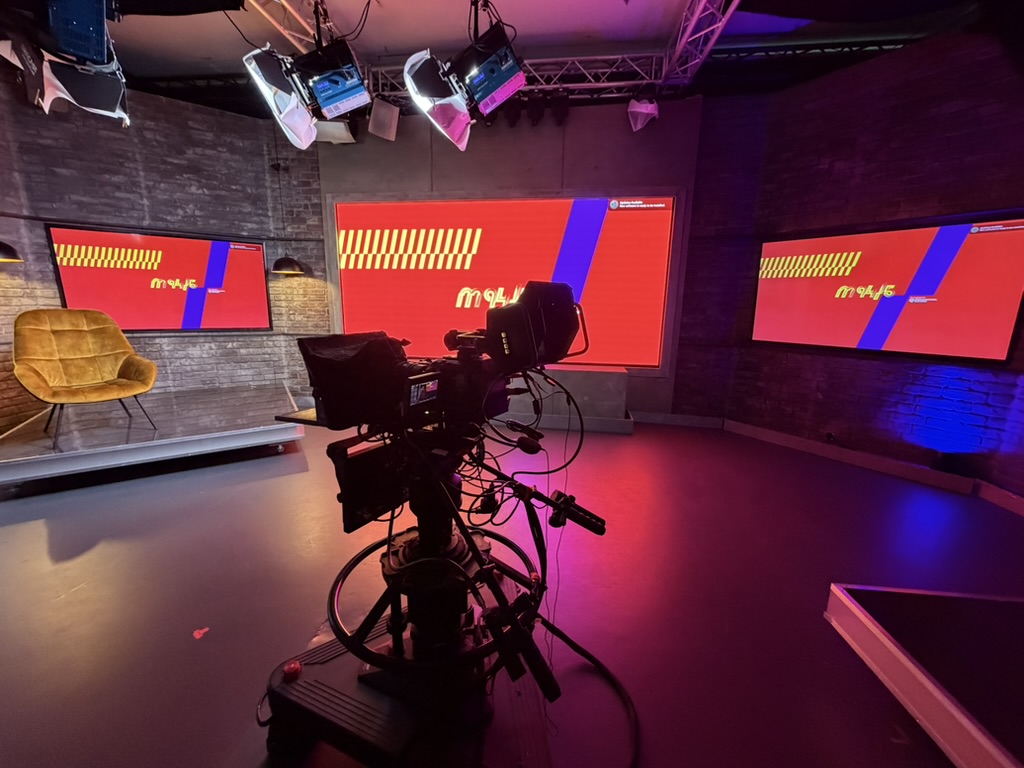
Hi, and welcome back to Yinuo’s blog! Today, I’ll be sharing my experience visiting Media School Bayern.
Stepping into the building for the first time, I was immediately struck by the impressive equipment. It was easy to spend the first hour just marveling at the physical space: the television studios, the professional radio booths, and the high-end digital editing suites.
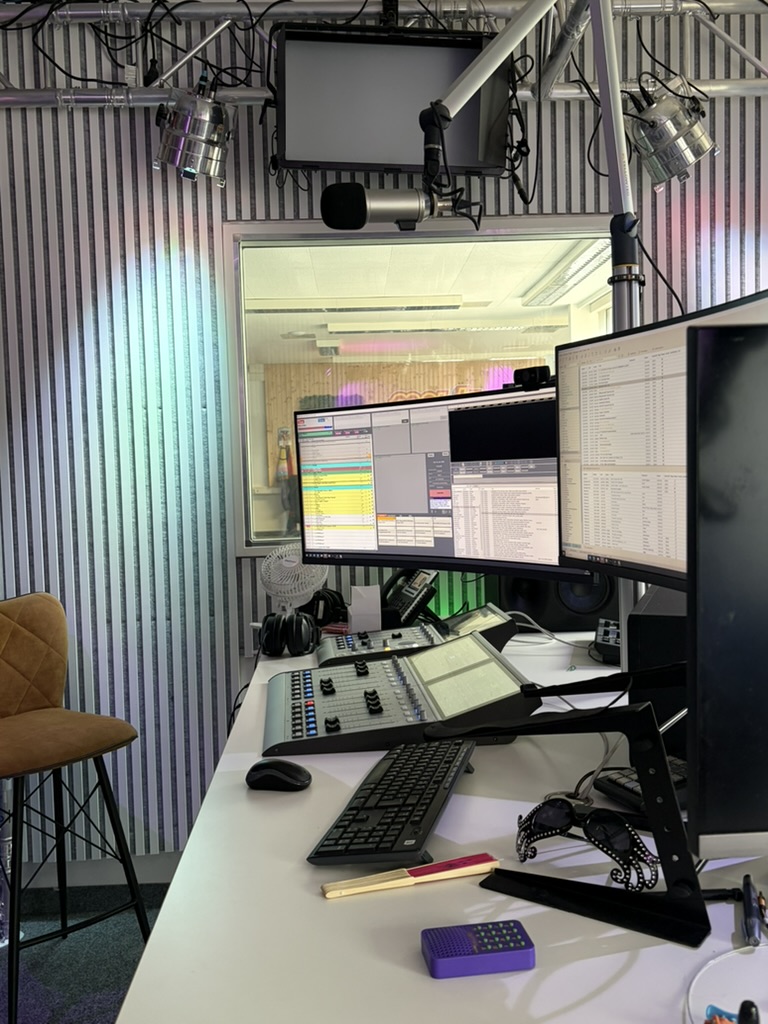
However, looking at the institution through the lens of a student analyzing Munich’s media landscape quickly shifted my focus. I started looking past what the students were making and started wondering: how does a school like this actually survive?
Beyond just being a place to gain practical experience, I realized Media School Bayern works because of a clever, three-pronged partnership between private enterprise, public funding, and university theory.
1. The Private Sector: An Outsourced Corporate Training Ground
To see why the school works, I had to look past the shiny cameras and focus on the business side of things. Media School Bayern receives substantial equipment and financial support from private, commercial TV and radio stations across Bavaria.
This support isn’t just out of the goodness of their hearts; it is a smart economic strategy. For a commercial media company, taking a fresh university graduate and teaching them how to run a live control room, handle broadcast cameras, or edit audio takes months of paid training.
By funding this school, private companies let the institution handle the most expensive part of onboarding new workers. In return, they get a steady pool of experienced students who can handle tight deadlines and technical gear from their very first day on the job.
2. The Public Sector: Safeguarding Democratic Journalism
However, if private companies were the only ones running the show, the school would risk turning into an assembly line for cheap corporate content creators. This is where public funding creates an important ethical balance.
The school receives significant support from state media authorities, specifically the Bayerische Landeszentrale für neue Medien (BLM). From my perspective as a student, this is a brilliant use of public tax dollars. In an era plagued by fake news and internet rumors, a healthy democracy desperately needs honest, high-quality journalism.
This public funding ensures that the curriculum prioritizes media ethics, civic responsibility, and factual reporting over simply chasing viral clickbait or maximizing advertising revenue.
3. The University Connection: Bridging Theory and Practice
This unique combination of corporate and public interests creates the perfect sandbox for university students to connect classroom theory with real-world practice.
In my university lecture halls, I spend semesters analyzing abstract concepts like changing audience demographics and media ethics. But these ideas can feel detached from reality until you are forced to apply them in real-time. Watching the students work perfectly illustrated this bridge. Trying to condense a complex political or social news story into a sharp, engaging two-minute radio clip for a distracted audience forces you to think fast.
It turns academic theories into professional survival skills, requiring students to uphold rigorous journalistic standards while operating under the strict time constraints of a live broadcast.
A Critical Reflection: Playground or Corporate Copycats?
Admittedly, seeing how closely these different groups interact raised a critical question for me. During my visit, I watched a group of students outdoors filming a highly unconventional creative challenge using a drone and… cucumbers. The scene felt much more like a fun playground than a serious newsroom.
This brought up an interesting contradiction: when a training school is so closely tied to both future employers and public funders, do students actually feel free to innovate, or do they just copy existing ideas? One could easily argue that students, eager to impress the corporate donors who might hire them, would play it safe by simply replicating old, formulaic TV and radio formats instead of taking risks.
Yet, a closer look at that playful “cucumber challenge” suggests a much more positive reality. Allowing students to engage in weird, low-stakes experiments proves that Media School Bayern acts as a safe, non-profit sandbox.
Because the financial and career cost of making a mistake here is zero, students are given the grace to fail safely. This safety net allows them to push creative boundaries and develop the exact kind of fresh, modern storytelling that major media houses desperately need but rarely have the patience to teach.
Final Thoughts & A New Blueprint
Ultimately, looking at Media School Bayern from a broader perspective revealed that its true innovation is not its expensive hardware but its structural blueprint. By perfectly balancing the speed of private business, the ethical mandates of public funding, and the critical thinking of university theory, it ensures that the next generation of content creators is both technically elite and socially responsible. In an era where digital media is being rewritten every day, this three-part model serves as an excellent case study for the future of media education.
What do you think? Does a model like this sound like the perfect balance for students, or does the corporate influence still worry you? Let me know your thoughts in the comments below, and I’ll see you in the next post!
Leave a Reply