Mediaschool Bayern: Fostering Media Education and Pluralism
Authors . Excursions . Media . Media influence . UncategorizedBy Sangnan Hua
In an era where media literacy and diverse journalism are vital for a healthy democracy, Mediaschool Bayern has emerged as a unique institution in Germany’s media landscape. Founded in Bavaria as a non-profit training organization, Mediaschool Bayern operates non-commercial radio and television channels that serve as live laboratories for aspiring media makers. It aims to democratize access to media training by offering free, practice-oriented education in radio, video, and online journalism, thus promoting media pluralism from the grassroots.
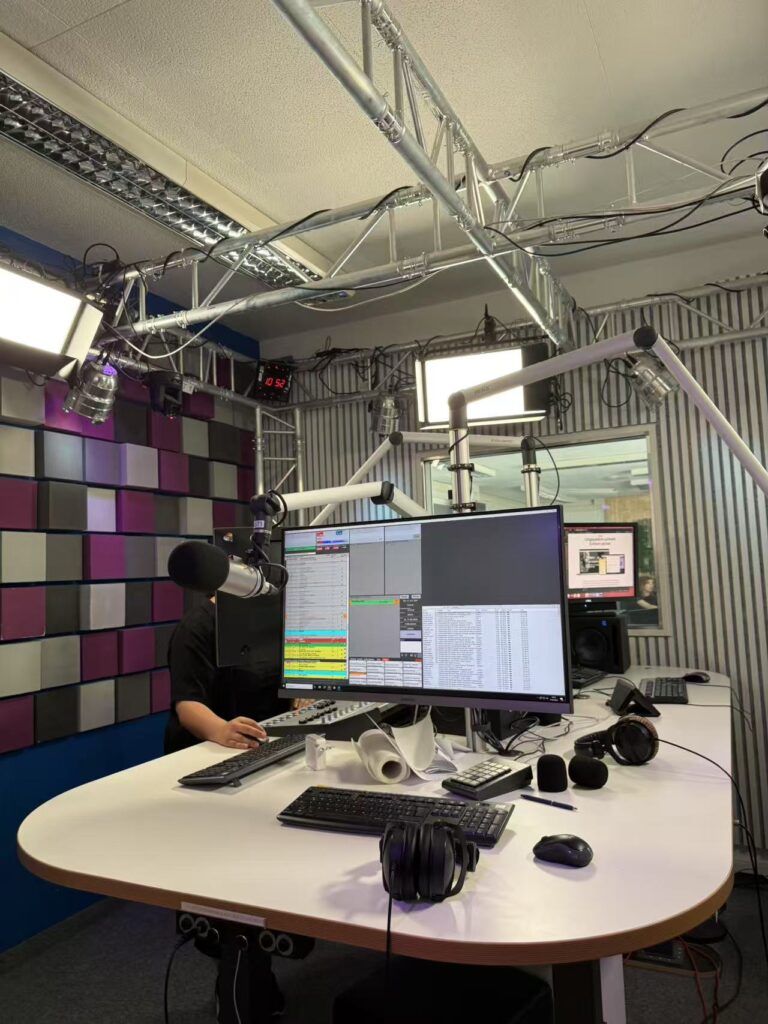
Mediaschool Bayern plays a multifaceted role in Germany’s media and educational landscape, particularly in Bavaria. At its core, it provides a platform for young voices in media. With dedicated radio (M94.5 in Munich) and web/TV (M94.5 TV in Munich and max neo in Nuremberg) outlets, enabling trainees to create and broadcast content to the public. Since the launch of these training channels, they have developed into essential elements of the Bavarian media landscape, helping media newcomers gain entry into the industry. This directly contributes to media pluralism by injecting fresh perspectives and new talent into a media ecosystem traditionally dominated by established players.
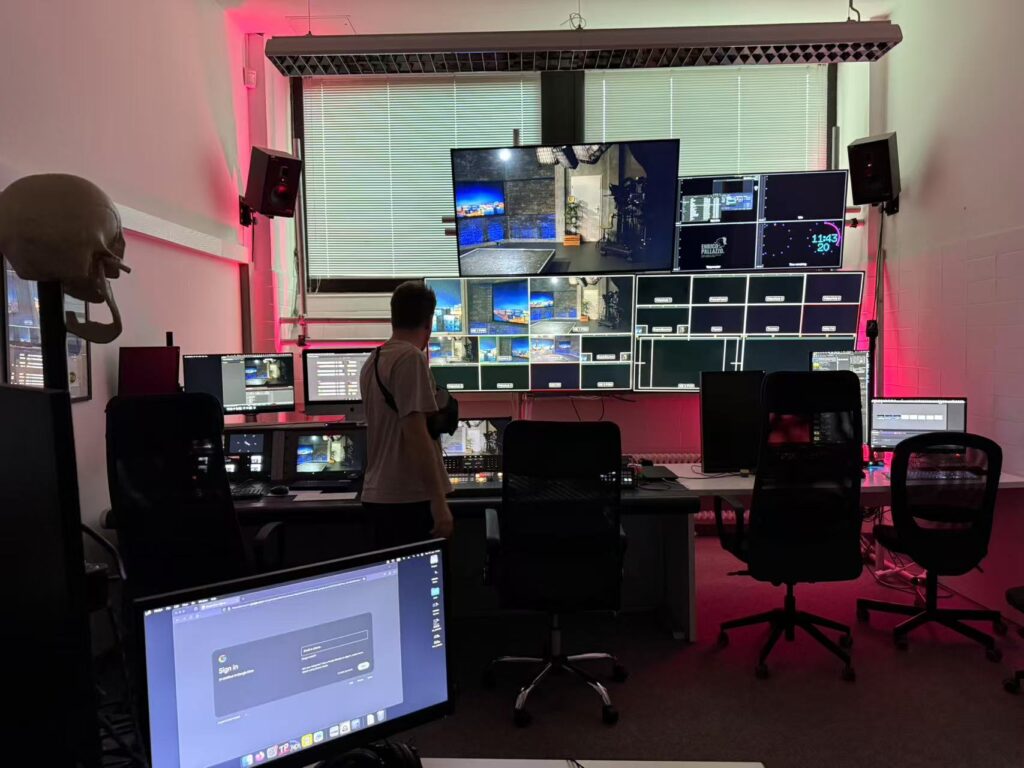
A key democratic aspect of Mediaschool Bayern is its commitment to accessibility and independence. The program is open to all creative school leavers and students interested in media, and all training offerings are free of charge for participants. By removing financial barriers, Mediaschool Bayern lowers the threshold for participation in media production, striving for a more democratic access to media training than many traditional programs. Mediaschool Bayern supports an inclusive pipeline of future journalists and creators, which is fundamental for a pluralistic and representative media environment.
Mediaschool Bayern’s offerings are practice-driven and contemporary. Trainees work in real studios under professional guidance, producing radio shows, videos, and online content. The curriculum emphasizes cross-media skills and digital literacy – for example, integrating the use of social media platforms and online tools into daily editorial work.This forward-looking approach recognizes the changing media consumption patterns and the need for journalists to engage audiences across multiple channels.
Mediaschool Bayern also contributes to media literacy and civic education in the society. It frequently partners with educational and regulatory bodies on initiatives that promote critical media understanding among the public. A notable example is the annual Schülermedientage (Schools’ Media Days) organized around World Press Freedom Day. The program included live-streamed talks on topics like local journalism, social media, copyright, and press freedom, with students actively engaging by posing questions via smartphone. Such initiatives underscore Mediaschool Bayern’s role in fostering democratic culture, by empowering young citizens to critically evaluate media and understand journalism’s societal role.
While Mediaschool Bayern has lots of clear benefits, it is important to critically examine some aspects of the organization and its approach:
Despite carrying the “Bayern” name, the Mediaschool’s direct training activities are concentrated in Munich and Nuremberg. Youth from other parts of Bavaria or Germany may find it difficult to participate unless they relocate or study nearby. This raises questions about regional equity in access. Moreover, the television content produced and the radio broadcasts on M94.5/FM may have relatively limited audiences. The impact on broader media pluralism might therefore be constrained by the local scope. Mediaschool Bayern’s model, effective as it is locally, has not been expanded statewide or nationally to maximize its democratic benefit.
Besides, Mediaschool Bayern’s heavy reliance on BLM and public funds is a double-edged sword. On one hand, it ensures a stable, non-commercial financing anchored in law (BLM’s mandate to support media education). On the other hand, this makes the Mediaschool vulnerable to political and budgetary shifts.
Leave a Reply