From Goosebumps to Broadcasts: My Reflections on Science and Media Communication
Authors . Germany . Media . Media influence . Opinion piece . SocietyAs someone who’s always been curious about how messages shape minds, these past few weeks have been a turning point for me. Our guest visits in the room from Munich Science Communication Lab (MSCL) and Media School Munich weren’t just field trips, they were invitations into two very different worlds that both revolve around the same question:
How do we communicate in a way that matters?
This blog post is my personal reflection on what I learned, what surprised me, and why I left both places feeling more excited, and more critical, about what it means to be a communicator today.
MSCL – Where Communication Meets Research
Our guest visits from MSCL completely shifted how I think about science communication. I used to believe that making science “accessible” was enough, but MSCL challenged that idea. They don’t just ask whether science reaches people. They ask:
Is it really making an impact?
Who gets to define success?
Is it harmful to constructive?
What inspired me most was their idea that evaluation is not something you tack on at the end. It’s part of the process from the first brainstorm to the final exhibition. That hit me. I’ve often seen feedback as something we collect after a project, but MSCL treats them as something that guides and shapes the project themselves.
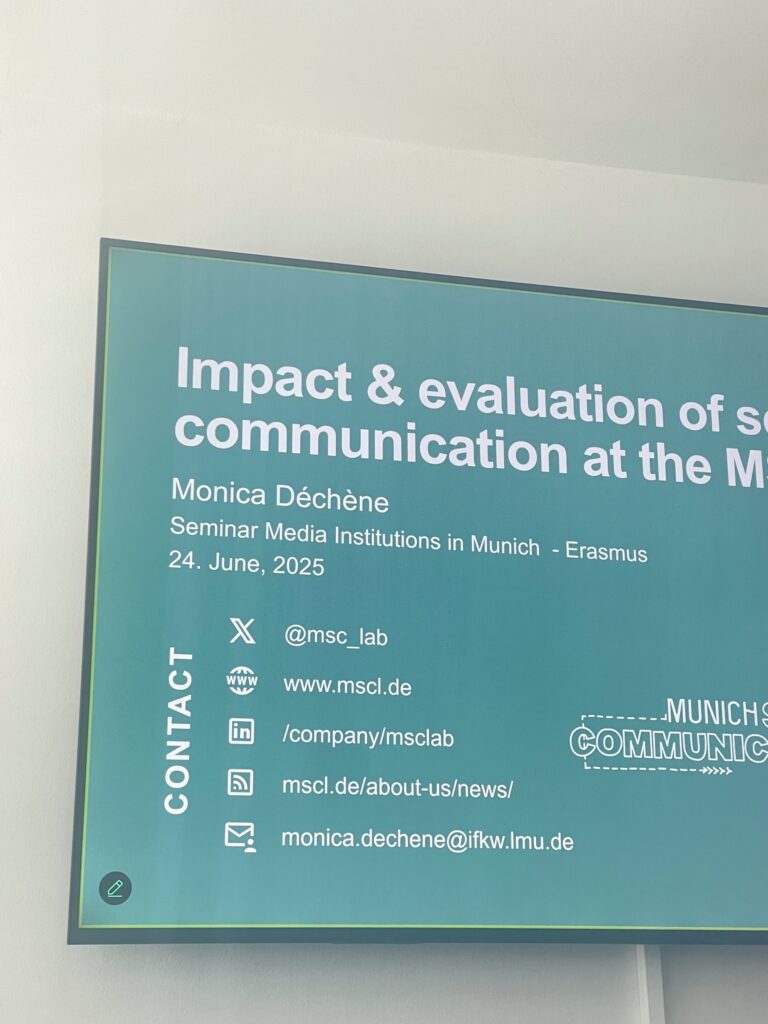
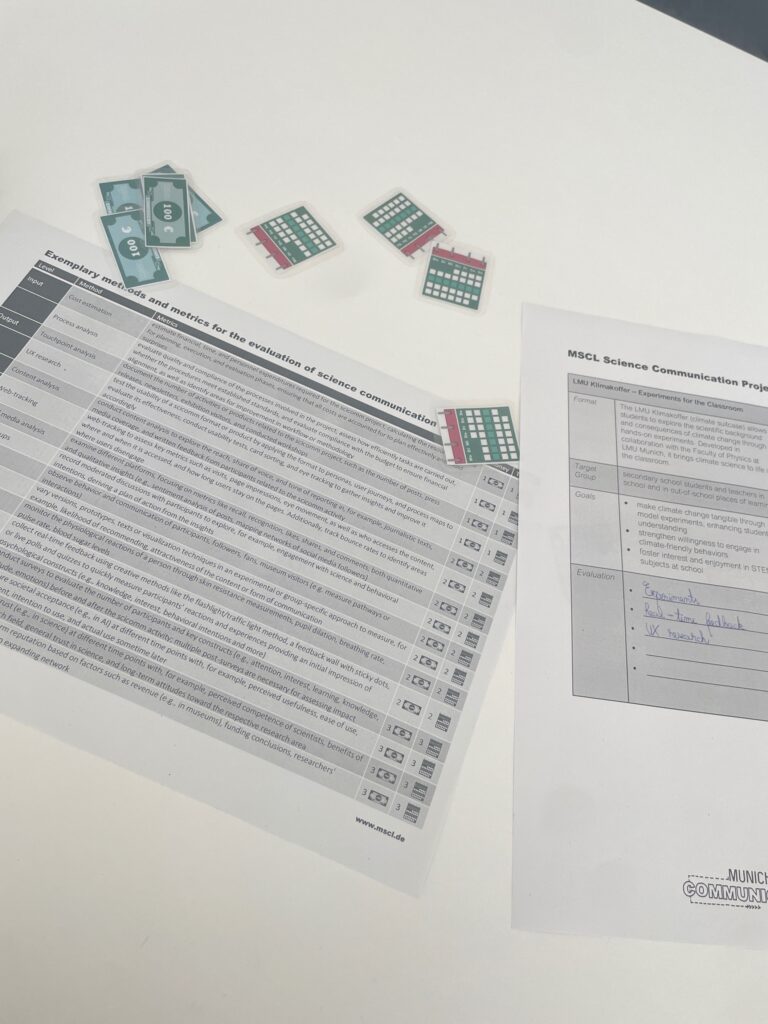
During the workshop, we had to quickly choose the best evaluation tools for a science communication project with limited time and budget. I loved this workshop. It felt real. We as one group debated what counts as meaningful impact: is it Target group? or Action? That exercise taught me that “impact” isn’t a fixed thing, but it’s contextual, complicated, and honestly, kind of beautiful.
And then there was that moment when one of the speakers said she sometimes gets goosebumps when watching people in museums discover something new. I couldn’t stop thinking about that. It reminded me why I care about communication in the first place, because it can change how someone feels, even just for a second in their lifetime.
Media School Munich – Young Voices and Real Power
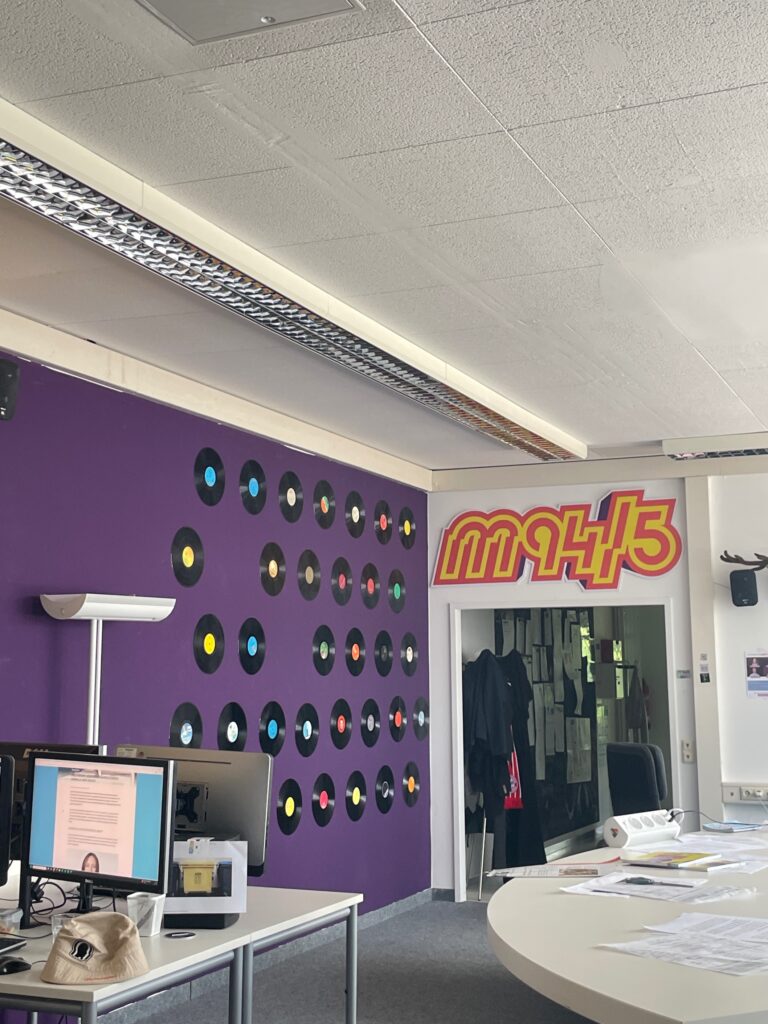
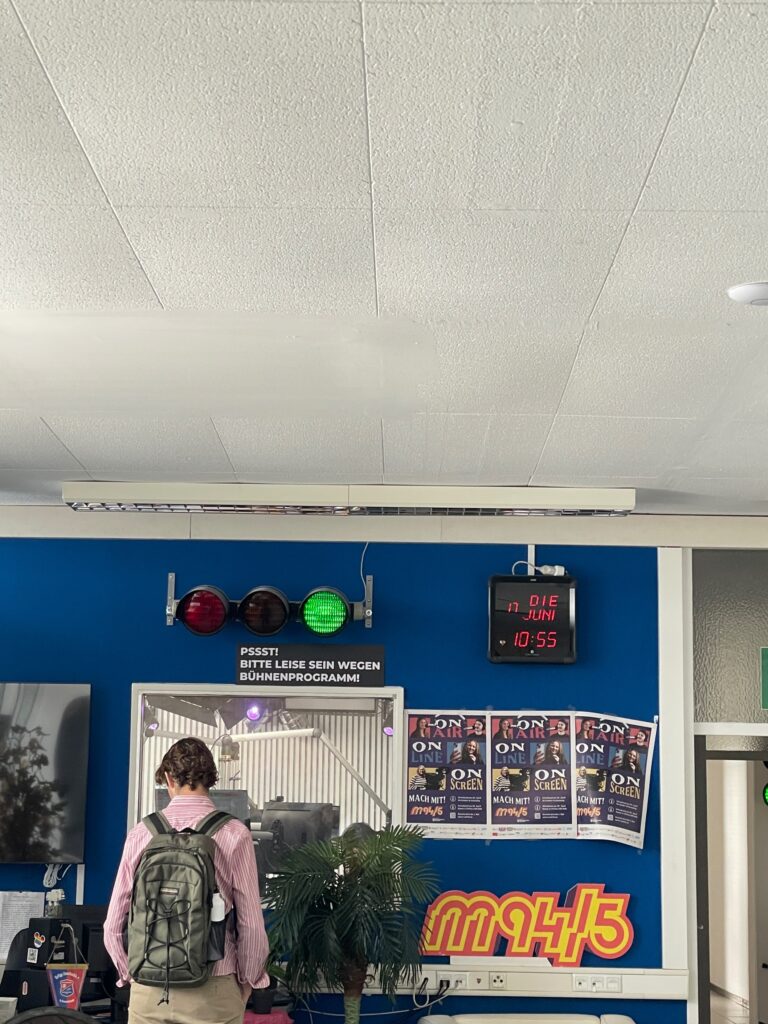
A week earlier, we visited Media School Munich and even though I arrived a little late, I walked into a buzzing space full of ideas, energy, and sound. We started in the podcast studio, where students can produce their own thesis projects for free. I found out that external professionals can also rent the space, and honestly, it looked and felt like a real media house.
What really caught my attention was how they mix professional training with freedom to explore. Interns and trainees work in real broadcast environments — live radio, podcasting, editing rooms — and they even have to pass an exam or contest to earn their certificate. Watching a live radio session while the intern spoke so naturally by using expressive body language even when no one could see her — was inspiring. She wasn’t just reading from a script. However, she was performing the message. That stuck with me a little while.
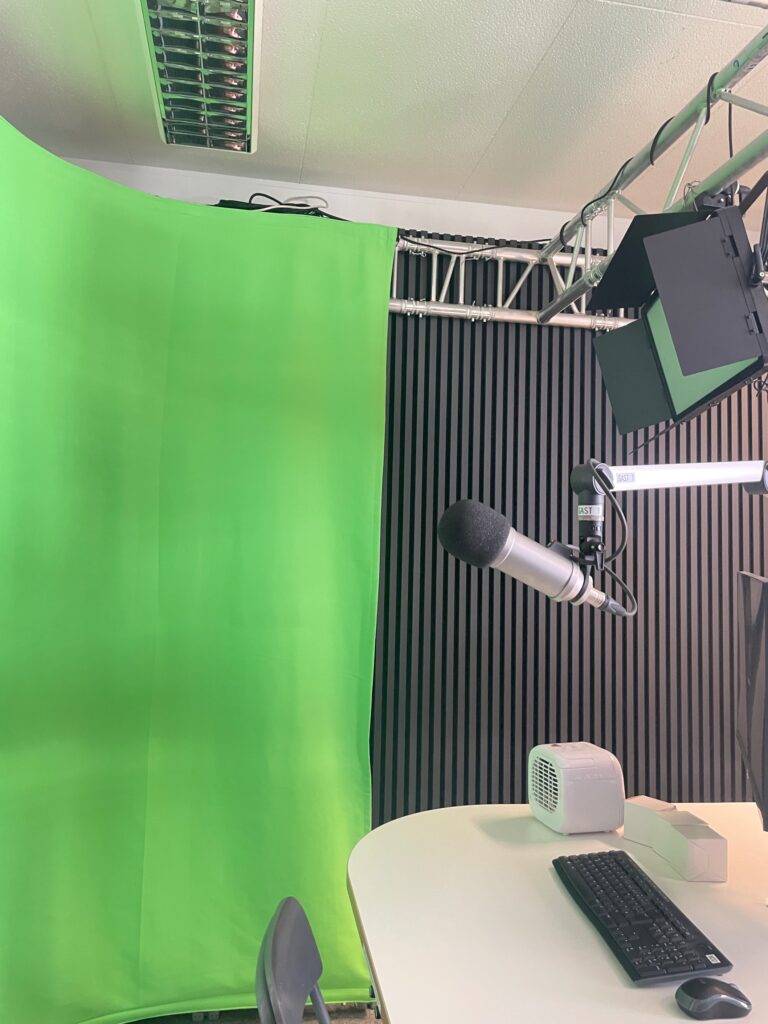
They also shared how they plan and script shows, like a late-night format, and how they deal with real political topics— not just reporting them, but sometimes critiquing and parodying them. I was fascinated by how they took a serious issue, like Munich being voted an “unfriendly city,” and turned it into a creative commentary. That takes guts and smart thinking.
And then there was the episode on the Eisbach surfers, a mix of lifestyle, identity, and urban space. Again, it showed me that media is never just about information — it’s about connection between people. They also have mobile mics and flexible tools for fast, on-the-go interviews. This is communication in motion, and I loved every bit of it.
What I Took Away
If I had to sum up what I learned from these two visits, it would be this:
Good communication doesn’t just happen. It’s designed. and It’s felt.
From MSCL, I learned that research can shape communication in ways that are deeply ethical and thoughtful. From Media School, I learned that creativity, spontaneity, and performance are equally powerful tools, especially in the hands of young people who have something to say. And from missing the conversation with Felix, I realised that engaged listening doesn’t only happen in the room, it can continue through reflection and peer exchange too.
These weeks reignited my passion for communication as something dynamic, responsible, and deeply human. Whether it’s in a podcast studio, a science museum, or a journalist’s notebook, the same question applies: How can we communicate with care, clarity, and courage?
Leave a Reply