Being a Dream Breaker – to the Next Chapter
Interview . Night lifeWhat’s your dream? Is there a goal you want to achieve? Here is the girl after her dream came true. This is the story of Woojin Kim, who got a job as a nurse right after graduating from university and has been working at a hospital in the city for about two years. We will capture her dream life by using her precious ‘off-days’.
Dreaming
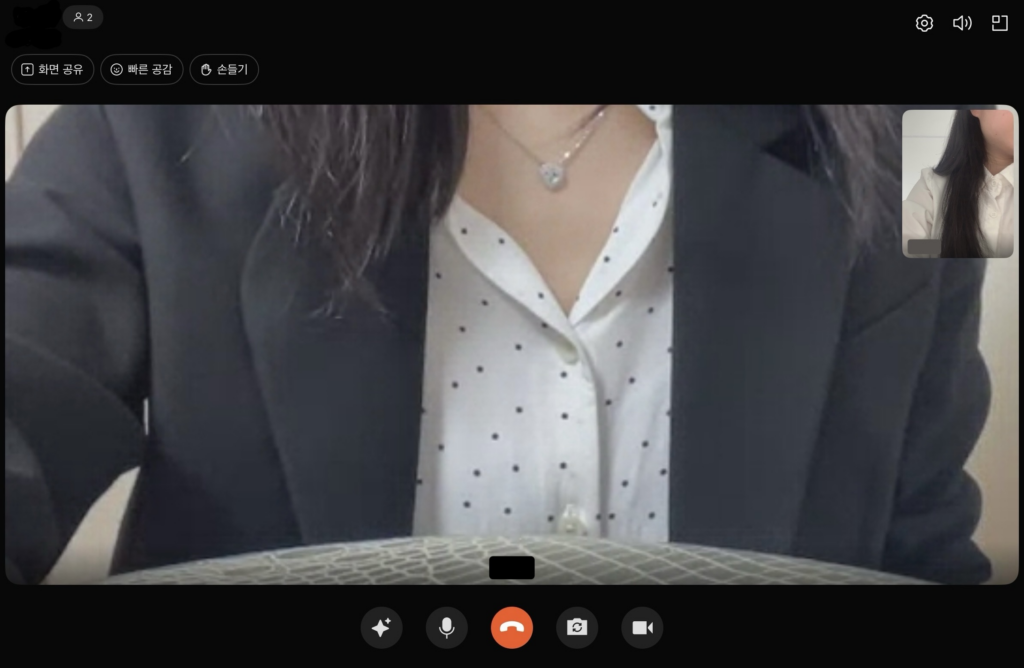
“Wait a minute, I just woke up and am having an egg mukbang right now. Call me back in five minutes.” This was the message I received from her at 9:25 AM. In Korea where she lives, it was already 5:25 PM (8 hours ahead). She was starting her day in the late afternoon and thirty minutes later, I was able to get in touch with her.
– When did you wake up today?
“I woke up at around 5 PM today. I think my body hasn’t adapted yet because my last shift was a night shift. It’s something I’m used to. But starting today, I have two days off!”
– why did you choose to become a nurse?
“I became curious after watching a drama called ‘Dr. Romantic.’ They looked like guardians who protect patients’ psychological stability and health by caring for them 24 hours a day. It’s quite appealing, isn’t it? And more than anything, I wanted to get a job. Back then, the common belief was that if you went into nursing, you would definitely be hired. But the ‘hellfire’ started just as I was about to graduate. The nationwide medical strike began, and all the nursing job announcements were postponed.”
Living in a Dream
Even before Ms. Kim officially became a nurse, she first faced a crisis for her dream. KMA (Korean Medical Association) launched a nationwide medical strike to protest the government’s policy to drastically increase medical school quotas. She remembers the atmosphere of that time, having been as an intern.
– I remember that you were working at the university hospital as an intern during the medical strike. What was the atmosphere like back then?
“Since fewer people were being hired and fewer staff were working, the three-shift system was changed to a two-shift system, and the workload per nurse increased significantly. Now that the medical strike has ended, job postings are starting to come up, but we can’t say the situation has fully recovered. It’s true that getting a job is harder than in the past because there is still a backlog of unemplyed personnel.”
“For instance, in the past, top-ranking students had a relatively clear path to securing positions at large hospitals based on their grades. Now, guaranteed employment is uncertain regardless of one’s grades or ‘speces’ (qualifications). I have a college who had excellent grades, but he waited over a year, dreaming of Kyungpook National University Hospital (a top-tier hospital). I don’t know if he’s been hired yet.”
It seems that the medical situation at the time was a ‘hellfire’ not only for working nurses but also for students aspiring to become nurses, and its aftermath still appears to linger.
– Have you felt like you did something well or felt fulfilled while working as a nurse?
“Honestly, I don’t know if I’ve done anything ‘well’ yet as a nurse, but I have felt proud. It’s very difficult to stick elderly patients in one go because their veins don’t show well. Once, I succeeded on the first try, and the patient said, ‘Aigoo~ why are you so good! Thank you.’ Hearing that directly from a patient really stuck with me.
– Do you have a secret to giving injections well?
“I actually force myself to practice giving injections. Besides clinical practice, there’s no place to practice, right? I should practice with real patients. But some patients ask for higher-ranking nurses to give them the shot. Then I just lie to them ‘I’m really good at it.”
– What if you fail?
“There are times when I genuinely cannot find the vein. In those moments, I have a method: I preemptively manage the patient’s expectations. I say ‘Oh, your veins are too small! They’re so weak! I’ll go get another nurse~’ and quickly bring someone else.”
“But there truly was one patient whose veins were impossible to find. I went out to bring another nurse, but that patient chased me down the hallway, yelling and angry. We quickly brought the Sub-Chip nurse, and even she couldn’t find the vein. But at least he listened to her… (A bitter tone). He apologized to me later though. That’s why I feel most comfortable taking care of calm, easy-going patients When I apologize after a failure, they just say one thing: ‘Try one more time.’”
Dream Break
– That sounds really difficult. Not all patients are as understanding as you’d like, and not even the veins cooperate.
“Still, I like the moment of giving the injection. The result is definite. The moments I felt this job wasn’t right for me were when there were too many variables. Everything depends on the patient’s condition, so I never know what work I’ll be doing before I come in. Those times were hard. That’s when I realized: ‘Ah, I like definite work.’”
“Once during a night shift, I told the Chip nurse I thought an elderly patient was breathing strangely. It turned out to be an emergency situation with rapidly progressing sepsis. So, the emergency room doctor and all three nurses on our team rushed in.”
“My role in that emergency was to quickly start the IV line, but I couldn’t find the vein at all —all four of us struggled to find it. I still remember the Chip nurse directing others, contacting the doctor, and caring for the patient. After spending a day like that —full of unexpected events — I realized that I truly prefer definite things.”
The Next Chapter
Disliking unexpected situations and variables, Woojin has found a new dream toward a career where variables are minimized.
“It’s definitely not the hospital. Though I know the ones who say that are often the ones who stay the longest. After realizing I like definite things, I searched for about some jobs. My new dream is to be a QC (Quality Control) within a company. I know it involves getting a specialized license and managing parts. I started dreaming of it because it has the fewest variables and the tasks are clearly defined. I’m gonna just give it a try.”
Woojin, who dreamed of becoming a nurse at the end of her teens, achieved that goal. Yet, in making that dream a reality, she encountered unwanted situations and felt a dissonance with her ideal—a ‘Dream-Break.’ However, thanks to this experience, she clearly understood what she liked and disliked. Perhaps achieving a dream is akin to breaking the dream itself. But breaking a dream is not necessarily a bad thing. As Woojin demonstrated, it becomes the driving force toward another goal. The end signifies a new beginning. Why not become a ‘dream-breaker’ for the dream that lies beyond the initial goal, even knowing that there’s no Santa Claus there?
Leave a Reply