Visiting the Deutsches Museum — A Journey Through Science, Technology, and History
Germany . ScienceDuring my visit to the Deutsches Museum in Munich, I was struck by how this institution goes beyond simply displaying objects — it shows the unfolding story of scientific research and technological development.
Founded in 1903 by Oskar von Miller, the Deutsches Museum was established with the mission to promote scientific research and public understanding of science and technology. Today, it is one of the world’s largest and most influential science and technology museums, with an enormous collection that far exceeds what can be shown in permanent exhibitions.
After a major renovation, parts of the museum reopened in 2022, presenting a new generation of permanent exhibitions and a more interactive way of experiencing science.
Showing how technology evolves
Walking through the museum feels like moving along a timeline of human curiosity. The exhibitions are not only about inventions, but about how scientific methods, tools, and questions have changed over time.
From early mechanical devices to modern digital systems, the museum highlights science as a process — full of trial, error, breakthroughs, and rethinking. It becomes clear that technology is not static, but something that continuously evolves with society.
Aviation, war, and modern engineering
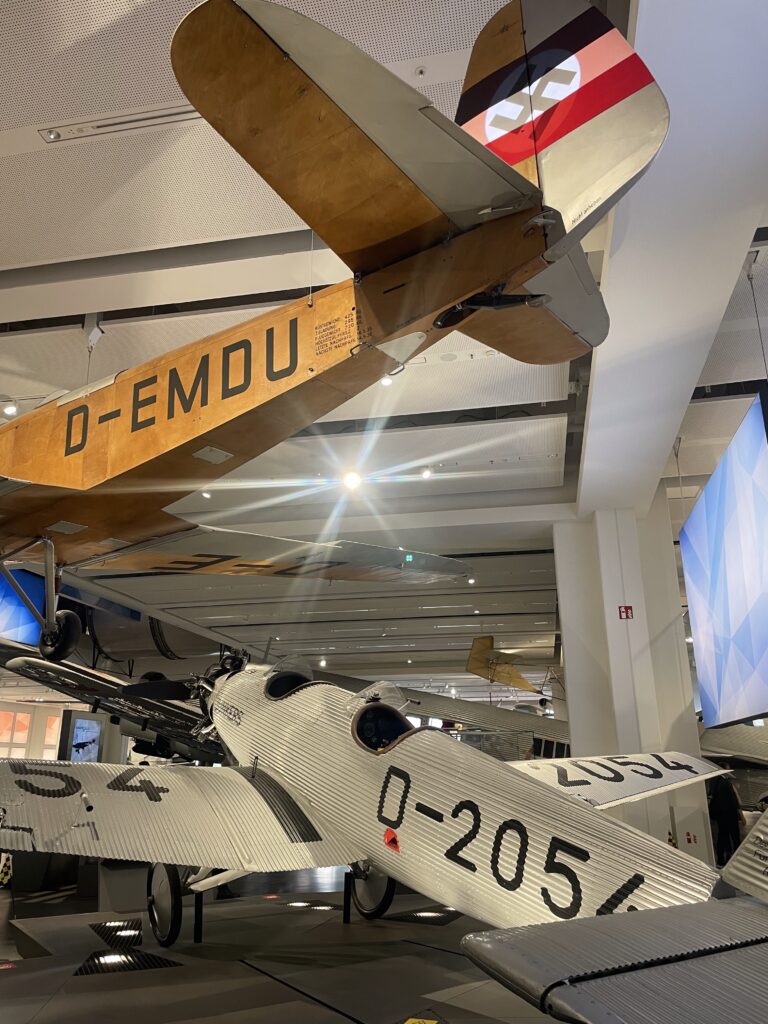
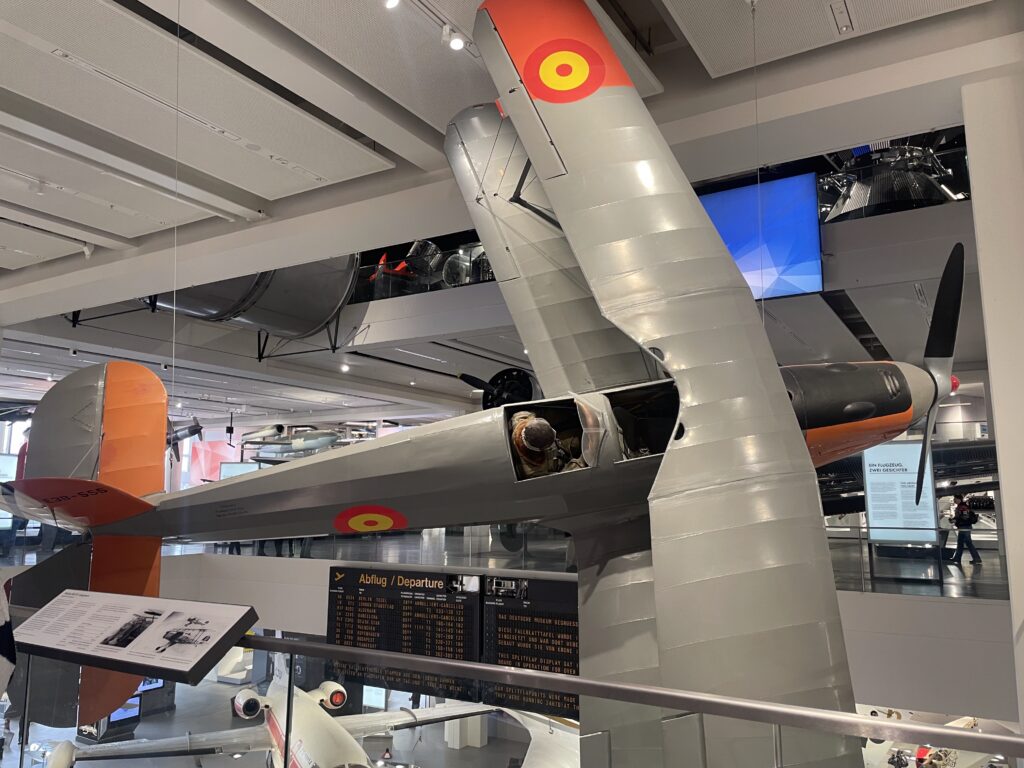
The Exhibition of the Aircrafts
One of the most striking sections for me was the aviation exhibition. Here, aircraft from the First World War, the Second World War, and the modern era are displayed in the same space.
This contrast makes the development of flight especially visible. Aircraft are shown not only as engineering achievements, but also as products of historical moments — shaped by war, political needs, industrial capacity, and scientific innovation.
Standing beneath these planes, it is impossible not to reflect on how closely technological progress is tied to global history.
An unexpected highlight: the meat exhibition
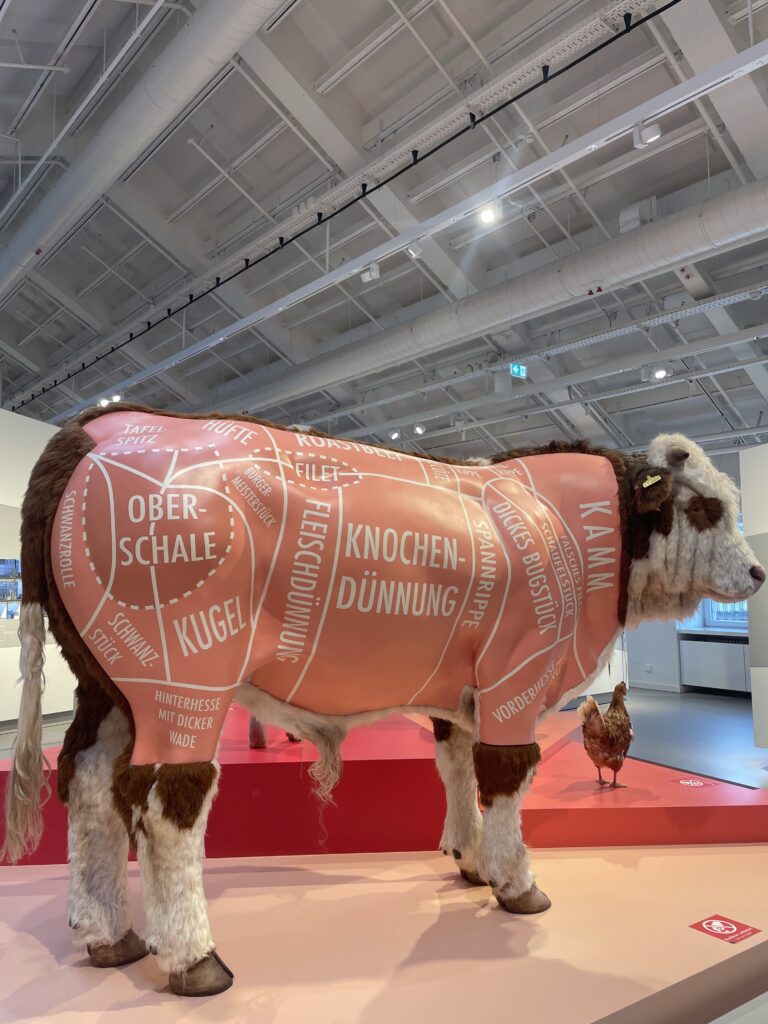
At the end of the visit, one exhibition surprised me the most. I found myself deeply interested in the section on meat and animal anatomy.
The exhibition clearly presented the different parts of a cow and their corresponding names, showing how each cut relates to specific culinary and industrial uses. I genuinely enjoyed finally being able to understand these distinctions in a visual and systematic way. It was fascinating to see how scientific classification and everyday life intersect so directly
The Exhibition of Meat
Overall, the Deutsches Museum does not simply present technology as a collection of objects, but as a living, changing force that shapes how humans work, travel, communicate, and even eat.
This visit reminded me that science is not only something that happens in laboratories — it is deeply embedded in history, culture, and daily life.
Leave a Reply