Behind the scenes at Radio LORA
Uncategorized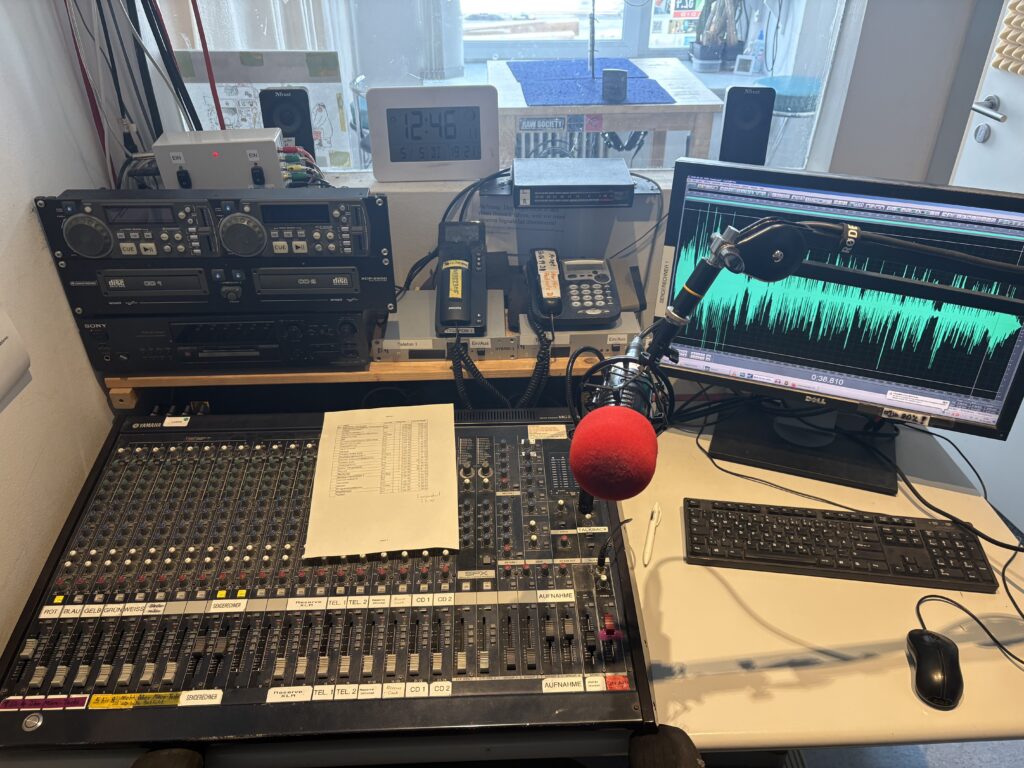
Before our visit, I knew Radio LORA only as the name of a station—something you might scroll past on the FM dial without giving much thought. But seeing the organization up close transformed my understanding of what “free radio” actually means in Germany. It is not just a broadcasting format; it is a daily struggle, a form of cultural resistance, and a community built on passion rather than profit. What I had imagined as a simple local radio station revealed itself to be a living ecosystem of volunteers, ideas, and stories.
Initially, entering the LORA office space, I anticipated a modern, minimal, and busy environment. I pictured sleek desks, soundproof glass, and the kind of fast‑paced atmosphere you see in mainstream media offices. To my surprise, we were greeted by a cozy, almost home‑like space filled with mismatched chairs, handwritten notes, and memorabilia pinned to the walls. One of the most memorable details was the row of large coffee bags decorating the back wall—gifts from a local roastery that once partnered with the station. Instead of throwing them away, LORA kept them as a reminder of the relationships that sustain them. The space felt raw and authentic, the kind of place where someone could speak freely, brainstorm for hours, or curl up with a book while waiting for their show to begin.
Community radio barely exists in Bavaria. In fact, Radio LORA and Radio Z in Nürnberg are the only two stations of their kind in the entire state. That rarity makes LORA’s mission even more significant. They provide a platform for voices that rarely appear in mainstream media—activists, minority groups, grassroots organizations, and everyday people with stories to tell. The uniqueness and passion of the volunteers who run the station amplify this mission. Their dedication is not just admirable; it is essential to the station’s survival and impact.
One of the most surprising parts of the visit was learning how difficult it is simply to exist as a free radio station. LORA’s staff explained the bureaucratic challenges they face: frequency licensing, strict broadcasting rules, and the constant pressure of limited airtime. Even something as basic as securing a stable broadcast window requires negotiation, paperwork, and persistence. Their schedule is also thoughtfully planned out. Every day of the week has a different theme, and we were handed pamphlets outlining the programming—from political discussions to cultural segments to diverse music genres. The variety was impressive, and the music schedule in particular caught my attention. It reflected the station’s commitment to offering something different from mainstream radio.
Hearing all of this made me realize how much invisible labor goes into keeping a small station alive. It’s not just about producing shows; it’s about creating a path for a division of media that was never designed to exist within the current system. Free radio operates in the gaps, the margins, and the overlooked spaces of the media landscape.
The non‑profit component is what shocked me the most. The idea that these volunteers—so passionate and dedicated—keep Radio LORA alive without the financial incentives typical of media work is extraordinary. In a capitalist society, where salary cuts and gains often determine one’s value, the adoration these volunteers have for community radio surpasses all of that. They invest their time and energy into something that pays off in ways other than money. Their zeal for radio is what has driven the station for decades. Despite the countless hardships they have faced, Radio LORA has always found a way to overcome them, fostering a community of tight‑knit individuals who do what they love.
Reflecting on our visit to Radio LORA, I realized how rare it is to encounter a space that is so deeply rooted in authenticity and collective purpose. The station reminded me that media does not always have to be polished or commercialized to be deemed important. Often, the most meaningful stories come from places held together by people who believe in giving others a voice. I gained an insight on independent media that made me recognize its diversity, growing respect for those communities who dedicate themselves to keep it alive.
Leave a Reply