26 Minutes on Air: Giving the Voiceless a Frequency in the Free State
Uncategorized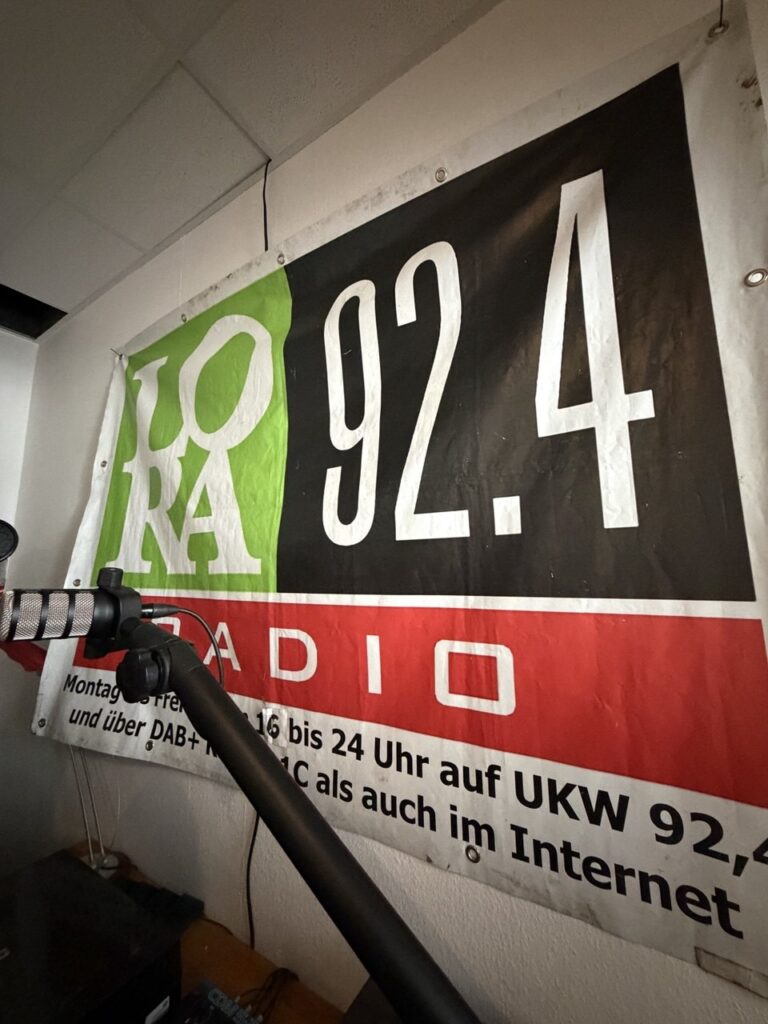
This field trip to Radio LORA München made me completely rethink how media works in Germany.
As an international student looking at how alternative digital spaces can mobilise communities, seeing an analog, localised version of this struggle firsthand was eye-opening. LORA isn’t just a quirky radio station, it is a case study in structural resistance.
The Split Frequency
I’ve always thought that the German media system is straightforward: you either have public broadcasting paid for by household fees, or private media making money through ads. But here in Bavaria, everything is different. There are only two community radio stations in the entire state: LORA and Radio Z in Nürnberg. They are run by volunteers who don’t get paid a single cent. Because Bavaria calls itself a “Free State,” the government refuses to give them any regular funding. Karin shared that when LORA’s team went to the city hall and the Bavarian State Parliament to ask for financial support they were dismissed with politicians telling them “This is Bavaria, we are a free country. Here, everyone can do what they want, even run a radio station!”
I realised the state’s logic is: you have the freedom to speak, but you have to pay for the microphone yourself. It’s a passive-aggressive form of censorship. By withholding structural funding, the state ensures that alternative, critical voices remain exhausted by the sheer logistics of survival.
Inside a Humble Space: The Anti-Corporate Aesthetic
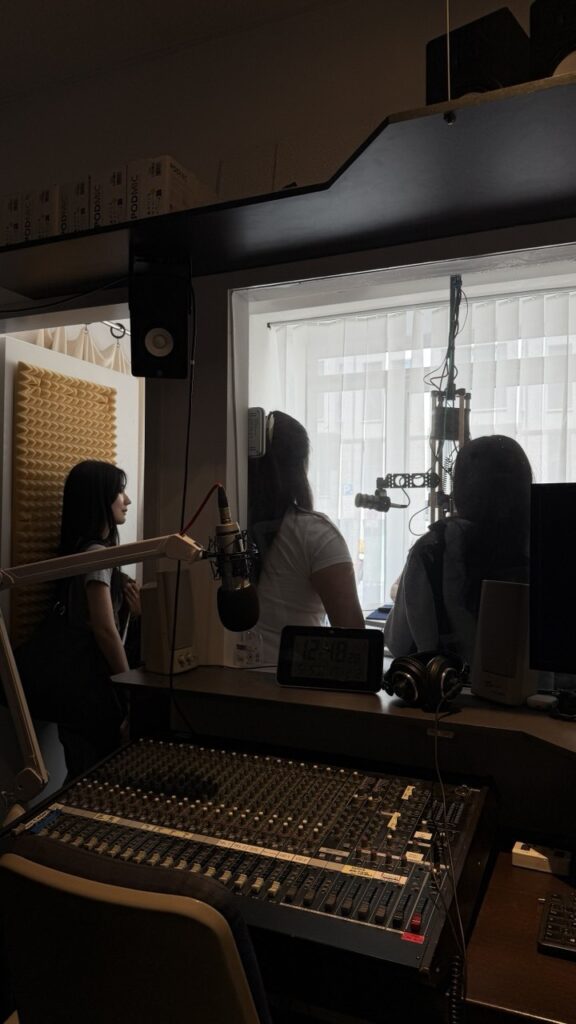
The studio doesn’t look like a slick, corporate media office. It is raw, lived-in, and incredibly small. Stepping inside the recording booths, I saw just how makeshift everything truly is. It isn’t like the professional studios we are used to seeing with everything seamlessly built into the architecture. Instead, it is just a small, cozy room with foam sound-absorbing panels manually stuck to the walls to handle the acoustics. It felt incredibly humble.
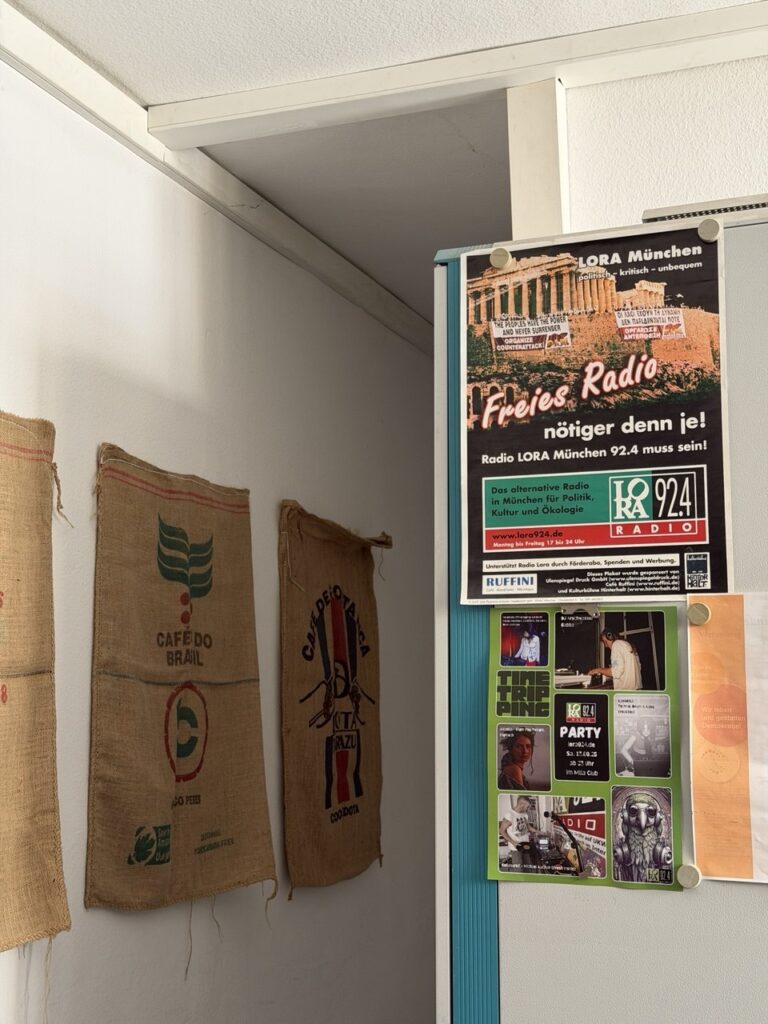
I noticed a total clash of eras in the main rooms. There were mixing boards with fading labels, analog gear mixed with digital cables, and a cloud upload setup. I even saw an old mobile cooking plate sitting in the corner. The space smells like old electronics and coffee , which I found out was actually paid for in airtime when a local roastery traded a few kilos of beans for a quick “thank you” shout-out on air.
What struck me most was how this physical messiness translates to their editorial philosophy. I learned that LORA rarely puts corporate spokespeople on air because they all sound identical. Same rhythm, same corporate vocabulary. Instead, the people here are activists, non-professionals, and minorities. I watched volunteers editing their own tracks, coordinating time slots, and managing their own shows from start to finish.
The Pandemic Contradiction
During Covid-19, the government officially declared LORA “system-relevant” because they provided public entertainment and information, meaning they were legally forbidden from shutting down their broadcast. But because they are entirely run by unpaid volunteers, they couldn’t easily issue night-time curfew passes to their sound engineers and music hosts who had to do live shows until midnight. This made me realise how hypocritical the system is. The state forced them to keep working because their voice is essential to society, but gave them zero funding to actually survive. They want the democratic benefit of alternative media, but they expect the volunteers to pay the bill for it.
Democratic Media is Inherently Unfiltered
Because LORA lets the activists completely control the content, they’ve hosted some of the most unconventional programs I’ve ever heard of:
Lora Pleasure: A late-night slot where two female cabaret hosts read historical erotic literature.
The Cooking Show: A radio show that ran for 7 years where guests brought a literal hot plate into the studio. The broadcast was just the raw sounds of sizzling onions mixed with talks about wine.
Beautiful Stutter: A live call-in show run entirely by disabled speakers who stutter, aimed at reducing the fear of speaking to others by putting unfiltered speech directly on the airwaves.
This specific part of the visit made me realise something important about media representation. When mainstream media talks about “giving a voice to the voiceless,” they almost always filter those voices through a polished corporate lens to make them digestible. LORA doesn’t do that.
Standing in their tiny makeshift recording booth, which is literally just a small room with foam sound absorbing panels manually stuck to the walls, it hit me that real grassroots communication is intentionally messy. It isn’t a slick studio with built-in architecture. It’s a humble cozy space where if you stutter, you stutter live on air. If you cook, the audience hears the grease popping. It’s human, unedited, and raw, the exact opposite of a PR script.x
Leave a Reply