Media School: Why Hands-On Is the Way to Go
Excursions . Germany . MediaA chicken hat, half-cut bell peppers on a counter, a dog, a Minion figurine hanging on the wall, and cucumbers used for playing “Gurki Ball” – these are probably not the first things one would expect to find in a training institution for aspiring journalists and media professionals. Yet, these were exactly the kinds of things one could find throughout the rooms of the Media School Bayern. At first glance, these seemingly random impressions may appear insignificant. However, they capture the essence of the institution remarkably well: young, creative, lively, and right in the middle of the action.
A Learning Environment Built on Practice
The Media School Bayern is a training institution for aspiring media professionals located in the AGROB Media Park in Ismaning, surrounded by major media organizations such as Antenne Bayern, Bayerischer Rundfunk and HSE. Around 100 students participate in its programs each semester, attending courses and workshops, and gaining practical experience through radio, television, online journalism, podcasts, and social media productions. Rather than generating revenue through tuition fees or commercial media products, the school is funded by a network of media organizations and institutions. Its largest shareholder is the Bavarian Regulatory Authority for New Media (BLM), which provides public funding but does not influence editorial content. This structure allows the school to maintain journalistic independence while providing students with access to professional networks and resources.
What makes the Media School Bayern particularly relevant within the German educational landscape is its emphasis on learning through practice. Instead of primarily teaching journalism in a classroom setting, students are encouraged to develop and realize their own ideas. The production process often starts with a simple idea, such as covering a local event. Students then decide which format is most appropriate: a written article, a radio report, a television piece, or short-form social media content. Each format requires a different journalistic approach. Students learn how journalistic content must be adapted to the specific requirements, audiences, and storytelling conventions of each platform.
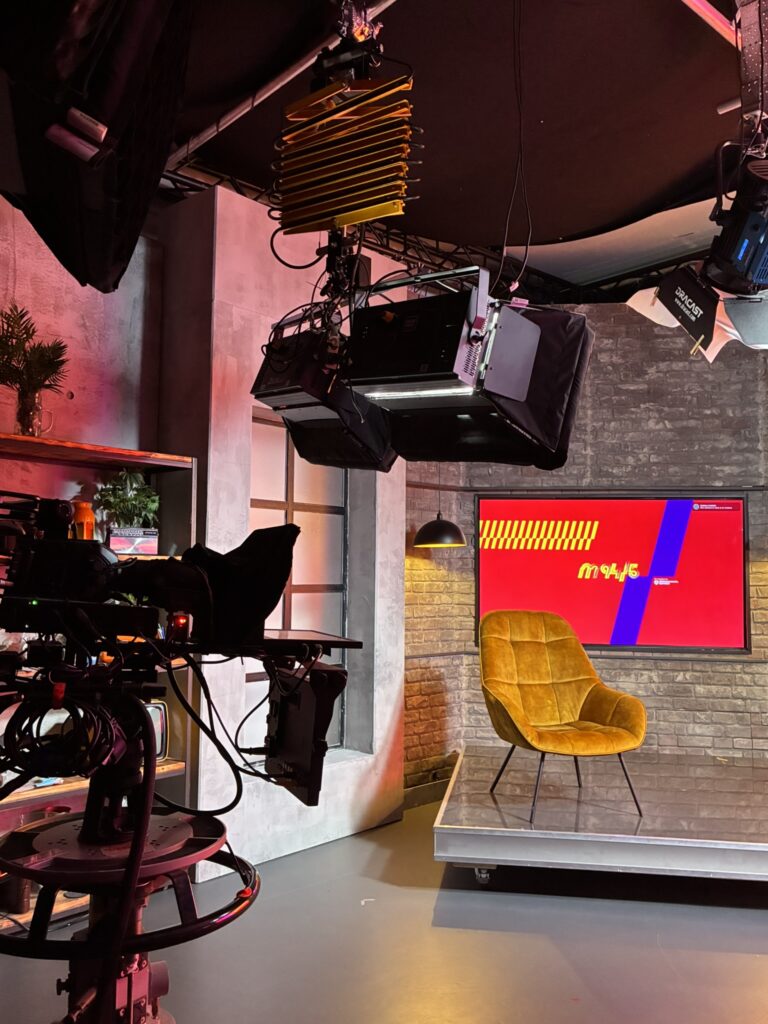
The freedom offered by the Media School Bayern creates an experimental environment in which students are encouraged to test new ideas without fear of failure. The school provides guidance and resources, but participants remain largely responsible for their own projects. As a result, they do not merely learn about journalism; they actively practice it. The hands-on approach allows students to gain experience across different formats while working on real productions and reaching actual audiences. Furthermore, the school’s partnerships with established media organizations create valuable pathways into professional journalism.
Balancing Creative Freedom and Professional Standards
However, the experimental freedom offered by the Media School Bayern should not be mistaken for a lack of standards. Despite its experimental atmosphere, the organization emphasizes fundamental journalistic principles such as fact-checking, fairness, and the representation of different perspectives. The journalistic role performance reflected in the Media School Bayern’s content, particularly through its radio station M94.5, can primarily be classified as informational-instructive and analytical-deliberative. Its content aims not only to inform audiences about socially relevant issues but also to provide context and encourage public discussion. At the same time, the organization fulfills a developmental-educative function by promoting media literacy and civic engagement among young audiences (Hanitzsch & Örnebring, 2019).
While the strong focus on practical experience is undoubtedly one of the institution’s greatest strengths, the experimental nature of the Media School Bayern can also present challenges. Because the organization is not primarily driven by commercial pressures such as maximizing clicks, views, or advertising revenue, students are given considerable freedom to test new ideas and formats. While this creates valuable learning opportunities, it may also result in content that does not always meet the standards of highly optimized professional media productions or fully align with audience expectations. The challenge lies in balancing creative freedom, learning objectives, and audience needs.
Overall, the Media School Bayern demonstrates that journalism is best learned not only through lectures but through participation. By allowing students to experiment, create, and take responsibility for their own projects, the organization provides an educational environment that closely resembles real-world media work. In a rapidly changing media landscape, where adaptability and practical skills are increasingly important, the Media School Bayern’s hands-on mentality appears not only effective but essential. If there was one lesson to take away from the field trip, it is that sometimes the best way to learn journalism is simply to start doing it.
Source: Hanitzsch, T., Örnebring, H. (2019). Professionalism, Professional Identity, and Journalistic Roles. In Hanitzsch, T. (Ed). The Handbook of Journalism Studies. 2nd Edition. Routledge.
Leave a Reply