Visiting Mediaschool Bayern
Excursions . Germany . Media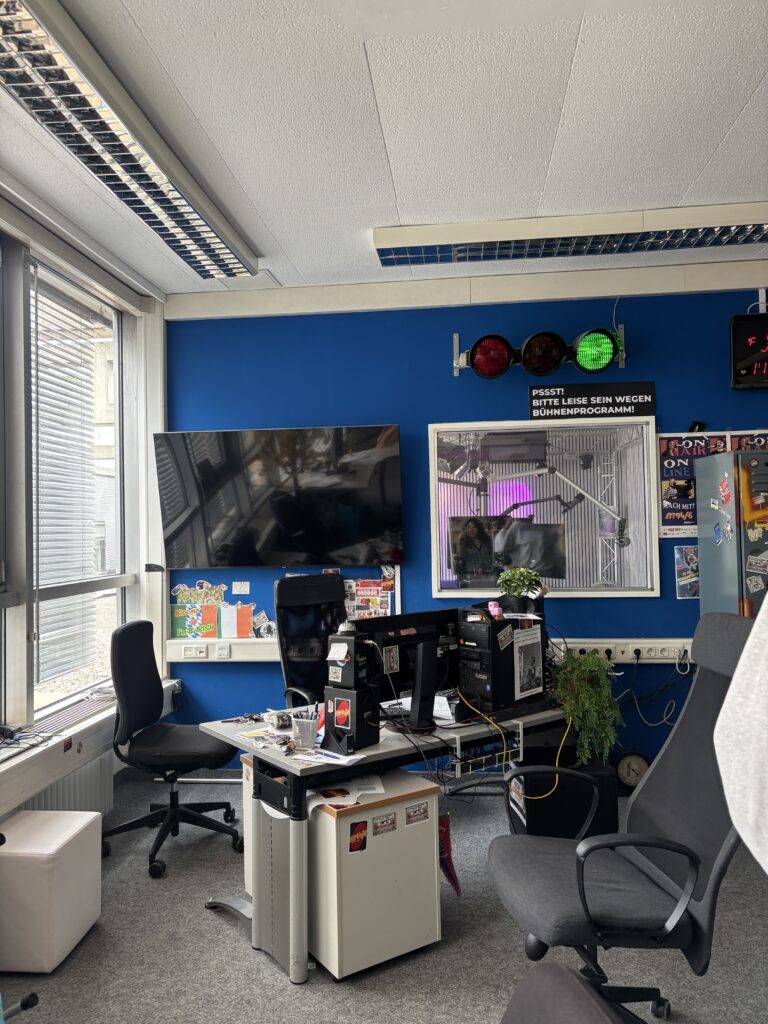
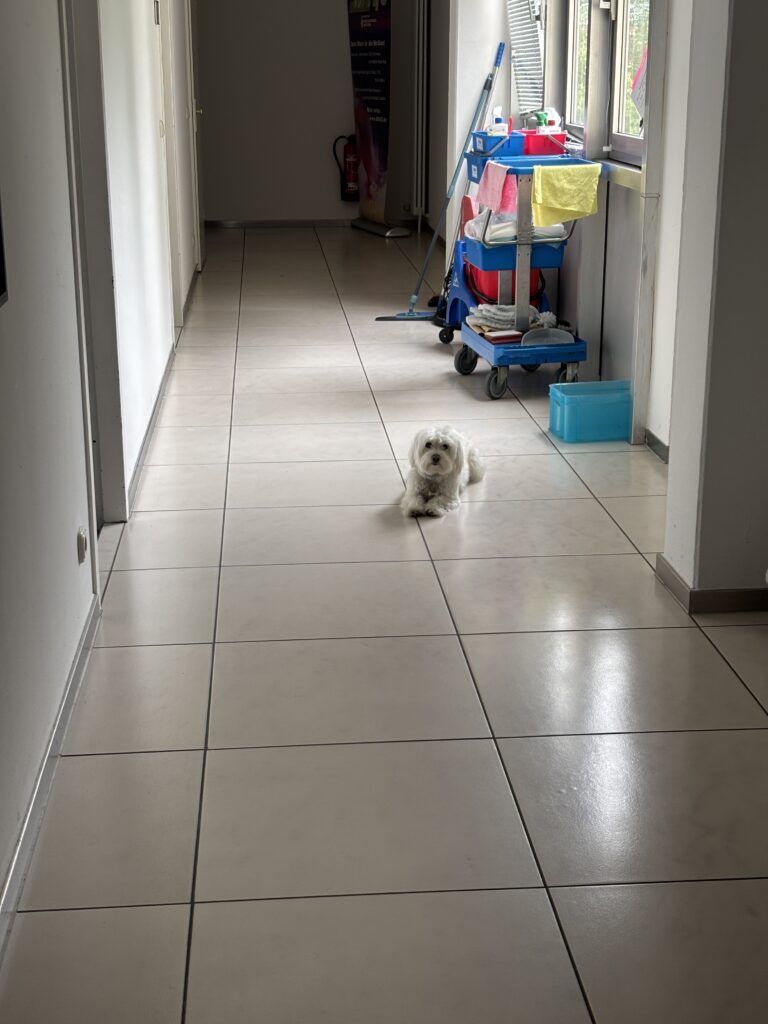
During my first visit to Mediaschool Bayern, I was highly impressed by the state-of-the-art equipment and the maze-like production spaces. Through the campus tour, we explored all the core facilities, including the radio studios, professional meeting rooms, and broadcasting studios. Watching a dog follow us around the whole time and seeing people chatting freely made me feel that the school has a very open and relaxed atmosphere. Yet, at the same time, I could tell it is a smoothly running organization.
Mediaschool Bayern is a public interest educational institution that offers students free hands-on training under the guidance of faculty and tutors, giving them the chance to run actual media outlets. Here, students do not just work on simulated assignments; they produce professional content that is actually broadcast to real viewers and listeners.
Real broadcasting stations like Munich’s ‘M94.5’ and Nuremberg’s ‘max neo’ are operated through this school. In particular, M94.5 broadcasts 24-hour live radio programs in the Munich area via DAB+ channels 10D and 11C, with most of the content created directly by students from various universities and majors.
The school provides comprehensive training in all aspects of broadcast production, including audio and video editing, camera operation, social media management, graphic design, and marketing.
Beyond that, they train students on the essential standards expected of professional journalists, such as thorough research, fact-checking, and strictly separating personal opinions from factual reporting. Above all, the school nurtures future media talent by emphasizing the social responsibility of journalists to serve the public interest.
The operating model of Mediaschool Bayern was highly impressive. While it serves as an excellent model for providing public interest media education, it also faces clear structural limitations as a non-profit organization. First, because Mediaschool Bayern is free from the pressure of commercial ratings and advertising revenue, it allows students to boldly try experimental and creative content formats. Another advantage is that it offers media education opportunities to talented individuals through programs like free practical workshops.
However, there are some challenges to consider. Despite promoting independent journalism, a significant portion of its funding relies on the Bavarian State Authority for New Media and major private media companies. This raises structural questions about whether an institution funded by these corporations can truly deliver completely unbiased and fearless criticism of the media industry itself. Additionally, there is an operational limitation in that the daily running of the stations relies heavily on the labor of temporary student workers, such as interns, student volunteers, and short-term freelancers. This seems to be a challenge faced not only by Mediaschool Bayern but by the media industry as a whole.
Leave a Reply