Analysing Irish Women’s Place in History
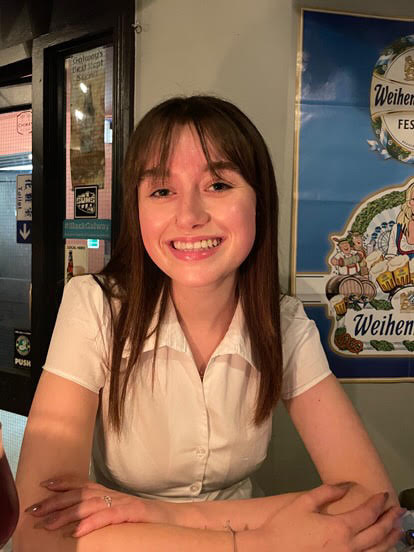
InterviewAoibhín Ní Gleasain won a Global Graduate award for an essay she wrote about The Mother and Child Scheme in Ireland which was failed to be implemented. It is an interesting topic so I decided to interview her on her interest in History and her essay.
GOH: Could You explain briefly what your project was about?
ANG: My paper examines the 1951 proposed policy entitled ‘the mother and Child Scheme’. It was proposed by Dr. Noel Brown and would have seen free sate funded maternity and gynaecological care for Irish women and free GP visits for their children up until the age of sixteen. The scheme never passed stages in the Dáil (Irish Parliament) due to church and some inter-party politics, so it was never enacted. But my paper examines the proposal and tried to determine why the scheme failed to be fully implemented. I analysed it through a comparative context of the emergence of the NHS (National Health Service) in Britian, looking at the lack of legislative background and the slow movement towards socialised health care in both states. I also looked at it in comparison to an Italian scheme which is very similar, it provided similar if not more radical maternity care in Italy and I analysed that to view in comparison how the church interacted with the scheme and how the schemes success in being adopted as governmental policy.
GOH: Was there any reason in particular that you chose this topic?
ANG: I suppose I am quite interested in the fact that Ireland is an island, but it doesn’t exist in isolation, and I’m interested in these transnational connections between Ireland and other states. A lot of my research relating to this would have been derived from archival trips and sources and through looking through some of the national archives we have in Dublin. I found a letter from a Doctor in Limerick, who was involved in the government, to an Italian Priest who sponsored the Italian scheme, so this showed that there was this awareness of this Italian scheme in Ireland and that Italy was aware of Irelands problems and the interactions that both states had with one another. The other reason I chose this topic is that I am interested in this idea that when the Irish state was founded that there was this attitude of anti- Englishness and anti-Britian and the idea that no matter what would be beneficial for the Irish people if the British did it we wouldn’t do it and that kind of tension between what’s good for the state and what’s good for the national narrative.
GOH: What award did you win?
ANG: So, I won the regional winner for the Global Undergraduate award in the category of History. So, the global undergraduate awards, is an Irish based awards ceremony which seeks to award Undergraduate work from all over the world. Theres about 25-30 categories and there are the global winners and then regional winners, so I won it for the region of Ireland which included Northern Ireland, so the whole island. The are also categories called the highly commended and the rising circle, who are people who wrote very good essays, but they didn’t reach the regional categories.
GOH: Has this inspired you to do similar work?
ANG: At the moment I am currently researching the impact of the Ladies Land League on the emergence of early nationalist feminist movements in Ireland. So, I suppose my emerging area of research is in this alternative history of Ireland and theses sort of, I wouldn’t necessarily call them radicals but these people who sort of fought against the tide to make Ireland more egalitarian. My interest in this is more the transnational elements of this, so Irelands interaction on a national stage and how that effects Ireland and the perceptions that people hold of Ireland globally. So now I’m looking at the impact of the Ladies Land Legue on early national feminist movements in Ireland and I’m looking at the view other feminist organisations in the late 19th century, early 20th century would have had of Ireland. So, I’m focusing in on some organisations in Ireland but also the perceptions held by the British Suffragettes of Irish women.
GOH: Do you have a favourite Irish historical figure?
ANG: Ironically this is to do with my paper, but it’s a man named Dr. Noel Brown he was a Doctor and the Minister for Health when they tried to implement this policy. He was quite an interesting character politically in Ireland. He was kind of always on, what I would deem, the good side throughout his life. He grew up in Waterford and spent his life trying to fight tuberculosis and try to come u with a cure because his family died of tuberculosis. I like the idea that from his tragedy he tried to help and seek a cure.
GOH: So, is Irish History your favourite type of history to study?
ANG: Yes, it is the best history in the world. No other history in the world ever will compare to Irish History cause it’s just so amazing!
Unfortunately, Aoibhín could not attend the ceremony for the award so there is no photo of her with her award.
Leave a Reply