Pedro Martín: “Journalism is tough, but exciting”
Authors . Interview . Media . Media influence . Spain . Sports . UncategorizedPedro Martín – Sports Journalist at Cadena COPE
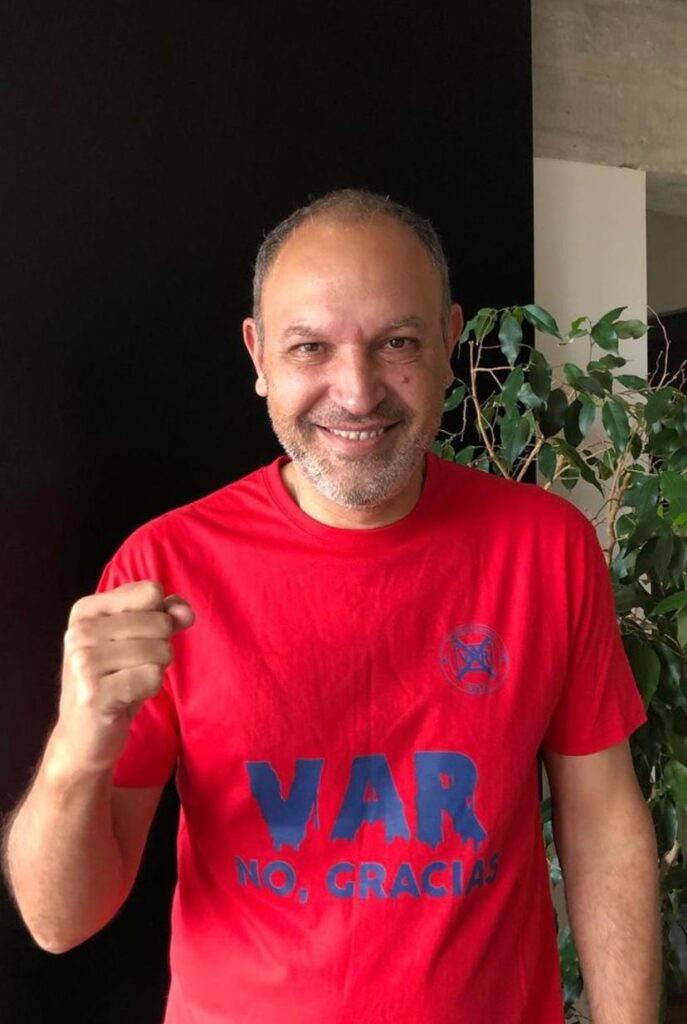
Pedro Martín, a true Madrilenian, works at Cadena COPE, one of the most prestigious radio networks in Madrid, Spain, specifically on the sports programme Tiempo de Juego. He is a key figure at the station, and his main role is to handle football statistics and data, as well as acting as a kind of “referee” during live match broadcasts.
He is a journalist through and through. He has been working in the profession since 1990 and had always dreamed of the career he has today. His story reflects both the good and the bad sides of journalism. This human interview offers an insightful perspective on the profession.
Interview
Q: Do you think journalism is really as vocational as people say?
A: Yes, journalism is a very complex world. You need to be prepared and qualified for many things, and if you’re not passionate about what you do, it’s very hard to deal with situations of uncertainty, especially in terms of job stability.
Q: In your personal case, did you know from a very young age what you wanted to do?
A: (Laughs) The truth is, my case was incredible. I couldn’t imagine working in anything that wasn’t related to journalism or football. And look where I ended up… From a very young age at school, all I did was follow football results and learn about players. Besides that, I always had a very organised mind. In my free time, I used to make rankings of everything I could think of. I was a bit crazy, but it was what I loved.
Q: Were the beginnings difficult?
A: Well, like any journalism student who enters the job market. It’s about learning how to survive, making contacts and knowing where you’re getting into. I studied Journalism at the Complutense University of Madrid, and when I graduated, I explored several options. Due to my family’s financial situation and other factors, it was essential for me to find a job quickly. My first job related to what I had studied came fairly soon, but it wasn’t really what I liked.
Q: Do you mean it wasn’t about football?
A: In reality, anything related to journalism interested me from a very young age. Writing has always been one of my greatest passions. But because I had such a clear idea of what I wanted to do, my first jobs felt a bit “boring” to me.
Q: This profession often means working far away from home, right?
A: I went wherever life took me, wherever I saw there was work. I worked a lot outside Madrid, and I actually enjoyed it. Getting to know other cities and learning in each place really enriched me. I never lacked culture. I worked at a newspaper in Lugo and another one in Málaga. Both experiences helped me grow professionally, and I fell in love with both cities.
Q: And after everything, this profession gave you everything you had always dreamed of. How did it all happen?
A: After several years learning and growing in this profession, I managed to work at AS. It was a dream come true. I spent several years there, and then I came across radio. Paco González had been my friend since childhood and trusted me for a new project at Cadena SER. We were a group of young people full of hope and eager to create something new, fun and powerful. The programme was called Carrusel Deportivo. I started being the “football statistics journalist” and I was very happy. After several years at that station, our next destination was COPE. The whole group moved to this station with a new project. Today, Tiempo de Juego is the most listened-to sports radio programme. It took a lot of work to make it succeed, but enthusiasm, passion and hard work were always there.
Q: After so many years, what would you say is the key to succeeding in a profession like this? What message would you give to future journalists?
A: Journalism is tough, but passionate. With everything I’ve said in this interview, I think it’s clear that it’s a complex world where it’s hard to know where you’ll end up, and where uncertainty often overwhelms you.
All of that is important to keep in mind. It may sound typical, but in my opinion, the most essential things are hard work and determination. Who would have told a four-year-old kid that he would end up working at COPE, on a programme of that level and with such important professionals? Life often surprises you, but you also have to earn your luck.
To future journalists, I would say: work hard, never stop learning, and stay strong in any situation. It’s a profession that requires a lot of wisdom and professionalism.
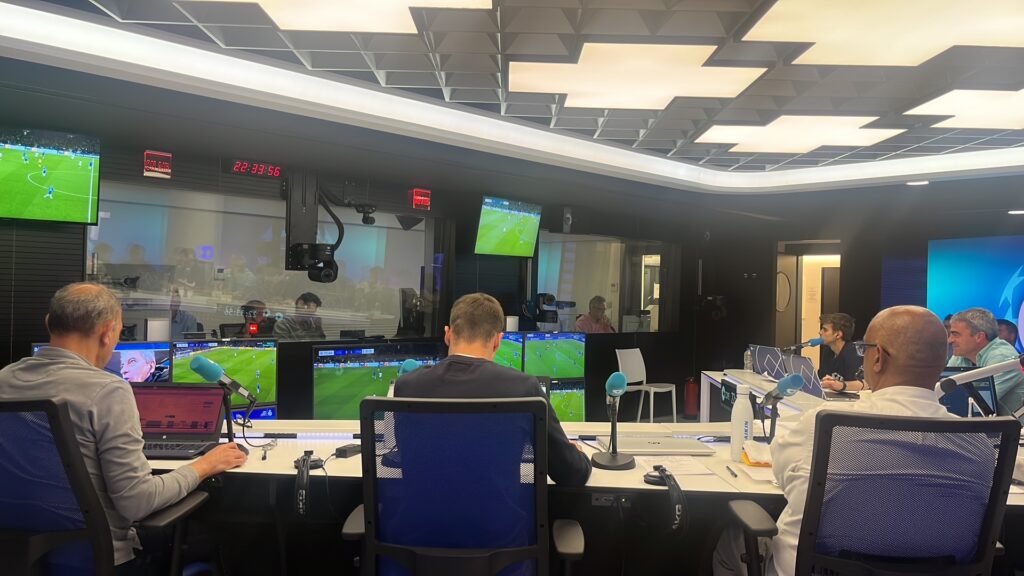
Q: And more specifically, now that radio is what you’re closest to, what do you think about this medium? Do you believe in its future, or do you think it will eventually disappear or evolve into something else?
A: Radio has given me everything, so that’s why I can only speak about it with beautiful words. I firmly believe it is the most transcendent, beautiful and useful medium that exists today. What radio gives you, neither television nor social media can. You don’t need a physical image to succeed; talent is enough. Just by listening, it can transform ideas, movements and perspectives.
As for the future, I don’t overthink it. Radio is not going to disappear, but it may evolve into different and original formats. I trust that its essence will never disappear and that there will always be listeners who defend it.
Q: Finally, what do you think about artificial intelligence? Do you think it could one day replace jobs like yours?
A: This question is not really my style. I consider myself a very traditional man and not very modern for these things. For me, wherever there’s a radio, you can take my mobile phone away. Maybe that’s why I can’t imagine something much further when it comes to things like artificial intelligence. Honestly, I think everything is a process. If it really is something that will arrive to make our lives easier, it will come.
But I firmly believe in human intelligence, and I’d find it deplorable if such a beautiful profession disappeared. What would we do without radio, for example?
In my personal case, it’s possible that my database could become insignificant, given that machines can store everything. But the essence and uniqueness of human work will always be there.
Pedro’s story makes it clear that journalism goes far beyond microphones, studios and headlines. It is a career marked by uncertainty, long hours and constant pressure, but also by the excitement of telling stories and connecting with people. What stands out the most from his experience is the importance of persistence and passion. His journey shows that real success is built slowly, with effort, humility and dedication, proving that when you truly believe in what you do, every obstacle becomes part of the learning process.
Leave a Reply