Media School Bayern: What It Really Means to Learn Media by Doing
Media & JournalismVisiting Media School Bayern was not just a field trip — it felt like stepping into a real, working media organization.
Before going in, I unconsciously imagined something very “academic”: classes, assignments, maybe some simulated projects. But what I encountered was much closer to a newsroom and a production studio than to a traditional classroom. Here, students are not preparing to enter the media industry. They are already inside it.
Student radio: not a simulation, but real broadcasting
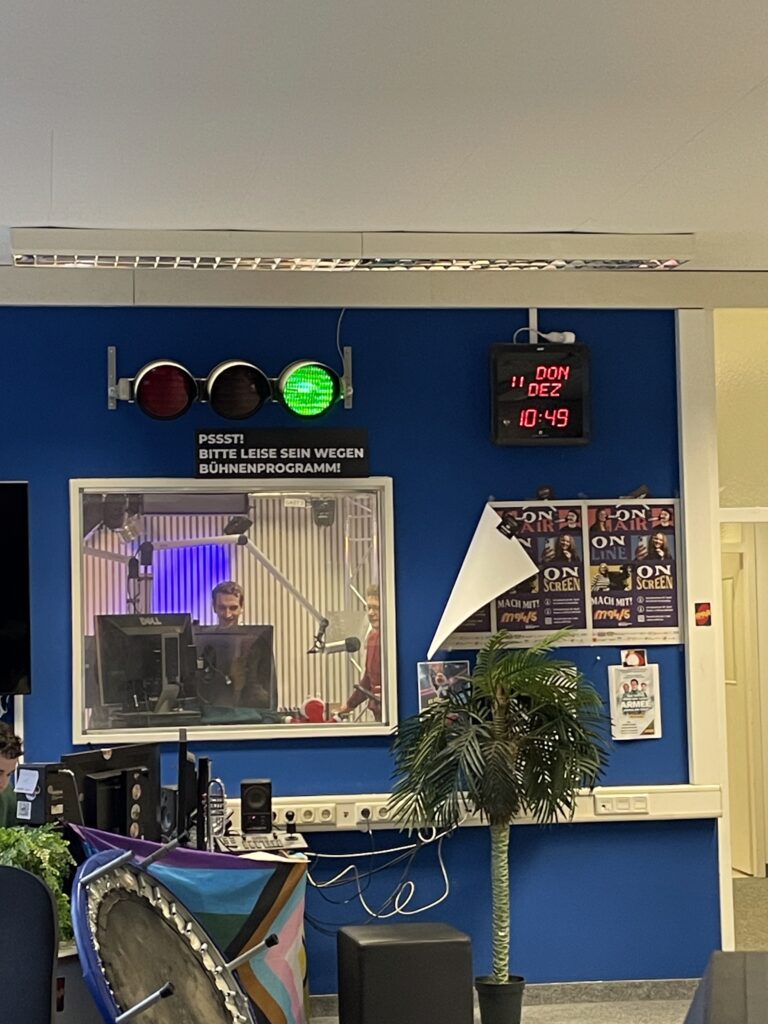
One of the first things we learned about was their student radio program. Students come once a week alongside their regular university studies and participate in real content production — completely free of charge.
A sentence that stayed with me was: “We don’t give people money, but we give people knowledge.”
Students are involved in producing programs that actually go on air. They plan shows for the afternoon and the next morning, brainstorm topics such as loneliness, Christmas, urban spaces in Munich, and everyday youth culture, gather background information, look for interviewees, and structure the program together. This is not “practice work.” It is real media work with a real audience. Radio Recording Studio
From radio to video: learning the entire production chain
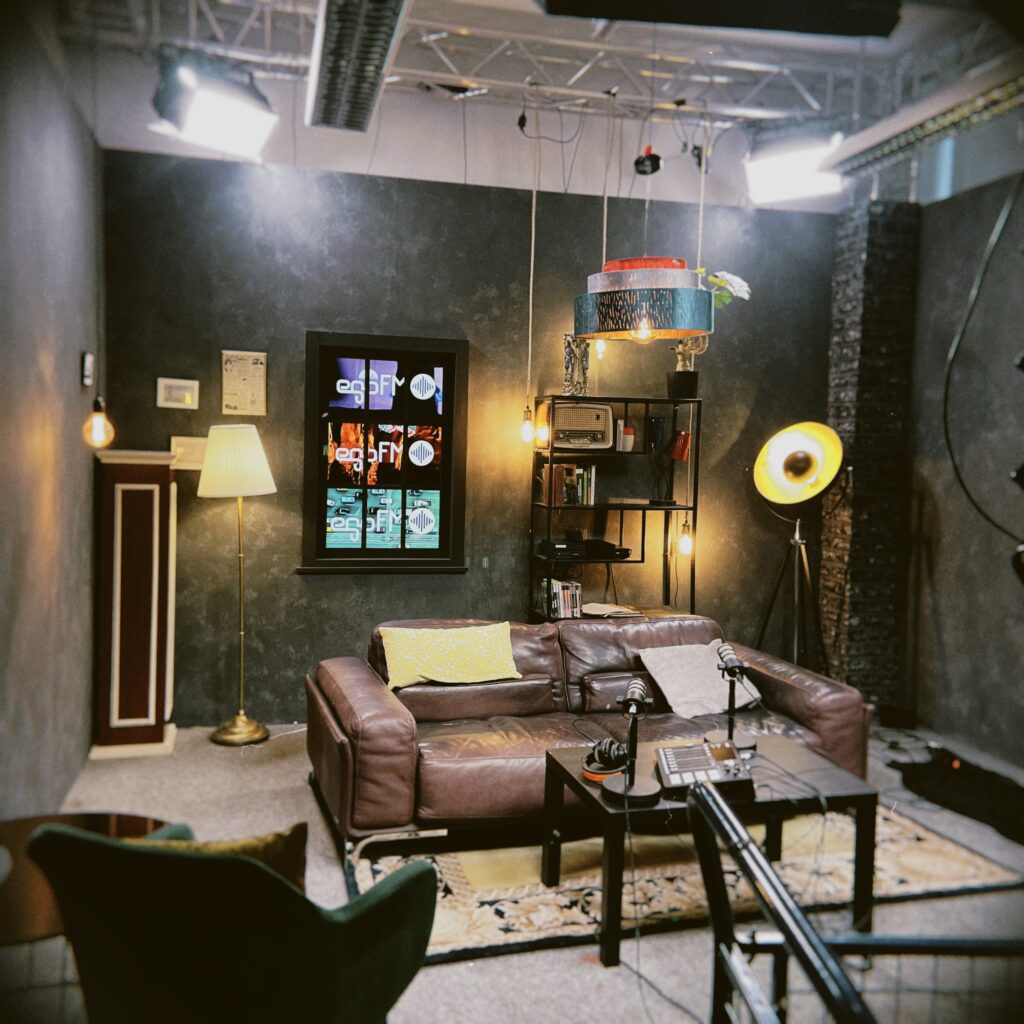
Beyond radio, Media School Bayern is actively developing video formats — TV-style programs, YouTube videos, and podcasts. Students are encouraged to move across formats and platforms, not being limited to a single role.
What impressed me most is that students are expected to handle a project from beginning to end. Step by step, they rotate through different departments and learn how every part of media production works: topic development, filming, sound recording, editing, and post-production.
The goal is not to train narrow specialists, but people who understand how a media product is built as a whole. TV Program Producing Studio
Technology matters less than problem-solving
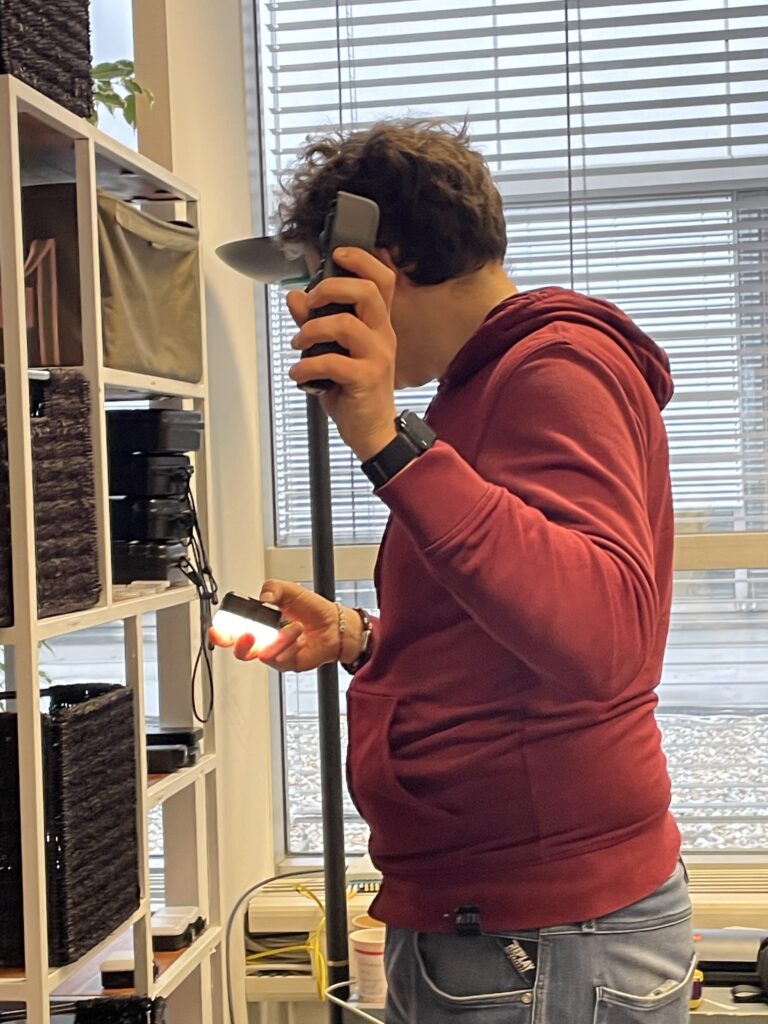
I expected to see rooms full of top-level professional equipment. Instead, the staff told us something surprisingly honest: “Our best-quality production tools are actually iPhone 16 and DJI cameras.”
What matters more than equipment is the working environment they create. Students constantly deal with unexpected situations: audio that cannot be used, technical breakdowns, last-minute changes, unstable shooting conditions.
Instead of avoiding these problems, they are encouraged to face them — and solve them. In that sense, Media School Bayern does not teach an “ideal process.” It teaches how to continue a project when reality becomes messy, which is probably the most authentic preparation for media work. The Staff is showing the Production Tools
My reflection: this is not a school, it is an early entry into the industry
After the visit, I kept thinking about what “media education” really means today.
At Media School Bayern, students do not wait until graduation to encounter professional reality. They learn inside it. They take responsibility for content, work in teams, negotiate ideas, manage time pressure, and produce work for real audiences.
In an era shaped by artificial intelligence and rapidly changing platforms, technical skills alone are never enough. What becomes truly valuable is the ability to design content, coordinate processes, and respond to uncertainty.
This visit made one thing very clear to me: Media is not something you only study. Media is something you learn by doing.
Leave a Reply