On Air: 92.4FM Radio LORA
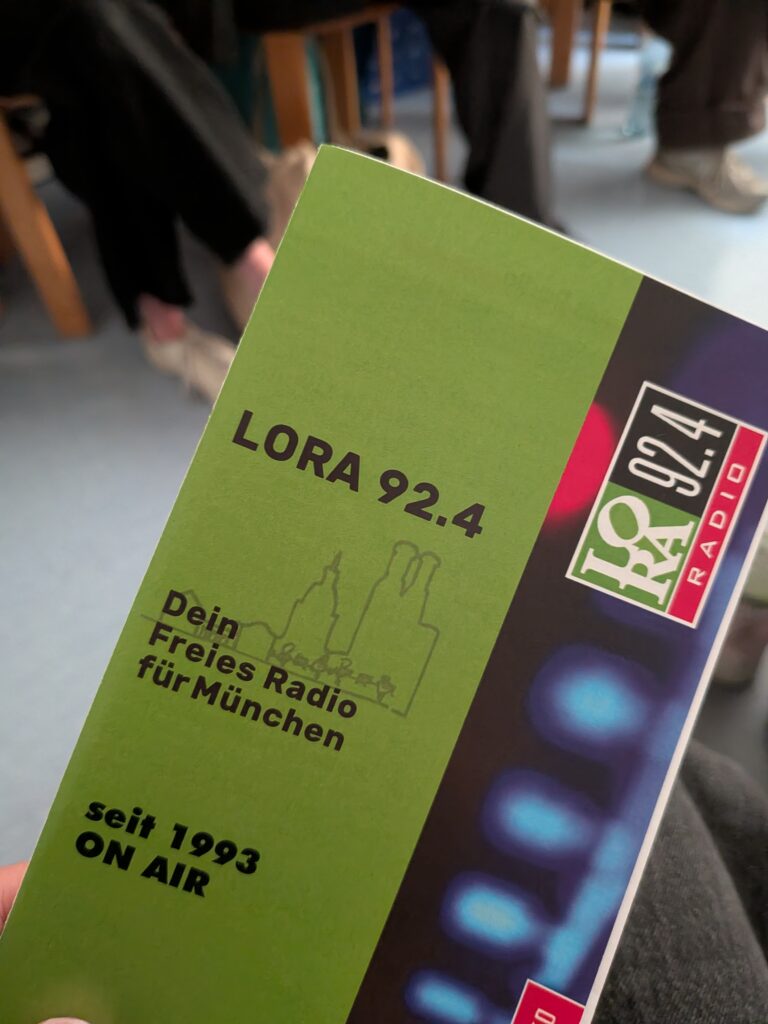
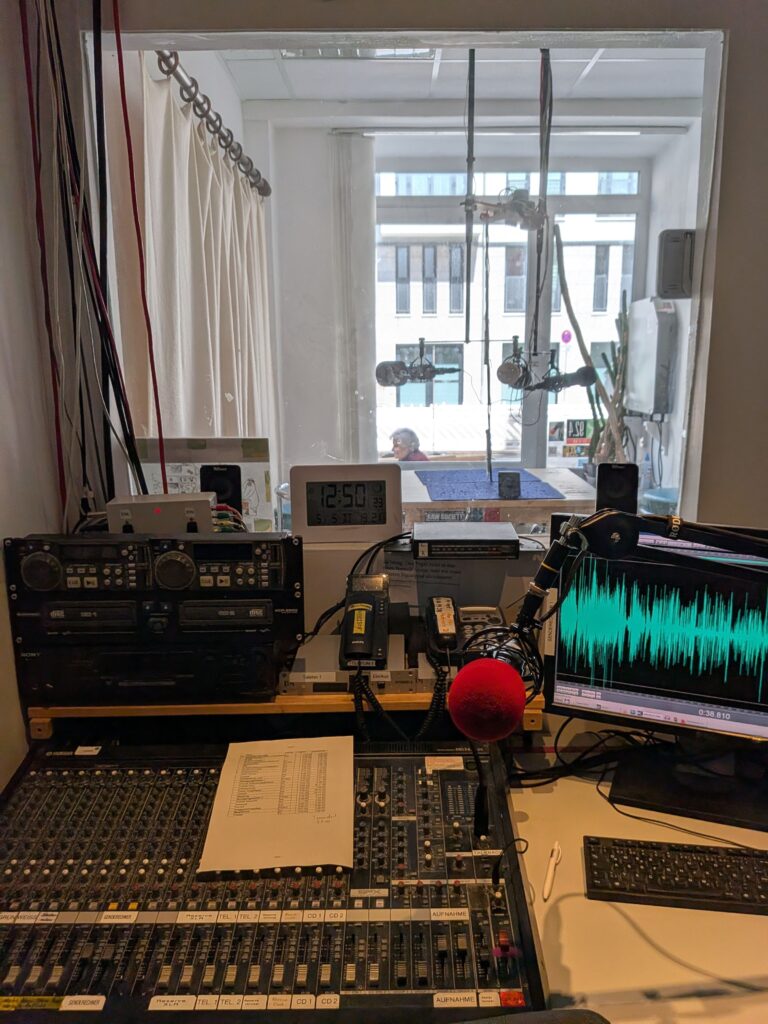
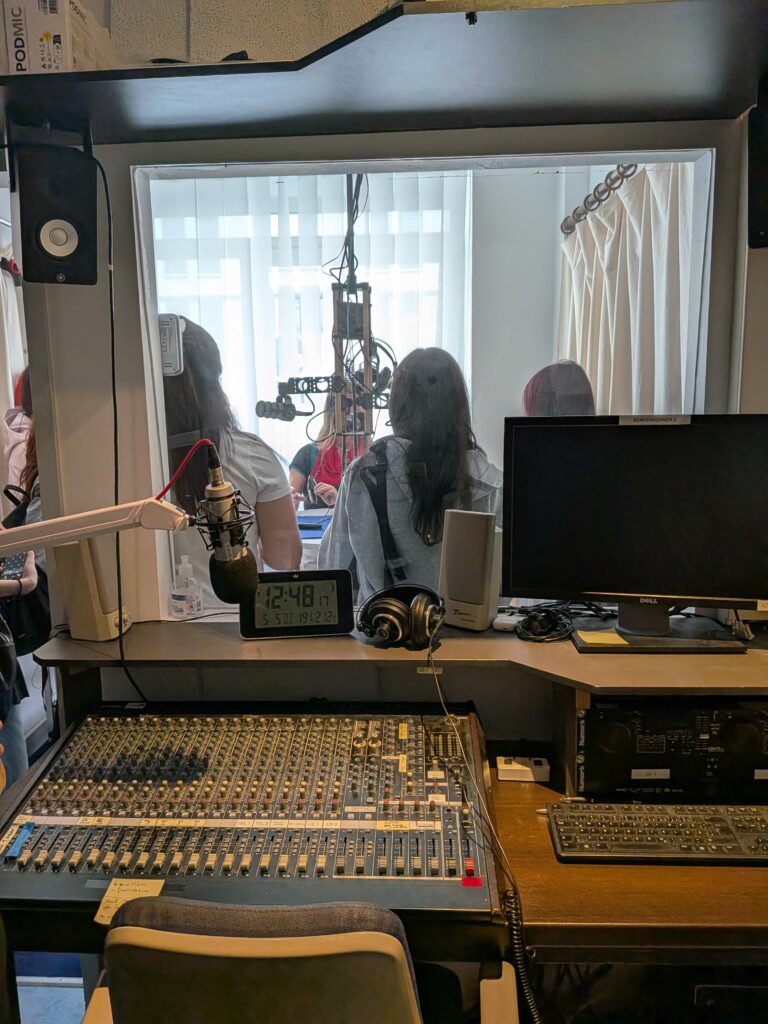
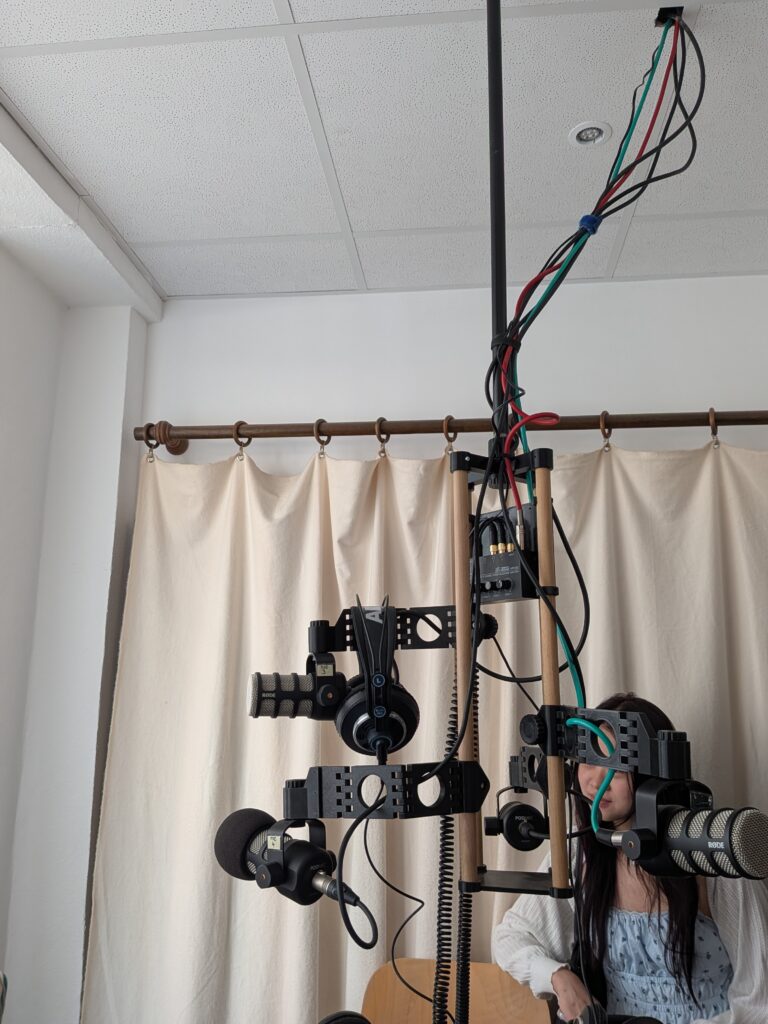
ExcursionsOn 5th May, we had a chance to visit the only community radio in Munich, Radio LORA. It was a special experience for me. When I step into the radio, it is totally different from my expectations of Germany’s media institutions. Instead of fancy and big studios, the space is small and casual. It feels more like a cosy community living room than a professional radio station. Although the studio was small, everything was well-equipped.
What is LORA?
LORA is short for “Local Radio” and is a private, non-commercial, and independent community radio station. Unlike public broadcasters funded by household fees or private media driven by advertisements, LORA is a non-profit organisation run entirely by unpaid volunteers. Its core mission is to provide a platform for social, ecological, cultural, and political topics. By intentionally avoiding professional spokespersons, LORA gives a vital voice to non-professional journalists and minority groups who lack representation in mainstream media.
In terms of its operations, the station has faced various financial and structural difficulties in the Bavarian media landscape. The radio does not have any licensing fees or sponsorships from firms; instead, it relies heavily on the booster club, which has fewer than 500 members, and on financial aid from projects. Although the radio has been classified as system relevant by the government during the coronavirus pandemic, it does not receive any government funding.
The Voice of the Unheard
After the visit, one of the things that impressed me during Ms Karin’s presentation was how LORA creates content and intentionally hands the microphone to ordinary people. In most mainstream media, we usually hear professional spokespersons who all sound almost the same. But LORA does the exact opposite. They give opportunities to non-professional journalists and minorities to create their own shows. The rule here was incredibly simple and open: whoever is here makes the program. The volunteers are empowered to do everything themselves, including developing the concept, conducting interviews, editing, selecting the music, and hosting the show. For example, there was a show called “Beautiful Stutter”, which was hosted by people who stuttered and featured live telephone calls. The goal was to make stuttering audible and help people reduce their fear of speaking with others. Instead of hiding imperfections, they gave them a safe space to be heard.
Another impressive story was when an Asian visitor asked Ms Karin if they had something against Asians because she didn’t see any Asian hosts. Instead of making excuses, she told her, “If you miss an Asian show, please come to us and do one!” And the visitor actually starts doing short reports for their daily magazine. This perfectly shows that they don’t just talk about diversity; they actually put it into practice. These are the stories that could not happen in other well-known mainstream media and radio. However, despite their thoughts being beautiful, the reality was not that perfect. Beyond their pursuit of diversity, their funding remains a major problem for them. The whole organisation of LORA was operated by volunteers. They work for free, work for their passion. As a community radio in Bavaria, LORA does not receive any radio license fees or sponsorships, and its booster club now has fewer than 500 members. After paying rent, energy costs, technology and so on, the cost is way much higher than the revenue. The funding is not the only problem for LORA; the training of volunteers and rapidly changing technology trends are reducing the number of people who listen to the radio.
After visiting and getting the insight of LORA studio, it really hooked my curiosity about LORA radio. However, they struggled with financial problems and with changing listener habits. Their existence reminds us of the true value of media. It proves that broadcasting should not merely be about fancy studios or huge metrics, but about providing a genuine avenue for the unheard voices in our society.
Leave a Reply