Second-Hand Fashion: against the environmental impact of the textile industry
Authors . Climate Change . Culture . Interview . Media . Media influence . Science . Society . SpainThe environmental impact refers to the effects that human activities have on the natural environment. Although these effects can sometimes be positive, most human actions generate serious damage to ecosystems. One of the industries with the greatest environmental footprint is the textile sector, whose impact extends across the entire life cycle of garments, from the extraction of raw materials to production, use, and final disposal.
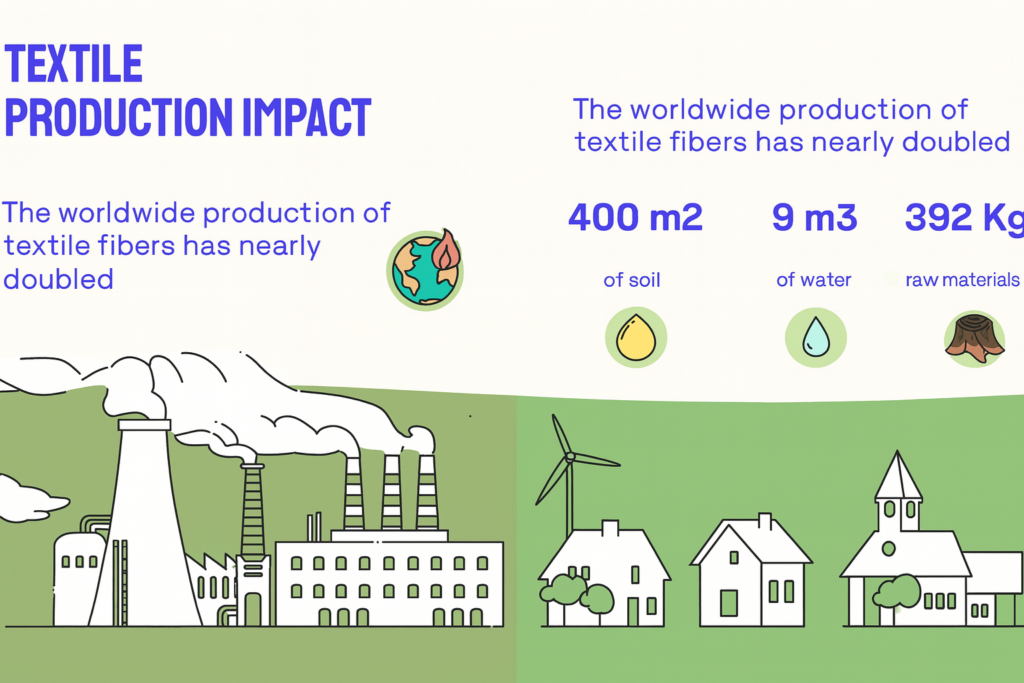
The environmental impact of textile products includes the massive consumption of natural resources, water pollution caused by dyes and finishing processes, greenhouse gas emissions, and the generation of enormous amounts of waste. In response to this problem, second-hand clothing and sustainable fashion have emerged as effective alternatives to the fast fashion model, which is responsible for large-scale pollution and overproduction.
Reducing textile waste and resource consumption
One of the most significant benefits of second-hand clothing is the reduction of textile waste. Every year, millions of tons of clothing end up in landfills, where many garments take decades or even centuries to decompose. Reusing clothing extends the lifespan of garments and prevents them from becoming waste prematurely. This also reduces the need for incineration, a process that releases toxic gases into the atmosphere.
The production of new clothing requires enormous amounts of water, energy, and raw materials. Studies show that textile dyeing and finishing processes are responsible for nearly 20% of global drinking water pollution. To put this into perspective, producing a single pair of jeans can require around 10,000 liters of water. As Joan Carles Montes Patiño, journalist and communication officer at Humana Foundation, explains:
“For every kilogram of clothing that is recovered and does not end up in a landfill, 6.1 kilograms of CO₂ emissions are avoided. On average, we recover around 18,000 tons of clothing per year in Spain.”
Cotton, synthetic fibers, and climate impact
Cotton is one of the most widely used fibers in the textile industry, but its environmental cost is extremely high. Producing a single cotton T-shirt can require up to 2,700 liters of water, while one kilogram of cotton may demand more than 10,000 liters. This excessive water use worsens water scarcity in many producing regions and competes with essential uses such as food agriculture and human consumption.
Synthetic fibers like polyester, nylon, and acrylic are derived from petroleum, a non-renewable resource. Their production generates large quantities of greenhouse gases. In fact, manufacturing polyester produces up to 70% more CO₂ emissions than cotton. Additionally, the fashion industry as a whole is responsible for between 8% and 10% of global carbon emissions.
“Everything that goes into the trash ends up in a landfill, where it will be incinerated or buried. That is where these CO₂ emissions emerge,” Montes Patiño emphasizes
Microplastics and ocean pollution
Another serious issue linked to synthetic fibers is microplastic pollution. When garments made of polyester or nylon are washed, tiny plastic particles are released into the water system and eventually reach the oceans. These microplastics harm marine ecosystems and enter the food chain, posing risks to both wildlife and human health. Reusing synthetic garments significantly reduces the need to produce new fibers, helping to limit this form of pollution.
Humana: a key actor in the circular economy
One of the most influential initiatives in textile reuse and sustainability is Humana Foundation People to People. Founded in 1987, Humana promotes environmental protection through textile reuse while supporting international development projects in Africa, Latin America, and Asia, as well as local initiatives in Spain.
After 37 years of activity, Humana has become a major actor in the social economy, a driver of the circular economy, and a generator of green employment. According to Montes Patiño:
“We are a non-profit foundation, and our profits are mainly allocated to development cooperation projects. We collect clothing, manage it, and classify it properly to give it a second life. Clothing that is not suitable for resale is sent to recycling plants.”
The perception of second-hand clothing has changed significantly in recent years.
“In the past, used clothing was associated with people with fewer resources, but that is changing. Young people increasingly see second-hand clothing as an affordable and sustainable alternative to fast fashion,” says Montes Patiño
Despite growing environmental awareness, collection rates remain low. Only around 12% of discarded clothing in Spain reaches textile collection containers. According to Humana, this is largely due to a lack of information about what happens to donated clothes, highlighting the need for greater public education.
A Responsible Way Forward
Second-hand clothing promotes a more responsible consumption mindset, encouraging quality, durability, and circular economy practices. Along with textile recycling, it represents one of the most effective strategies to reduce the environmental impact of the fashion industry.
As this report shows, sustainable fashion is not just a trend, but a necessary response to one of the most polluting industries in the world; and voices like Joan Carles Montes Patiño’s are key to understanding why change is both possible and urgent.
Although this report focuses on Spain through the example of Humana Foundation, the challenges of textile waste are shared across Europe, including Germany.
Leave a Reply